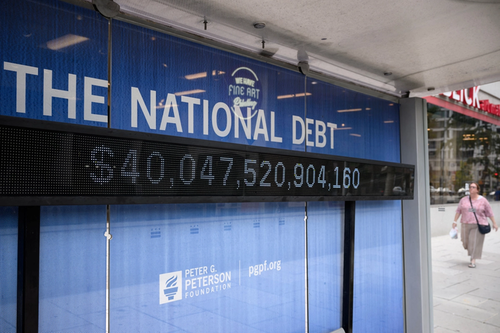
US National Debt Surpasses $40 Trillion Amid Warnings of Fiscal Unsustainability
US debt crossed $40T in August 2026 at ~120% of GDP; corroborated by Treasury data and major media, with analyses tying growth to fiat system post-1971 and Fed policies, though solutions like monetary reform remain debated.
The US national debt officially exceeded $40 trillion in mid-August 2026, marking a significant fiscal milestone reported across major outlets. According to Treasury Department data, total public debt outstanding reached approximately $40.047 trillion as of August 19, 2026, up from under $40 trillion the prior day. This figure represents roughly 120-123% of GDP, based on recent quarterly data from FRED and other trackers.
Mainstream analyses highlight parallels to historical highs, noting the debt-to-GDP ratio approaches levels last seen during World War II, though public debt (excluding intragovernmental holdings) stands lower at around $32 trillion. Economists and fiscal watchdogs, including the Committee for a Responsible Federal Budget, describe the trajectory as unsustainable, with deficits exceeding $2 trillion annually and interest costs rising rapidly. The debt has roughly doubled in the past decade, accelerated by pandemic spending, tax policies, and ongoing deficits under multiple administrations.
Commentary from Jeffrey A. Tucker in The Epoch Times frames the issue through household finance analogies—debt-to-income and debt-to-assets ratios—arguing that federal levels far exceed prudent benchmarks. Tucker links the acceleration to the 1971 end of the Bretton Woods gold standard, which removed external constraints on spending, and criticizes the Federal Reserve's role as buyer of last resort via open market operations. He contrasts this with state governments, which lack monetary authority and thus face market discipline through credit ratings. Proposals include restricting Fed asset purchases to restore accountability.
Related context from sources like Bloomberg and The Washington Post emphasizes growing "doom loop" risks from climbing interest expenses and political gridlock over spending bills. Historical data confirms the post-1971 shift enabled sustained deficits without immediate gold outflows or default premiums.
[Fiscal Analyst]: Persistent deficits and high debt-to-GDP ratios could elevate interest costs to crowd out other spending, pressuring future policy toward spending restraint or monetary adjustments unless structural reforms intervene.
Sources (5)
- [1]U.S. National Debt Just Passed $40 Trillion: How We Got Here and Why(https://www.wsj.com/economy/u-s-debt-just-topped-40-trillion-how-we-got-here-c1c6c9d2)
- [2]U.S. debt hits $40 trillion faster than investors expected(https://www.washingtonpost.com/business/2026/08/19/united-states-debt-surpasses-40-trillion/)
- [3]US Public Debt Hits $40 Trillion, Raising ‘Doom Loop’ Risk(https://www.bloomberg.com/news/articles/2026-08-19/us-public-debt-hits-40-trillion-high-raising-doom-loop-risk)
- [4]Federal Debt: Total Public Debt as Percent of Gross Domestic Product(https://fred.stlouisfed.org/series/GFDEGDQ188S)
- [5]The Unsustainable $40 Trillion National Debt(https://www.theepochtimes.com/opinion/the-unsustainable-40-trillion-national-debt-6079241)