Iran Conflict Exposes NATO Supply Chain Fragility: Baltic Frontline States Bear the Cost of Multi-Theater Overstretch
Escalating Iran conflict is delaying US HIMARS ammunition to Baltic states, exposing chronic fragility in Western munitions supply chains strained by simultaneous Ukraine, Middle East, and China contingencies. Original coverage captured statements but missed systemic industrial base failure and strategic risk to NATO's eastern flank.
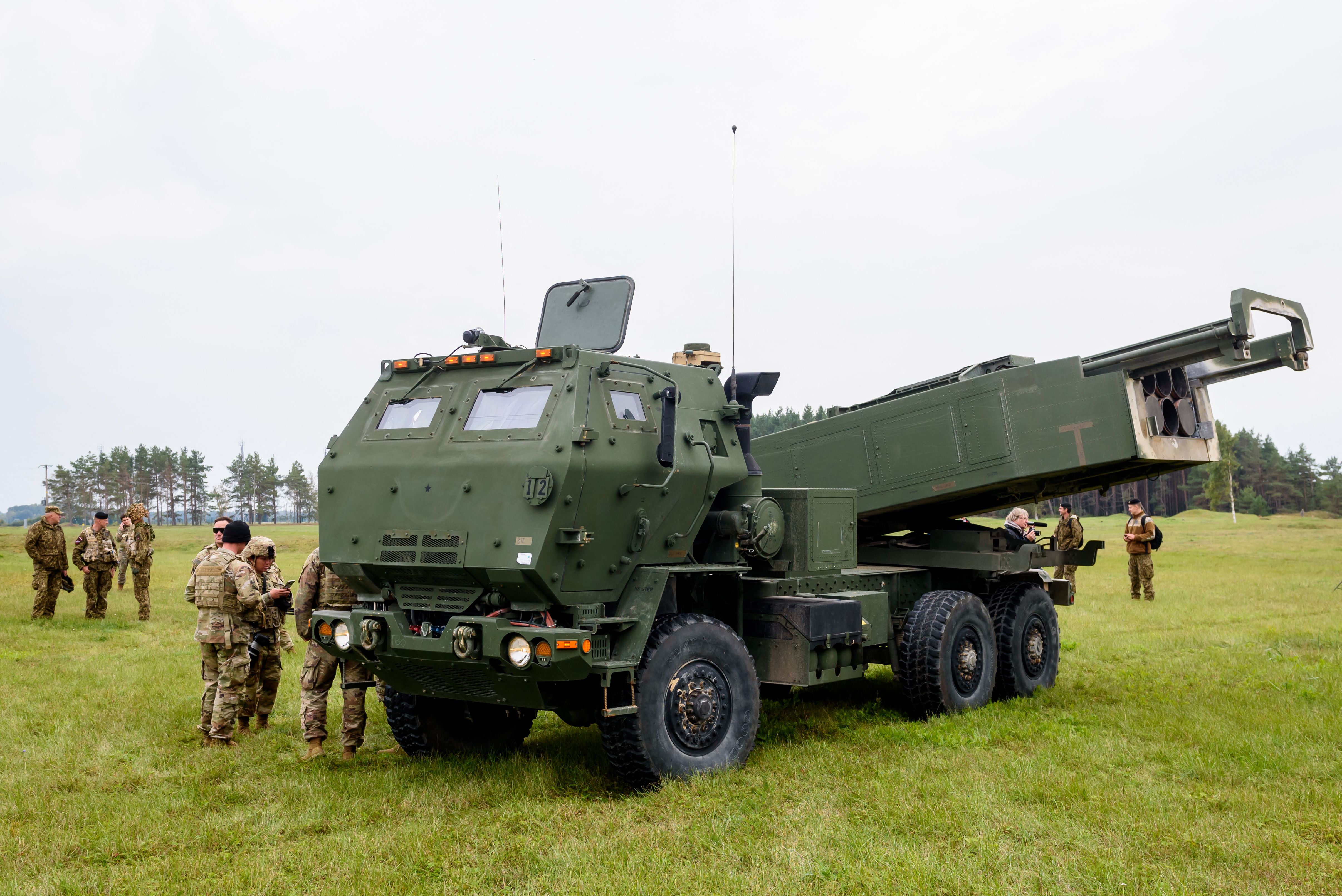
The April 17 joint press conference by the prime ministers of Estonia and Lithuania reveals more than a simple scheduling adjustment. While the Defense News report accurately captures the diplomatic language of understanding and continued alliance strength, it understates the severity and misses the deeper structural failure now visible: the United States' defense industrial base is no longer capable of simultaneously supporting high-intensity operations in the Middle East, sustained aid to Ukraine, and readiness stocks for its most vulnerable European allies. The announced delays in HIMARS ammunition deliveries to the Baltic states are not an isolated logistics hiccup but a symptom of intertwined global conflicts that have pushed Western munitions production and allocation systems to a breaking point.
Estonian Defense Minister Hanno Pevkur’s admission that HIMARS rocket deliveries have been paused, coupled with the need for potential third-party munitions approvals from Lockheed Martin and the U.S. government, highlights a rarely discussed vulnerability: even when hardware is delivered, the sustainment pipeline is brittle. This is the second major wave of such delays. A Reuters investigation published two days earlier documented parallel notifications to Scandinavian partners, confirming the prioritization of U.S. Central Command requirements linked to direct strikes against Iranian-backed networks and Israeli defense needs following escalated exchanges in April 2026.
What the original coverage missed is the historical pattern and strategic implication. Since Russia’s full-scale invasion of Ukraine in 2022, the U.S. has diverted vast quantities of 155mm artillery shells, JASSM cruise missiles, and HIMARS rockets originally slated for European partners. A 2025 CSIS report on the state of the defense industrial base warned that U.S. production capacity for precision-guided munitions remained at roughly 40% of what independent wargames suggest would be required for a simultaneous Taiwan Strait and European contingency. The current Iran-related diversions validate that assessment. RAND’s 2024 study on munitions stockpiles further projected that U.S. inventories of critical rocket systems would be exhausted within nine weeks in a major peer conflict, forcing exactly the kind of rationing now occurring.
The Baltic states sit at the sharpest end of this reality. Their combined defense posture relies heavily on rapid delivery of long-range fires to offset limited manpower and territorial depth. Russian hybrid activity in the Suwalki Gap and regular incursions into Baltic airspace have increased 300% since 2024 according to Lithuanian and Estonian defense ministries. Any gap in HIMARS sustainment directly degrades their ability to contest Russian artillery dominance in the opening phases of a potential Article 5 scenario. The original article presents the prime ministers’ calm statements as reassuring; in reality, they reflect strategic helplessness. European NATO members have few immediate substitutes. Although the EU’s ASAP initiative and joint procurement programs have made incremental progress, they cannot replace U.S. production scale in the short term.
This episode fits a larger pattern of Western strategic distraction. The same supply chains strained by Red Sea shipping attacks, Ukraine’s attritional warfare, and now direct Iran-Israel conflict are the same ones required to deter China in the Indo-Pacific. The result is a de facto global prioritization queue in which Baltic air defense and rocket artillery sit several rungs below urgent CENTCOM requirements. European strategic autonomy, long discussed in Brussels, is no longer an aspirational slogan but an urgent operational necessity. Without accelerated investment in domestic production of rocket motors, warheads, and propellants, frontline NATO states will remain exposed every time Washington’s attention is pulled toward the next crisis.
The deeper analytical takeaway is sobering: the post-Cold War assumption of uncontested U.S. industrial supremacy and unlimited surge capacity has collapsed under the weight of simultaneous authoritarian challenges. The Baltic delay is not merely about moved deadlines. It is visible proof that the West’s defense ecosystem remains optimized for single-theater operations in an era that no longer permits them. Absent rapid decoupling of European requirements from sole-source U.S. production, the credibility of NATO’s eastern flank deterrence will continue to fluctuate with every escalation in the Middle East.
SENTINEL: Iran-driven delays in HIMARS munitions to the Baltics signal that U.S. production capacity has reached its limit across three theaters, leaving NATO's most exposed members with degraded readiness precisely as Russian hybrid pressure intensifies. This will accelerate European demands for defense industrial sovereignty.
Sources (3)
- [1]Baltic nations brace for impact of Iran war delaying US weapons shipments(https://www.defensenews.com/global/europe/2026/04/20/baltic-nations-brace-for-impact-of-iran-war-delaying-us-weapons-shipments/)
- [2]U.S. delays weapons deliveries to Europe as Middle East fighting intensifies(https://www.reuters.com/world/us-weapons-deliveries-europe-delayed-middle-east-needs-2026-04-18/)
- [3]Overstretched: The State of the U.S. Defense Industrial Base(https://www.csis.org/analysis/overstretched-us-defense-industrial-base-2025)