Documented ALPR misuse and the shutdown of TSA Quiet Skies sit inside a longer, separately authorized surveillance record
Police misuse of Flock license-plate readers is documented in court cases and an Institute for Justice database, and TSA’s Quiet Skies traveler-surveillance program was shut down in 2025 after years of criticism and a 2020 inspector general finding that TSA could not show it worked. Those facts sit beside older, separately authorized programs such as FISA Section 702 and FATCA. The further claim that they form one continuous surveillance project is an interpretation, not a finding of those records.
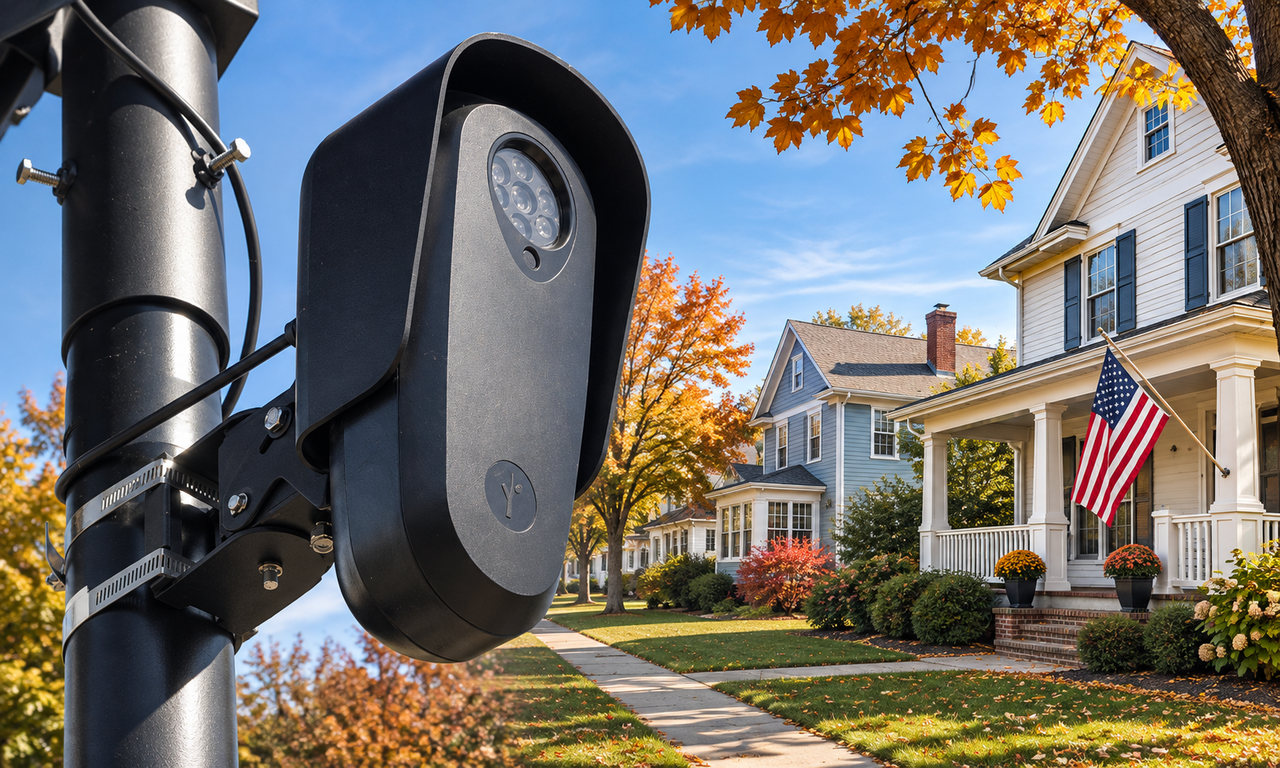
Documented: Automated license-plate readers, especially networks sold by Flock Safety, are now a routine police tool, and misuse is no longer anecdotal. The Institute for Justice maintains a public database of ALPR abuse that, by Senate testimony in September 2026, catalogued more than 240 incidents, including stalking and stops tied to reader errors. CNN reported that the tally includes at least two dozen cases in which officers resigned or were arrested after allegedly using Flock to track romantic partners or exes, among them a Milwaukee officer who searched a partner’s plate 124 times and that partner’s ex 55 times. The Washington Post’s review, as summarized by The Marshall Project, found more than 50 unauthorized-access cases, frequently involving partners, exes, or women officers wanted to meet. Flock’s chief executive has said police abuse long predates the product and that audit logs help catch bad officers. That is a company claim, not an independent finding that the design prevents misuse. Separately, the Electronic Frontier Foundation reported that Johnson County, Texas, deputies queried a nationwide Flock network in a case logged in part as an abortion-related search, after the sheriff and the company had described the query as a welfare check.
Documented, and distinct: On June 5, 2025, Homeland Security Secretary Kristi Noem ended TSA’s Quiet Skies program. DHS said it cost about $200 million a year and had not stopped a terrorist attack, and alleged it had been used to target political opponents and benefit allies. Those politicization allegations are administration claims; Reuters and the Wall Street Journal reported the shutdown and the allegations, not an adjudicated finding that every selection was political. What is older and less contested is the program’s design. The Boston Globe reported in July 2018, from air-marshal accounts and TSA documents, that marshals followed U.S. citizens who were not under investigation and not on the terrorist watchlist, noting ordinary behavior such as bathroom use, phone use, and staring. A November 2020 DHS Office of Inspector General audit (OIG-21-11) found TSA had not developed performance measures to show Quiet Skies worked and had not always followed its own guidance. TSA, in response to that audit, pointed to travelers later watchlisted as evidence of value. That is the agency’s interpretation of its data, not the inspector general’s conclusion that the program was effective. The essay’s figure of roughly $10 billion a year is in the range of TSA’s overall budget, not the Quiet Skies line item DHS cited.
Documented, and also distinct: Section 702 of the Foreign Intelligence Surveillance Act authorizes collection aimed at non-U.S. persons reasonably believed to be abroad, without an individualized warrant for each target. Downstream collection, publicly known after Edward Snowden’s 2013 disclosures as PRISM, obtains communications from providers using selectors tied to those foreign targets. When a target communicates with someone in the United States, that American’s side of the exchange can be collected incidentally and later queried. A federal district judge in the Eastern District of New York held in a December 2024 opinion, discussed by Just Security, that some U.S.-person queries of that already-collected data implicate the Fourth Amendment. Whether incidental collection itself is lawful, and whether a warrant is required for later queries, remains litigated and politically contested. FATCA, enacted in 2010, is a tax statute, not a security program: from July 1, 2014, foreign financial institutions faced reporting duties on U.S. accounts or withholding on certain U.S.-source payments. It expands financial visibility over Americans abroad. It does not, on the public record, operate the cameras or the air-marshal details.
Claimed: The Mises Institute essay treats Flock, Quiet Skies, Section 702, FATCA, the 2001 AUMF, and the PATRIOT Act as one twenty-five-year cultivation of a surveillance ambiance, drawing on Christopher Coyne and Abigail Hall’s “boomerang” argument that powers developed abroad return home. That is an interpretive frame. The statutes and programs are real and sequential in calendar time. A single causal project, in which foreign-intelligence authorities produced local plate readers, is not what the court records, inspector general audits, or agency documents establish. Each program has its own statute, agency, and stated purpose: foreign intelligence, aviation screening, tax compliance, and local crime investigation.
Speculated: That ending one program, or publishing abuse logs, reverses the broader architecture. Noem said TSA would keep other vetting functions. Flock has shortened a standard retention period and tightened search rationales amid cancellations tracked by the Institute for Justice; those are vendor and local-government responses, not a national rollback of warrantless querying. Readers can hold the documented incidents and the legal authorities without accepting the essay’s claim that they are one system.
Drivers in cities that share Flock data can have their movements searched without a warrant, and court records show some officers have used that access to stalk people they know. Air travelers were also placed in Quiet Skies monitoring without being suspects or watchlisted, a program DHS ended in 2025 after an inspector general found TSA could not measure whether it worked.
Sources (10)
- [1]CNN: Inside the growing police use and misuse of Flock’s license-plate reader cameras(https://www.cnn.com/2026/07/26/us/flock-cameras-surveillance-abuse)
- [2]Senate Judiciary testimony citing Institute for Justice ALPR abuse database(https://www.judiciary.senate.gov/download/09/23/2026/2026-09-23-pm_testimony_whitneypdf)
- [3]The Marshall Project: The Flock backlash(https://www.themarshallproject.org/2026/10/03/police-camera-traffic-flock-protest)
- [4]EFF: Flock search logged in Texas abortion investigation(https://www.eff.org/deeplinks/2025/10/flock-safety-and-texas-sheriff-claimed-license-plate-search-was-missing-person-it)
- [5]DHS: Secretary Noem ends Quiet Skies(https://www.dhs.gov/news/2025/06/05/secretary-noem-ends-politicized-tsa-watchlist-program-has-failed-prevent-single)
- [6]Reuters: U.S. removes senior officials over airline passenger watch list(https://www.reuters.com/world/us/us-removes-senior-leaders-over-airline-passenger-watch-list-screening-program-2025-09-30/)
- [7]Boston Globe: Welcome to the Quiet Skies(https://www.bostonglobe.com/metro/2018/07/28/welcome-the-quiet-skies-air-marshals-track-ordinary-travelers-like-terror-suspects-controversial-new-surveillance-program/uEvS2VJ2n3DHfFfPJ4z7DJ/story.html)
- [8]DHS OIG: TSA Needs to Improve Management of the Quiet Skies Program (OIG-21-11)(https://www.oversight.gov/reports/audit/tsa-needs-improve-management-quiet-skies-program-redacted)
- [9]Just Security: Court says warrant needed for some U.S. person queries of Section 702 data(https://justsecurity.org/106895/warrant-needed-fisa-section-702)
- [10]Forbes: FATCA makes foreign banks report Americans(https://www.forbes.com/sites/robertwood/2012/11/21/fatca-makes-foreign-banks-report-americans/)