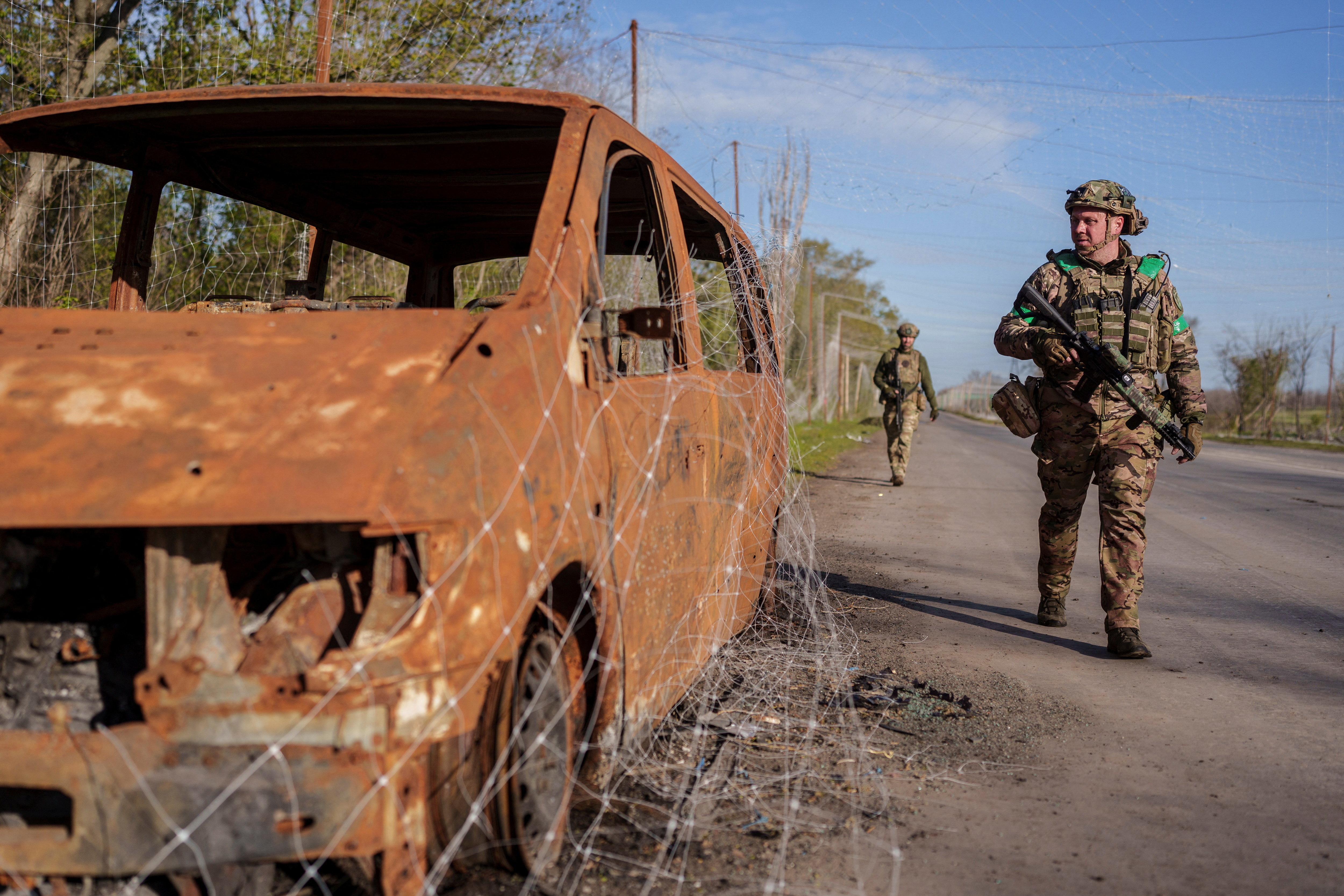
Ukraine-Russia Conflict Persists Despite Ceasefire: A Symptom of Deeper Geopolitical and Cyber Warfare Trends
The Ukraine-Russia conflict’s persistence despite a US-mediated ceasefire highlights the limits of diplomacy in a hybrid war defined by cyber tactics and geopolitical alliances. Mainstream coverage misses these deeper drivers, focusing on immediate clashes while ignoring digital warfare and global power shifts.
The breakdown of the US-mediated ceasefire between Ukraine and Russia, as reported on May 11, 2026, underscores the fragility of diplomatic interventions in a conflict now stretching beyond four years since Russia's 2022 invasion. While Defense News detailed the immediate violations—180 battlefield clashes, drone strikes, and artillery barrages—the coverage misses the broader strategic and technological undercurrents driving this persistence. Both sides accuse each other of breaching the truce, with Russia claiming over 23,000 Ukrainian violations and Ukraine reporting sustained Russian assaults. Beyond the frontline skirmishes, this conflict reflects a deeper failure of traditional diplomacy to address hybrid warfare tactics and shifting global alliances.
First, the role of cyber-enabled warfare remains underexplored in mainstream reports. Since the war’s onset, cyberattacks have been a parallel battlefield, with Ukraine’s critical infrastructure repeatedly targeted by Russian state-sponsored groups like Sandworm, linked to the 2022 power grid attacks (per FireEye/Mandiant reports). Recent data from the Ukrainian State Service of Special Communications suggests a 30% uptick in cyber incidents since early 2026, coinciding with physical escalations. These digital assaults—often paired with drone warfare—amplify the chaos of ceasefire violations, as they disrupt command-and-control systems and civilian morale without overt military footprints. The Defense News piece overlooks how such tactics erode trust in ceasefire agreements, as neither side can fully verify the other’s compliance in a hybrid war.
Second, the geopolitical context reveals why diplomatic efforts like the US-led truce falter. Russia’s alignment with China and Iran, evidenced by joint military exercises in the Caspian Sea in 2025 (as reported by Reuters), provides Moscow with economic and technological buffers against Western pressure. Meanwhile, Ukraine’s deepened NATO integration—accelerated by emergency arms shipments post-2024 (per SIPRI data)—entrenches the conflict as a proxy for broader East-West tensions. The rejection by EU foreign ministers of Putin’s overtures for new European security arrangements, as noted in the original coverage, signals a refusal to engage on Russia’s terms. Yet, this misses Putin’s strategic pivot: his mention of Gerhard Schroeder as a negotiator hints at exploiting historical European divisions, a tactic seen in Russia’s Nord Stream diplomacy pre-2022.
Finally, the original reporting errs in framing the ceasefire collapse as mere tactical disagreement. It’s a symptom of irreconcilable strategic goals—Russia’s territorial ambitions versus Ukraine’s sovereignty—compounded by external actors. Trump’s hope for an extended truce, while optimistic, ignores the lack of enforcement mechanisms in a war where both sides wield asymmetric tools like drones and malware. The civilian toll, with deaths reported in Belgorod, Zaporizhzhia, and Kherson, is not just collateral damage but a deliberate pressure point in a war of attrition.
This conflict’s trajectory suggests that without addressing cyber warfare and alliance dynamics, ceasefires will remain symbolic at best. Future diplomatic efforts must integrate mechanisms for digital de-escalation and neutral monitoring—potentially through UN cyber task forces—while recognizing that neither side views peace as an immediate priority over strategic gains.
SENTINEL: The Ukraine-Russia ceasefire failures signal a protracted conflict, as hybrid warfare and external alliances outweigh diplomatic leverage. Expect intensified cyber operations to disrupt future peace attempts.
Sources (3)
- [1]Ukraine and Russia fight on despite US-mediated ceasefire(https://www.defensenews.com/news/pentagon-congress/2026/05/11/ukraine-and-russia-fight-on-despite-us-mediated-ceasefire/)
- [2]Russia, China, Iran Hold Joint Naval Drills in Caspian Sea(https://www.reuters.com/world/russia-china-iran-hold-joint-naval-drills-caspian-sea-2025-03-15/)
- [3]SIPRI Yearbook 2025: Arms Transfers to Ukraine(https://www.sipri.org/yearbook/2025)