From Convenience to Control: The Global Shift to Programmable Digital Currencies and the Erosion of Financial Privacy
CBDC proliferation, BIS programmable money frameworks, U.S. Bitcoin reserve, and declining cash use corroborate concerns over surveillance and control in cashless transitions, with privacy trade-offs in designs like the digital euro.
The transition to a cashless society is accelerating through Central Bank Digital Currencies (CBDCs), with over 146 countries and currency unions—representing 98% of global GDP—actively exploring or advancing projects as of 2026. Only a handful, including the Bahamas (Sand Dollar), Jamaica (JAM-DEX), and Nigeria (eNaira), have launched retail versions, though adoption remains limited in practice. China’s e-CNY pilot has processed trillions in transactions, while the European Central Bank advances the digital euro with targeted offline capabilities offering cash-like privacy for small transactions but subject to holding and reconciliation limits.[1][2]
The Bank for International Settlements has outlined visions for tokenized unified ledgers that integrate programmable central bank money with deposits and assets, enabling atomic settlement and features like time- or purpose-bound restrictions—often described as programmable money. This builds on earlier explorations of smart contracts for monetary policy tools.[3][4]
In the United States, an Executive Order in March 2025 established a Strategic Bitcoin Reserve capitalized primarily with seized cryptocurrency holdings (estimated around 200,000 BTC), creating a centralized government stockpile of an asset originally designed for decentralization.[5][6] FedNow, launched in 2023, provides instant payment rails that could underpin future digital systems.
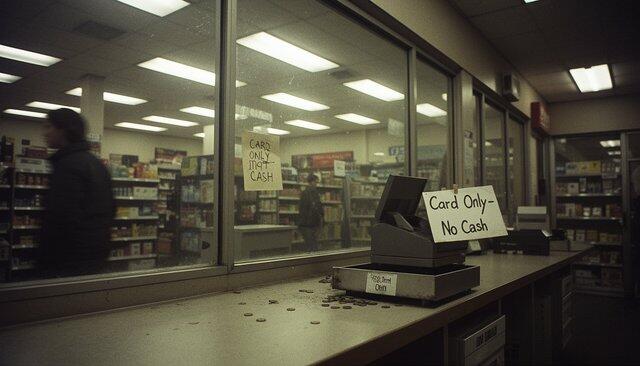
U.S. consumer cash use has declined sharply: Federal Reserve data shows average monthly cash payments falling from 14 in 2016 to around 6 in 2025, with cash accounting for just 14% of transactions, though it remains the third-most-used method and is still carried by 76% of consumers.[7][8]
Deeper implications extend beyond efficiency. Programmable features could embed policy directly into currency—restricting use by location, time, or merchant type—while comprehensive transaction logging replaces cash’s anonymity. Credit card and digital payment trails already normalize surveillance; CBDCs would complete the infrastructure for real-time monitoring and conditional access. Connections to tokenization projects and stablecoin competition suggest a hybrid future where public and private rails converge under regulatory oversight, potentially amplifying data aggregation across borders via initiatives like mBridge. Privacy designs, such as the digital euro’s offline mode, offer limited protections but tie back to identity-linked accounts for larger or online use. The U.S. Bitcoin reserve illustrates the irony: even decentralized assets face centralization when seized by the state. As cash habits erode, the practical option for untraceable exchange diminishes before full infrastructure arrives, shifting the default from permissionless commerce to one requiring implicit approval.
Liminal: Programmable CBDCs risk embedding policy enforcement into everyday transactions, turning money into a conditional tool and accelerating the normalization of financial surveillance across both public and private systems.
Sources (7)
- [1]146 Countries Building Digital Currency(https://neuralwired.com/2026/06/26/cbdc-countries-digital-currency-enterprise-payments-2026/)
- [2]Advancing in tandem - results of the 2024 BIS survey on central bank digital currencies and crypto(https://www.bis.org/publications/paper-159-advancing-tandem-results-2024-bis-survey-central-bank-digital-currencies-and-crypto)
- [3]Establishment of the Strategic Bitcoin Reserve and United States Digital Asset Stockpile – The White House(https://www.whitehouse.gov/presidential-actions/2025/03/establishment-of-the-strategic-bitcoin-reserve-and-united-states-digital-asset-stockpile/)
- [4]Trump signs order establishing strategic bitcoin reserve | AP News(https://apnews.com/article/bitcoin-reserve-trump-crypto-sacks-5c91a1ab3dab9a8c86d4bc42b8db3f8f)
- [5]Fed Payments Diary: Cash Use Dips, But Remains Resilient – Digital Transactions(https://www.digitaltransactions.net/fed-payments-diary-cash-use-dips-but-remains-resilient/)
- [6]Next-generation monetary and financial system takes shape, based on a tokenised unified ledger: BIS(https://www.bis.org/media-releases/20250624-next-generation-monetary-and-financial-system-takes-shape-based-tokenised-unified-ledger-bis)
- [7]FAQs on the digital euro(https://www.ecb.europa.eu/euro/digital_euro/faqs/html/ecb.faq_digital_euro.en.html)