Bay Area Dumpster Retaliation Reveals Accelerating Economic Desperation and Privatized Service Collapse
A confirmed Bay Area incident where a dumpster company dumped unpaid trash on a customer's lawn is analyzed not as an outlier but as evidence of small business desperation amid $17k+ average late payments, regulatory burdens, and privatized service extremes pointing to wider societal strain.
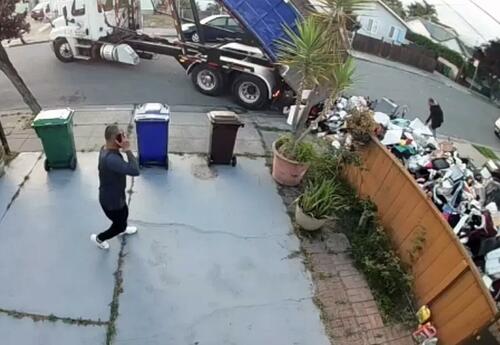
In San Pablo, California, a routine moving job escalated into a public spectacle when Express Rental Dumpster owner Martin Perez directed his driver to empty an entire load of debris onto a customer's front lawn after repeated payment failures on a roughly $700 bill. Ring camera footage captured the driver briefly discussing the situation before releasing the trash, an act Perez defended as necessary after absorbing losses on delivery, pickup, and impending dump fees. Local authorities later instructed the company to clear the sidewalk, while neighbors and scavengers from the area's growing homeless population eventually helped clear the mess.[1][2]
Mainstream coverage has framed the April 2026 incident as an isolated customer dispute. However, it illuminates deeper systemic failures. Small businesses across California are increasingly squeezed by late payments, with U.S. small businesses reporting an average of $17,500 in outstanding invoices as of early 2026 data, contributing to cash flow crises that hinder operations and growth. In California specifically, small business optimism has fallen below the national average, exacerbated by heavy regulation, high operational costs, and economic headwinds that make absorbing losses untenable.[3][4]
This event is not merely a billing dispute but a symptom of accelerating societal breakdown. Basic services like waste removal have been largely privatized, leaving operators like Perez with few institutional backstops when customers—often themselves facing Bay Area housing pressures and relocation stresses—default. Without reliable public alternatives, the result is direct, visible enforcement: trash returned to sender. Such incidents signal how economic desperation manifests in everyday infrastructure. As unpaid bills cascade through privatized systems, expect more 'self-help' resolutions that erode neighborhood stability, increase blight, and burden already strained communities where scavengers and neighbors become de facto cleanup crews.
The customer's move-out context aligns with broader regional trends of residents fleeing high costs, while small operators absorb the fallout from widespread invoice delays. Mainstream outlets treat these as quirky local stories, missing the pattern: privatization without robust economic floors creates conditions for petty conflicts to escalate into public health and aesthetic crises. This dumpster delivery to the lawn is an early, literal landmark of services failing catastrophically when the transactional social contract frays under sustained financial pressure.
[LIMINAL]: This case of direct trash retaliation foreshadows broader breakdowns in privatized essential services as unpaid invoices and economic strain become normalized, turning routine transactions into public conflicts that accelerate visible decay and community erosion.
Sources (5)
- [1]East Bay dump truck pours debris onto customer's yard after dispute over unpaid bill(https://abc7news.com/post/east-bay-dump-truck-returns-debris-customers-san-pablo-yard-dispute-unpaid-bill-video-shows/18893868/)
- [2]Fed-up dumpster company empties full load onto lawn of customer they say refused to pay bill(https://www.foxnews.com/us/fed-dumpster-company-empties-full-load-onto-lawn-customer-say-refused-pay-bill)
- [3]San Pablo double dump dumpster mystery becomes clearer(https://www.ktvu.com/news/double-dump-dumpster-mystery-becomes-clearer)
- [4]Small businesses are owed $17500 on average(https://www.sacbee.com/news/business/article315353909.html)
- [5]California Small Business Optimism Falls Below National Average(https://www.nfib.com/news/press-release/new-nfib-survey-california-small-business-optimism-falls-below-national-average/)