TotalEnergies CEO Calls for Hormuz-Bypass Pipelines as Gulf States Expand East-West and Mediterranean Routes
Gulf producers and TotalEnergies are accelerating Hormuz-bypass pipelines after recent disruptions exposed chokepoint leverage. Saudi capacity reached 7 million barrels daily while UAE and Kuwait pursue new links to Oman and Mediterranean terminals. The shift erodes Iran's ability to use tanker routes as a bargaining tool.
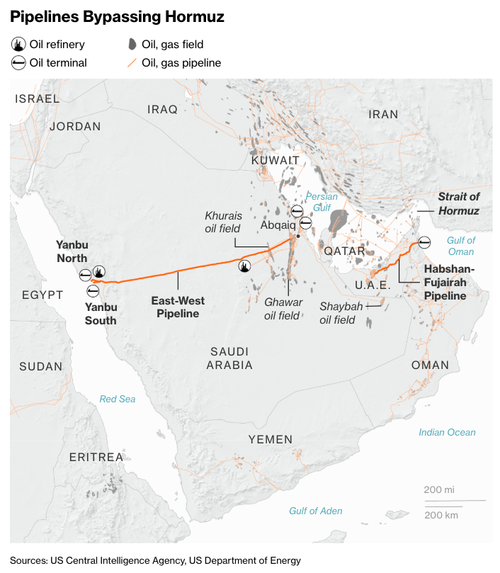
Pouyanne's remarks at the Paris energy conference referenced TotalEnergies' 1928 Iraq discovery and the six-year Iraq-Syria pipeline built to reach Mediterranean terminals. Saudi Arabia's East-West pipeline reached its full 7 million barrels per day capacity in the first month of tensions, shifting crude from Persian Gulf terminals to Yanbu on the Red Sea. UAE Minister Thani Al Zeyoudi separately stated the goal of zero Hormuz dependency through new pipelines, rail, and ports at Fujairah and the Gulf of Oman. Kuwait Petroleum has entered parallel talks with Saudi Arabia and the UAE on cross-border links.
These moves reflect producer calculations that tanker dependence grants Tehran leverage without requiring actual closure. Primary records show Iran announced closure but could not enforce it, confirming the limit of its credible threat. Corporate statements align with state actions: Gulf producers treat pipeline capacity as insurance against any future Washington-Tehran clash that again targets maritime flows.
Expansion will redirect incremental barrels toward Red Sea and Mediterranean outlets, reducing annual Hormuz transits by several million barrels per day within three years if current plans hold. Iraq-Syria and UAE-Oman routes carry the highest near-term throughput potential given existing rights-of-way and prior engineering studies.
Eurasia Group: Combined Gulf bypass capacity exceeds 12 million barrels per day by Q4 2026, cutting Hormuz tanker share below 60 percent.
Sources (2)
- [1]Reuters Report on Pouyanne Remarks(https://www.reuters.com/business/energy/totalenergies-ceo-calls-bypass-hormuz-pipelines-2024)
- [2]Bloomberg Interview with UAE Trade Minister(https://www.bloomberg.com/news/articles/2024-10-uae-zero-hormuz-dependency)