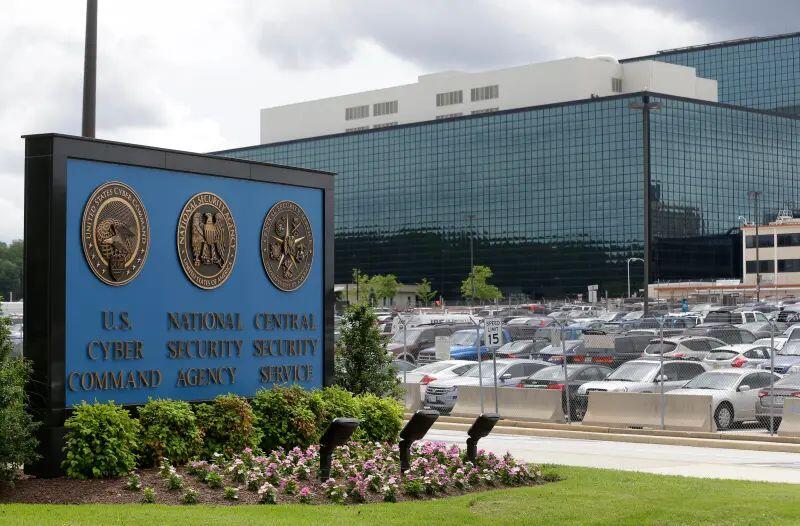
Lawmakers press to keep $11 million for cleared mental health care after at least 11 NSA and Cyber Command suicides
Bloomberg and congressional letters document at least 11 suicides among NSA and Cyber Command workers in about a year, including a five-death cluster in June and July, and a bipartisan push to keep $11 million for cleared mental-health staff at Fort Meade. Officials have not established a single cause.
Documented: At least 11 people who worked for the National Security Agency or U.S. Cyber Command died by suicide over roughly the year ending in September, according to U.S. officials and public records cited by Bloomberg. Ten of those deaths were around Fort Meade, Maryland, where both organizations are headquartered, and one was near an NSA facility in Georgia. The tally includes military personnel, civilians, and contractors. From early June to early July, five people tied to the NSA or Cyber Command died by suicide, a sequence the military treated as a suicide cluster, people familiar with the matter told Bloomberg. Two more deaths followed in September: a 21-year-old Army soldier and a 59-year-old civilian.
Documented: The deaths prompted closed-door questions from White House and congressional staff and a bipartisan push to retain $11 million in the fiscal 2027 defense spending bill for Cyber Command “high performance team training.” Gen. Joshua Rudd, who leads both Cyber Command and the NSA, requested the money, citing burnout and force degradation. The funds would support embedded behavioral health professionals who hold security clearances, a model last year’s defense policy bill authorized. In October, Maryland’s congressional delegation and members of the House Armed Services cyber subcommittee—including Reps. Sarah Elfreth, Eugene Vindman, Don Bacon, Ro Khanna, and Rich McCormick—wrote appropriators asking that the increase stay in the final bill. Vindman’s office published the subcommittee letter in November. Stars and Stripes, The Baltimore Banner, The Record, and the Baltimore Sun reported the same funding fight after the summer cluster.
Documented, with limits: Publicly identified cases include Air Force Tech. Sgt. Kevin Stallings, a digital-network intelligence analyst who died in June of a self-inflicted gunshot wound after missing duty, and Maryland Air National Guard Capt. Kevin Paulson, a cyberspace effects officer at the NSA who died in July. Families have described long shifts, sleep loss, and isolation. Lawmakers’ letters state a structural fact of the workplace, not a clinical finding: because much of the work is classified and done in sensitive compartmented information facilities, personnel often cannot discuss the source of stress with family or with clinicians who lack clearances or facility access. A Pentagon memo to Rudd, reported by The Banner, described the “continuous, high-tempo nature of ongoing active cyber operations” as imposing a cumulative cognitive and psychological toll and directed Cyber Command to build a framework to address it.
Claimed, not established as a single cause: Advocates and some lawmakers treat the cluster as evidence that surveillance-and-cyber work itself is driving a mental-health crisis inside the security apparatus. What is on the record is narrower. Officials have not tied the deaths to one cause. Agency leaders have pointed, in individual cases, to personal and financial troubles; Stallings’s family circumstances included financial stress and the end of a marriage, according to reporting that reviewed records and family accounts. Former NSA executive Harry Coker Jr. told Bloomberg the operational pace at both organizations “can be overwhelming,” which is an informed assessment, not a finding that pace caused any particular death. Military commanders have moved to limit long hours, expand access to care, and share resources between the NSA and Cyber Command. Fort Meade held a stand-down after the summer deaths.
Speculated, and not supported by the public record: Nothing in the Bloomberg tally, the congressional letters, or local reporting demonstrates a cover-up, a single institutional policy that produced the deaths, or a rate that has been formally compared with the rest of the Defense Department or the U.S. population. A Pentagon suicide report’s categories for cyberspace operations and signals intelligence do not map cleanly onto NSA and Cyber Command headcount, so a rate claim would outrun the data. The workforce at Fort Meade is large—on the order of tens of thousands of military and civilian personnel—so eleven deaths in a year is a serious cluster inside a specialized community, not by itself a measured collapse of an entire agency.
What the record does show is a readiness problem that appropriators are being asked to fund: classified cyber and signals work isolates people from ordinary care, demand on that workforce has been high, and Congress is treating cleared, on-site behavioral health as an operational requirement rather than a side benefit.
Documented deaths among NSA and Cyber Command personnel at Fort Meade have already moved Congress and the Pentagon to treat cleared mental-health care as a readiness issue for the people who run U.S. cyber and signals operations, and for the families who cannot be told what the work involves.
Sources (7)
- [1]More Suicides at Spy, Cyber Agencies Scrutinized by Congress(https://www.bloomberg.com/news/articles/2026-11-10/more-suicides-at-spy-cyber-agencies-scrutinized-by-congress)
- [2]More suicides at U.S. spy and cyber agencies scrutinized by Congress(https://www.japantimes.co.jp/news/2026/11/11/world/politics/suicides-spy-cyber-agencies-congress/)
- [3]Vindman Joins Colleagues in Urging $11 Million for Mental Health Support at Cyber Command(https://vindman.house.gov/2026/11/19/vindman-joins-colleagues-in-urging-11-million-in-additional-funding-for-mental-health-support-at-cyber-command-following-suicides/)
- [4]After Fort Meade community suicides, lawmakers seek $11M for mental health(https://www.stripes.com/theaters/us/2026-10-08/fort-meade-cyber-command-suicides-23093271.html)
- [5]Lawmakers seek $11M for Cyber Command after summer suicides(https://www.thebanner.com/community/local-news/cyber-command-suicide-fort-meade-11-million-congress-3W3IVRS5K5C6XOFZZ5HYR5VDUY/)
- [6]$11 million plan for psychological support at Cyber Command gets fresh boost from lawmakers(https://therecord.media/cyber-command-mental-health-support-program-bipartisan-letters)
- [7]Alarm raised after 11 NSA workers die by suicide this year(https://nypost.com/2026/11/21/us-news/suicides-of-11-nsa-workers-in-2026-spur-lawmakers-to-seek-answers/)