France's October 2026 Unrest: A Test Case for the Limits of Public Spending and Social Integration Policies
October 2026 French protests-riot wave exposes cracks in the assumption that public spending and integration suffice for stability, blending genuine policy grievances with opportunistic violence amid electoral pressures.
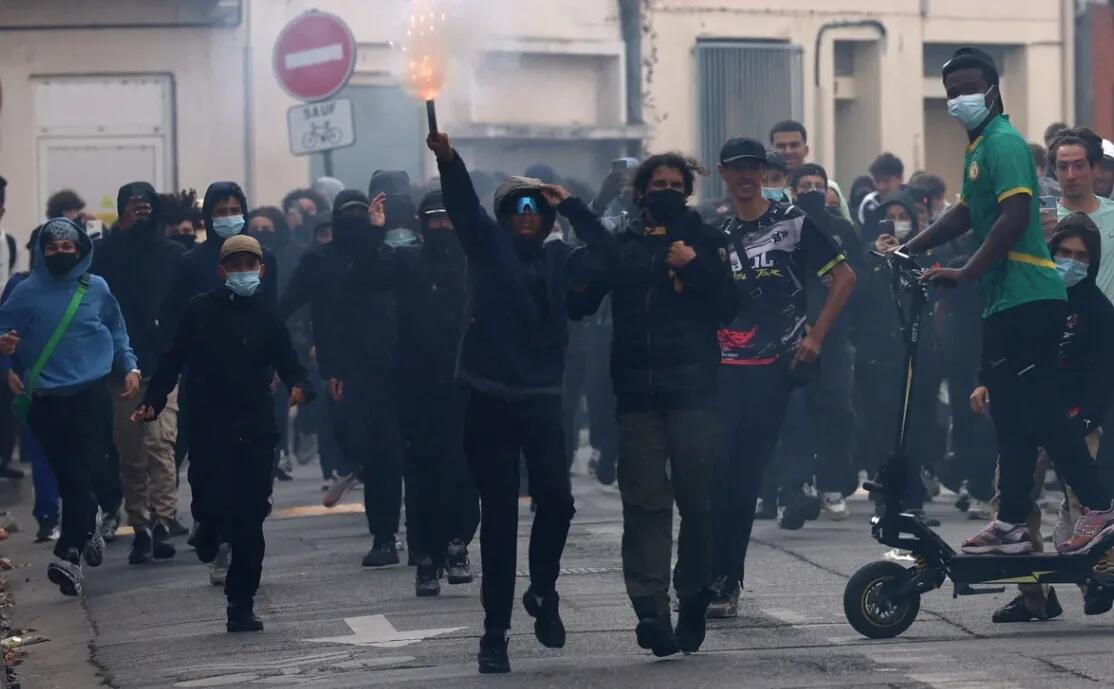
Widespread protests across France in mid-to-late October 2026, originating from student and teacher grievances over underfunded schools and expanding into broader discontent with austerity, rising living costs, and declining public services, escalated into significant violence in multiple cities. Demonstrations on October 17 drew an estimated 550,000 to 800,000 participants nationwide, with clashes, looting, arson targeting town halls and businesses, and over 1,200 arrests reported; a follow-up day on October 24 saw around 410,000 marchers under heavy police presence, yielding further arrests and injuries. Government officials, including President Emmanuel Macron and Interior Minister Laurent Nuñez, attributed the violence to ultra-left militants and criminals seeking to undermine the Republic, while acknowledging legitimate underlying frustrations. Mainstream reporting frames the events as a convergence of youth-led education protests and cost-of-living anger amid pre-election tensions, with police using tear gas and water cannon against black-clad groups. The unrest highlights deeper questions about whether increased public investment in services and integration efforts can reliably foster social cohesion, as persistent grievances in education infrastructure, staffing shortages, and economic pressures suggest that fiscal approaches alone may not address root causes of alienation and disorder. Connections to parallel debates in other European nations underscore how similar policy assumptions have faced repeated challenges from unrest tied to both economic discontent and demographic shifts.
Policy Analyst: France's experience signals that incremental spending increases without addressing cultural cohesion and enforcement gaps will likely fuel recurring cycles of protest and violence across Western Europe ahead of key elections.
Sources (5)
- [1]France protests: Violent clashes, looting and buildings ablaze as over 1,200 arrested(https://www.bbc.co.uk/news/articles/c6d937wedj7jo)
- [2]Macron urges calm as France counts cost of worst unrest in years(https://www.reuters.com/world/europe/france-faces-aftermath-worst-unrest-years-2026-10-18/)
- [3]France Protest Updates: Hundreds of Thousands March Amid Heavy Security(https://www.nytimes.com/live/2026/10/24/world/france-protests-riots)
- [4]Mass protests in France spiral into worst riots in years(https://www.reuters.com/world/students-trade-unions-yellow-vests-set-protest-across-france-2026-10-17/)
- [5]Protest leaders urge French pupils to keep barricading their schools(https://www.theguardian.com/world/2026/oct/26/protest-leaders-urge-french-students-to-keep-barricading-their-schools)