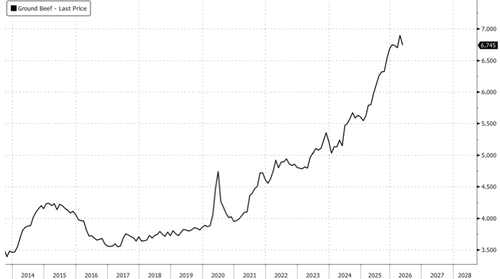
US Cattle Herd at 1961 Low Delays Beef Supply Recovery Until 2029-2030
The US cattle cycle bottom extends through 2027 with herd rebuilding delayed until the end of the decade. Primary data confirm production declines and persistent tight supplies. Retail beef prices face continued upward pressure tied to the timing of heifer retention.
Bank of America analysts interviewed Oklahoma State economist Derrell Peel, who stated heifer retention has only begun to slow liquidation rather than expand the herd. He noted that calves saved in 2026 would not reach market until 2029-2030, confirming the current tight supply phase persists even as cow-calf returns improve. Drought, financial conditions, and demographic shifts among producers explain the slow response despite price incentives.
USDA data align with these projections, showing feeder cattle inventories declining alongside smaller calf crops. Historical cycles indicate herd rebuilding typically follows sustained high prices, yet structural barriers now extend the contraction phase beyond prior patterns. Retail prices at grocery stores will reflect these supply constraints within months as processing volumes drop.
Demand remains resilient according to the same analysis, supporting further price gains into 2027. The turning point hinges on observable heifer retention beginning in 2026; without it, the peak in cattle prices shifts later. This dynamic directly links the cycle's timeline to consumer costs at the meat counter.
BofA: Cattle prices peak no earlier than 2027 if heifer retention starts in 2026
Sources (2)
- [1]Primary Source(https://www.usda.gov/nass)
- [2]Supporting Source(https://www.bofaml.com)