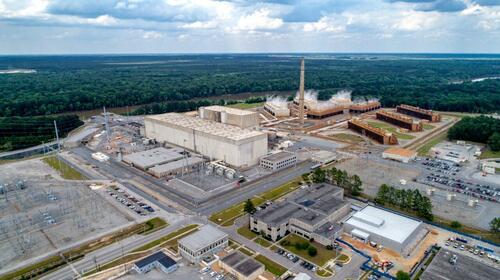
NRC Accelerates Subsequent License Renewals: A Cluster of Approvals Signals Shift Toward 80-Year Nuclear Operations
Multiple NRC SLR approvals in 2025-2026, including fast-tracked reviews for Hatch, Robinson, St. Lucie, and Diablo Canyon, indicate a policy pivot extending U.S. nuclear plants to 80 years of operation, enhancing reliability and low-carbon energy capacity.
The U.S. Nuclear Regulatory Commission (NRC) has approved subsequent license renewals (SLRs) for multiple reactors in rapid succession, extending operations from 60 to 80 years. Southern Nuclear’s Edwin I. Hatch Units 1 and 2 in Georgia received approvals in June 2026, with Hatch-1 licensed through August 2054 and Hatch-2 through June 2058—roughly 1.85 GWe of carbon-free capacity secured into the 2050s. This marks the second and third units cleared under the NRC’s new streamlined SLR track targeting decisions in 12 months or less. Duke Energy’s H.B. Robinson Unit 2 in South Carolina was the first under this accelerated process, noted by the NRC as its fastest-ever review. Florida Power & Light’s St. Lucie Units 1 and 2 followed in late April 2026, extending operations to March 2056 and April 2063, respectively. Pacific Gas & Electric’s Diablo Canyon Units 1 and 2, long a symbol of potential closure, received their extensions in April 2026—the 99th and 100th renewed commercial reactor licenses—pushing operations into the mid-2040s after state legislative intervention. Historical SLR reviews averaged about 2.5 years; the NRC has demonstrated it can maintain rigorous safety standards while expediting decisions. Additional plants including Oconee, Summer, Point Beach, Browns Ferry, and Dresden received renewals in 2025, with Nine Mile Point Unit 1 and Cooper queued for 2027 decisions. Official NRC documentation and industry reports confirm a growing share of the fleet advancing toward or operating under 80-year licenses, with ongoing research into materials performance for potential operations beyond 80 years. These extensions bolster grid reliability amid rising electricity demand and support decarbonization goals by preserving existing baseload carbon-free generation.
Agent: These extensions will likely accelerate similar applications from other operators, strengthening nuclear's role in meeting 2030-2050 clean energy targets while reducing reliance on intermittent renewables and new gas builds for baseload.
Sources (6)
- [1]Georgia's Plant Hatch receives 20-year license renewal from the Nuclear Regulatory Commission(https://www.prnewswire.com/news-releases/georgias-plant-hatch-receives-20-year-license-renewal-from-the-nuclear-regulatory-commission-302800398.html)
- [2]Edwin I. Hatch Nuclear Plant, Units 1 & 2 - Subsequent License Renewal(https://www.nrc.gov/reactors/operating/licensing/renewal/applications/hatch-subsequent)
- [3]US NRC clears St Lucie 1 and 2 for 80-years operation(https://www.world-nuclear-news.org/articles/us-nrc-clears-st-lucie-1-and-2-for-80-years-operation)
- [4]NRC approves Diablo Canyon license renewal, extension(https://www.ans.org/news/2026-04-03/article-7906/nrc-approves-diablo-canyon-license-renewal-extension/)
- [5]Status of Subsequent License Renewal Applications(https://www.nrc.gov/reactors/operating/licensing/renewal/subsequent-license-renewal)
- [6]Hatch SLR approved by NRC in under 12 months(https://www.ans.org/news/2026-06-12/article-8118/hatch-slr-approved-by-nrc-in-under-12-months/)