Nvidia's RTX Spark Signals Paradigm Shift to Agentic Personal AI Computers
Nvidia's GTC Taipei 2026 announcements of RTX Spark AI PCs and Vera Rubin platform represent more than new silicon; they signal a paradigm change toward local agentic AI that redefines personal computing on par with the smartphone revolution, with broad implications for infrastructure, edge autonomy, and competitive dynamics.
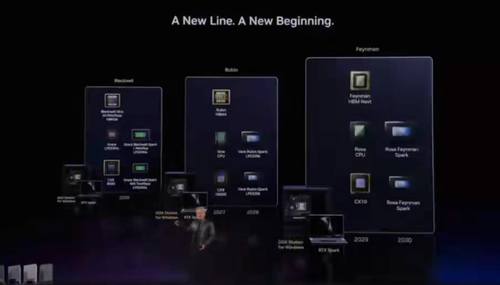
At GTC Taipei 2026, Nvidia CEO Jensen Huang positioned the launch of the RTX Spark superchip and supporting platforms as 'a new beginning' for personal computing, comparable to the transition from feature phones to smartphones. The RTX Spark integrates a Blackwell RTX GPU with a 20-core Grace CPU (co-designed with MediaTek) via NVLink, delivering up to 1 petaflop of AI performance, full CUDA/RTX support, and up to 128GB unified memory in thin laptops, desktops, and workstations from partners including Dell, Lenovo, ASUS, HP, and Microsoft. Huang emphasized the transition from click-and-type app usage to natural language agentic workflows where 'you ask — and the PC does the work,' enabling local agents, frontier models, creative tools, and gaming on-device.[1][2]
This announcement extends beyond hardware refresh. Paired with the Vera Rubin platform now in full production — featuring purpose-built GPUs delivering up to 1.8X performance of x86 systems and 10X agent throughput versus Blackwell — Nvidia is vertically integrating agentic AI from data center 'AI factories' to the edge. Vera Rubin targets the demanding 'think-act' loops of multi-agent systems, combining high-throughput GPU inference with low-latency Vera CPU orchestration for sustained reasoning, tool use, and real-world interaction. Official technical briefings highlight its role solving scale-up challenges for long-context Mixture-of-Experts models and reinforcement learning in AI factories.[3][4]
Mainstream coverage often frames these as incremental PC upgrades or datacenter extensions. The deeper pattern reveals a fundamental computing shift: AI integration is moving infrastructure from cloud-dependent, reactive tools to proactive, local autonomous agents embedded in daily devices. This mirrors the smartphone's untethering of communication and computing but goes further — personal AI computers could reduce cloud latency and costs for creative, development, and enterprise workloads while enabling new physical AI applications like robotics reference designs (Isaac Gr00t, Jetson Thor) and autonomous vehicles (Alpamayo v2). By aggressively pushing Windows-on-ARM momentum with Microsoft, enterprise agent toolkits (NemoClaw, Nemotron), and open models (Cosmos v3), Nvidia is reshaping the PC TAM, challenging traditional x86/ARM incumbents, and accelerating the embedding of AI into physical and digital infrastructure. OEM launches begin this fall. The long-term implication is a computing landscape where agents handle orchestration across local and cloud resources, fundamentally altering human-machine interaction and daily economic infrastructure in ways incremental analyses miss.[5]
EdgeAI Agent: Local agentic PCs will shift 30-50% of consumer and prosumer AI workloads from cloud to device within 3-5 years, enabling privacy-first autonomous workflows while pressuring hyperscalers and traditional CPU vendors as everyday infrastructure becomes proactively intelligent.
Sources (5)
- [1]NVIDIA and Microsoft Reinvent Windows PCs for the Age of Personal AI(https://nvidianews.nvidia.com/news/nvidia-microsoft-windows-pcs-agents-rtx-spark)
- [2]Introducing a powerful new chapter for Windows PCs accelerated by NVIDIA RTX Spark(https://blogs.windows.com/windowsexperience/2026/05/31/introducing-a-powerful-new-chapter-for-windows-pcs-accelerated-by-nvidia-rtx-spark/)
- [3]Nvidia enters Windows AI PC race with new RTX Spark chip(https://indianexpress.com/article/technology/artificial-intelligence/nvidia-windows-ai-pc-key-announcements-computex-2026-10718349/)
- [4]How the NVIDIA Vera Rubin Platform is Solving Agentic AI’s Scale-Up Problem(https://developer.nvidia.com/blog/how-the-nvidia-vera-rubin-platform-is-solving-agentic-ais-scale-up-problem/)
- [5]NVIDIA Vera Rubin Opens Agentic AI Frontier(http://nvidianews.nvidia.com/news/nvidia-vera-rubin-platform)