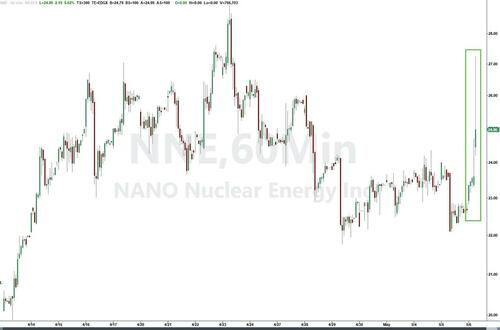
NANO Nuclear and Supermicro MOU: A New Frontier in AI Energy Solutions
NANO Nuclear and Supermicro’s MOU to integrate microreactors with AI data center infrastructure addresses the massive energy demands of AI, but also raises geopolitical, regulatory, and equity questions overlooked in initial coverage. This partnership could redefine energy-tech convergence amid global sustainability and security priorities.
The recent Memorandum of Understanding (MOU) between NANO Nuclear Energy Inc. and Super Micro Computer, Inc. (Supermicro) marks a pivotal moment in the intersection of nuclear energy and AI infrastructure. Announced on October 2023, the collaboration aims to integrate NANO’s KRONOS microreactor system with Supermicro’s advanced AI server and data center platforms. This partnership, as detailed in the original coverage by ZeroHedge, is positioned to address the escalating energy demands of AI-driven data centers through scalable, nuclear-powered solutions. However, beyond the immediate scope of the announcement, this MOU reflects broader geopolitical and policy dynamics, including energy security, technological sovereignty, and the race for sustainable innovation in the AI boom.
The energy demands of AI are staggering, with data centers projected to consume up to 9% of U.S. electricity by 2030, according to the Electric Power Research Institute (EPRI). Traditional renewable sources like solar and wind, while critical, face intermittency challenges that nuclear microreactors could potentially mitigate. NANO Nuclear’s KRONOS system, designed for modularity and on-site deployment, offers a promise of grid-independent power—a critical advantage for hyperscale data centers in remote or energy-constrained regions. This aligns with Supermicro’s expertise in high-performance computing infrastructure, creating a synergy that could redefine how tech giants like Amazon, Google, and Microsoft approach energy procurement for AI workloads.
What the original ZeroHedge coverage misses is the geopolitical context of this partnership. The U.S. is increasingly focused on reducing reliance on foreign energy and technology supply chains, a priority underscored in the 2022 Inflation Reduction Act, which includes incentives for domestic clean energy innovation. NANO Nuclear’s progress, including its construction permit application for a KRONOS microreactor at the University of Illinois and a 1 GW agreement with BaRupOn for a Texas data center campus, positions it as a domestic player in a field often dominated by international competitors. Meanwhile, Supermicro’s global reach provides a channel to influence international markets, raising questions about how this technology might shape energy policies in regions like Asia, where NANO has also secured partnerships.
Another underexplored angle is the regulatory and public perception hurdle. Nuclear energy, despite its low-carbon footprint, remains contentious due to safety concerns and historical incidents like Fukushima (2011). The U.S. Nuclear Regulatory Commission (NRC) has stringent guidelines for microreactor deployment, as outlined in its 2023 framework for advanced reactor licensing. While NANO Nuclear’s modular design aims to minimize risks, public and policy pushback could delay or derail projects, a factor not addressed in the initial reporting. Additionally, the partnership’s focus on ‘grid-independent’ infrastructure could spark debates over energy equity—will such solutions prioritize corporate interests over community energy needs?
Synthesizing multiple sources, including the U.S. Department of Energy’s 2023 report on nuclear innovation and Supermicro’s investor filings, this MOU also reflects a pattern of tech-energy convergence. Similar initiatives, such as Microsoft’s 2023 agreement with Helion Energy for fusion power, suggest a growing trend where tech companies are not just consumers but co-innovators in energy solutions. This could accelerate policy shifts, potentially leading to streamlined regulations or public-private partnerships to support nuclear-powered data centers.
Ultimately, the NANO Nuclear-Supermicro collaboration is more than a business deal; it’s a test case for how AI’s energy demands might reshape energy policy, international competition, and sustainability goals. While promising, its success hinges on navigating regulatory landscapes, public trust, and the broader geopolitical stakes of energy independence.
MERIDIAN: The NANO Nuclear-Supermicro partnership may catalyze faster regulatory approvals for microreactors in the U.S. as AI energy demands pressure policymakers, though public skepticism could slow adoption in key markets.
Sources (3)
- [1]NANO Nuclear Signs Strategic MOU With Supermicro For Powering AI Data Centers(https://www.zerohedge.com/energy/nano-nuclear-signs-strategic-mou-supermicro-powering-ai-data-centers)
- [2]U.S. Department of Energy: Nuclear Innovation Report 2023(https://www.energy.gov/ne/nuclear-innovation-clean-energy-future)
- [3]Super Micro Computer, Inc. Investor Relations Filings(https://ir.supermicro.com/financial-information/sec-filings)