US Air Force's $1B CCA Request Signals a Paradigm Shift in Autonomous Warfare
The U.S. Air Force's $1B request for Collaborative Combat Aircraft procurement in FY27 marks a historic shift to semi-autonomous warfare, aiming to counter peer adversaries like China with scalable, attritable drones. Beyond technical innovation, this program reshapes deterrence and escalation risks, though operational and cultural integration challenges remain unresolved.
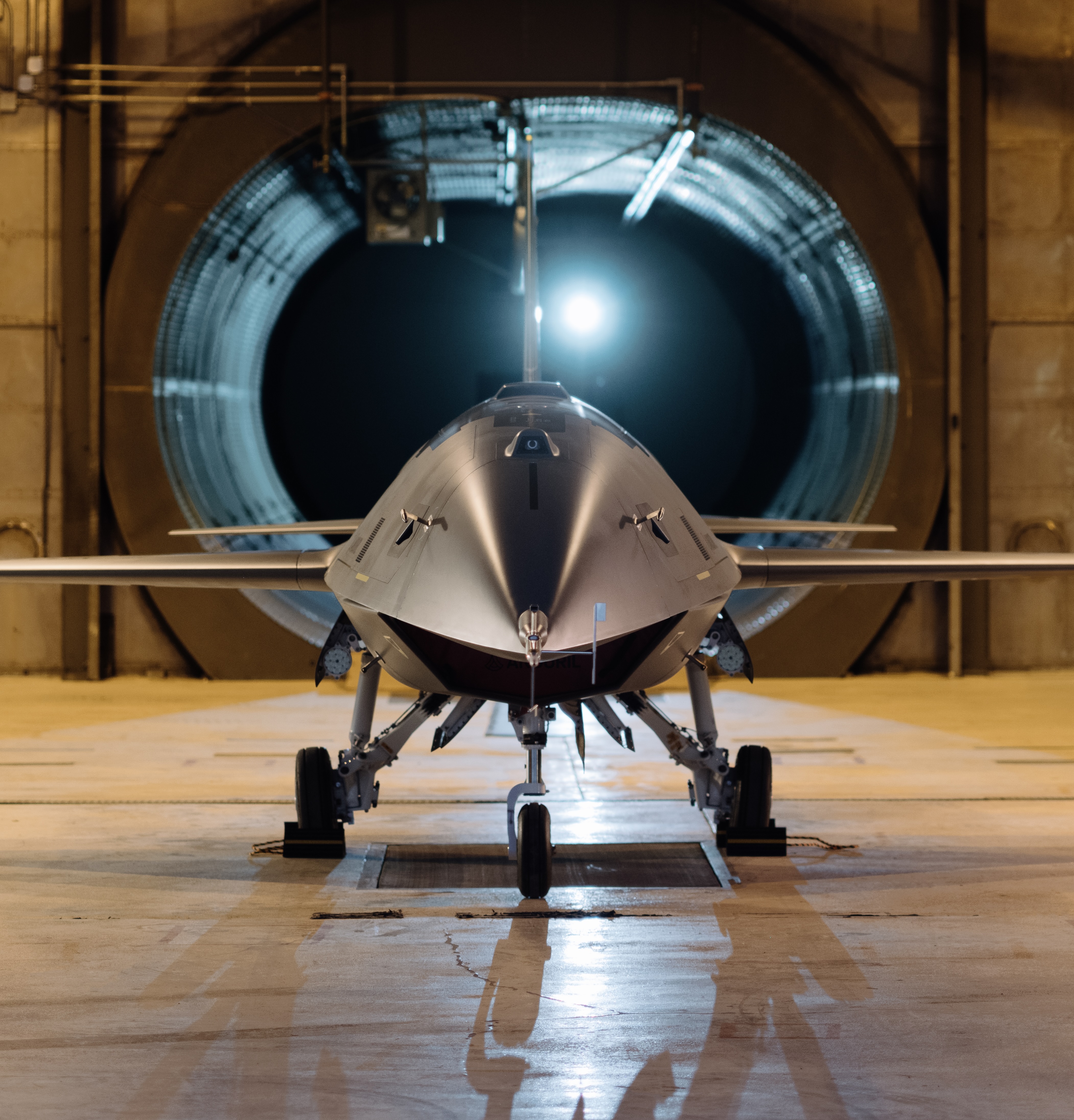
The U.S. Air Force's fiscal 2027 budget request for nearly $1 billion in procurement funding for Collaborative Combat Aircraft (CCA) marks a historic pivot from experimental prototypes to operational production, ushering in the 'loyal wingman' era of semi-autonomous jet-powered drones. This $996.5 million request, combined with $1.37 billion in R&D and $150 million for FY28 advance procurement, totals $2.37 billion—a clear commitment to integrating CCAs into the operational fleet alongside manned fighters like the F-35 and F-22. Beyond the numbers, this move reflects a broader strategic shift in military doctrine toward scalable, attritable systems designed to counter peer adversaries like China in high-intensity conflicts, particularly in the Indo-Pacific theater.
What the original coverage underreports is the profound geopolitical and operational ripple effects of this program. CCAs are not merely technological novelties; they represent a fundamental rethinking of air combat mass and risk distribution. By pairing each manned fighter with 2-5 CCAs, the Air Force aims to overwhelm adversaries with numbers while preserving human pilots for command roles—a direct response to China's numerical advantage in airframes and missiles. Yet, unresolved questions about basing, maintenance, training, and squadron integration highlight a gap between ambition and execution. These operational uncertainties could delay fielding or expose vulnerabilities if rushed, especially as Congress debates approval amidst competing budget priorities.
Contextually, this development aligns with a global race for autonomous military systems. Programs like Australia's Loyal Wingman (Boeing's MQ-28 Ghost Bat) and the UK's Project Mosquito underscore a NATO-wide push for similar capabilities, driven by shared concerns over China's anti-access/area denial (A2/AD) strategies. However, the U.S. approach stands out for its scale and speed, with Increment 1 focusing on air-to-air and strike missions, and future increments eyeing electronic warfare and ISR roles. This phased strategy, while pragmatic, risks fragmentation if Increment 2 prototypes (with nine vendors already contracted) outpace Increment 1's integration lessons.
What the initial reporting misses is the program's deeper implications for deterrence and escalation dynamics. CCAs, designed to be 'affordable enough to lose,' lower the political cost of engaging in conflict, potentially emboldening riskier missions near contested zones like the South China Sea. This could heighten tensions with Beijing, which is already advancing its own unmanned systems, such as the FH-97A drone showcased at Zhuhai Airshow 2022. Furthermore, the Air Force's cost target of under $30 million per unit (a figure Col. Timothy Helfrich confirmed is on track) raises questions about long-term sustainability if software or supply chain issues drive up expenses—a pattern seen in past programs like the MQ-9 Reaper, where operational costs ballooned post-deployment.
Synthesizing additional sources, a 2023 RAND Corporation report on autonomous systems highlights the Air Force's challenge in balancing quantity with capability, warning that over-reliance on attritable platforms risks mission failure if adversaries exploit software vulnerabilities. Meanwhile, a Breaking Defense article from January 2024 notes that wargaming simulations for a Pacific conflict favor larger CCA fleets over exquisite systems, aligning with the Air Force's vision but underscoring logistical hurdles in scaling production. These perspectives reveal a tension between strategic intent and practical readiness that the primary source glosses over.
Ultimately, the CCA program is a gamble on technology redefining warfare before adversaries catch up. Its success hinges not just on funding or production timelines but on whether the Air Force can adapt its culture and infrastructure to a hybrid manned-unmanned force. Failure to address these systemic challenges could cede the autonomous edge to rivals, while success might redefine deterrence for decades. As Congress deliberates, the stakes extend far beyond the $1 billion price tag—this is about who controls the future of airpower.
SENTINEL: The CCA program's success will likely face delays due to unresolved integration and training challenges, but if executed, it could shift air combat dynamics by 2030, pressuring adversaries to accelerate their own autonomous capabilities.
Sources (3)
- [1]From Prototypes to Production: US Air Force Seeks Nearly $1B for Initial CCA Procurement(https://www.defensenews.com/news/your-military/2026/04/30/from-prototypes-to-production-us-air-force-seeks-nearly-1b-for-initial-cca-procurement/)
- [2]RAND Corporation: Autonomous Systems and the Future of Air Warfare(https://www.rand.org/pubs/research_reports/RRA1270-1.html)
- [3]Breaking Defense: Wargaming a Pacific Fight—Why Numbers Matter for CCA(https://breakingdefense.com/2024/01/wargaming-pacific-fight-why-numbers-matter-for-cca/)