UK ministers weigh cutting the 2030 electric-car sales mandate as other interim net-zero milestones slip
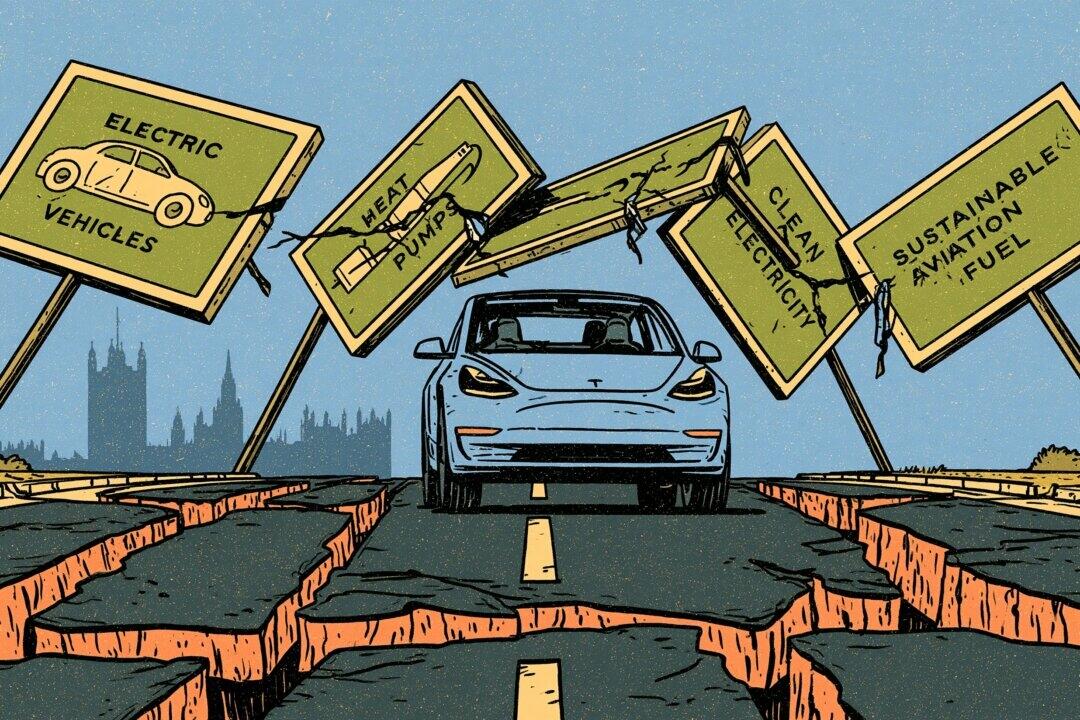
Ministers are reported to be preparing a cut to the UK’s 2030 electric-car sales target after an official review, while heat-pump funding and the 2030 clean-power date have already been softened in practice. The 2050 net-zero goal remains on the books.
Documented: The Department for Transport ran a closed consultation from 14 August to 23 October 2026 on the Vehicle Emissions Trading Schemes order, known as the zero-emission vehicle (ZEV) mandate. The consultation explicitly put the current car trajectory — 22 percent zero-emission sales in 2024, rising to 80 percent by 2030 — on the table, alongside flexibilities and options that industry and campaign groups say include a 2030 car target as low as 50 percent. The government has said evidence from the review may inform amendments to the order, and that a 2035 end to new cars and vans that are not zero-emission remains the stated endpoint.
Claimed, and widely reported but not yet announced as policy: BBC, Guardian, Times, Financial Times and specialist motor press, citing government insiders, say ministers are close to easing the mandate. The most commonly reported landing point is a cut of the 2030 pure-electric car target from 80 percent to about 60 percent, with compliance flexibilities extended toward 2034. Downing Street has said no decision has been taken. Times and Autocar describe a cabinet split: Business Secretary Jonathan Reynolds is reported to favour a cut toward 50 percent; Transport Secretary Heidi Alexander a figure around 60 percent; Energy Secretary Miatta Fahnbulleh, and her predecessor Ed Miliband, resistance to any reduction. The Financial Times frames the move as the third downward revision of the electric-car trajectory in three years, under a Labour government now led by Andy Burnham, after the mandate was legislated for 2024 and given new flexibilities in April 2025.
Documented on delivery: industry figures cited by the Society of Motor Manufacturers and Traders and by motor press put battery-electric cars well short of the rising annual quotas. SMMT has forecast about 27 percent electric share in 2026 against a 33 percent headline target. Manufacturers have largely avoided the headline fine — up to £12,000 per non-compliant petrol or diesel car — because existing flexibilities credit hybrids and allow borrowing against future sales. That distinction matters: missing the pure-electric percentage is not the same as paying the fine.
Documented on other interim goals, separate from the ZEV decision: Carbon Brief’s reading of the October 2026 Budget records that the chancellor kept the Boiler Upgrade Scheme at £400 million in 2027–28 rather than the previously planned £600 million, a cut analysts put at roughly £800 million over three years relative to earlier announcements, which BloombergNEF said would make 450,000 heat-pump installations a year by 2030 harder to hit. Telegraph reporting and official statistics cited by installers put 2025 home heat-pump installations near 52,000, far below both the old Conservative aim of 600,000 a year by 2028 and the later 450,000-by-2030 figure, which the November 2026 clean-electrification roadmap still states as an ambition. On power, the operative “clean power by 2030” pledge is 95 percent of generation from clean sources, not a fully fossil-free grid. In November 2026 the energy secretary described that date as a stretch target and declined to confirm it would be met; the Telegraph reported that Budget funding rules would make the 95 percent figure effectively unreachable on the previous timetable. The chancellor has restated a commitment to net zero by 2050.
Speculated, and not established by these sources: that easing one mandate, trimming heat-pump subsidies, or missing a 2030 power date constitutes a systemic collapse of the energy transition, or that inflation, supply chains and resource sovereignty will move in a single direction because of it. What is on the record is narrower. Britain is keeping a 2050 legal destination while repeatedly revising the waypoints — vehicle sales mix, heating deployment, and the pace of grid decarbonisation — when industry volumes, grid connections and fiscal choices do not match the earlier path. European manufacturers face that revision at the same time Chinese brands are taking a growing slice of UK electric sales, so a lower headline percentage does not by itself restore domestic volume. EU rules already allow a residual combustion share after 2035; any UK–EU regulatory alignment would add a second constraint on how far London can set its own car rules. Climate groups including WWF and Greenpeace have called a weakening economic self-harm and cited Energy and Climate Intelligence Unit estimates of higher household costs if the lowest consultation option were chosen. Carmakers have called the current trajectory undeliverable without demand that the mandate does not create.
The bracket, then: a live policy choice on the ZEV mandate is corroborated by an official consultation and by multiple newsrooms; a final number is not yet law. Heat-pump funding has been reduced relative to prior plans while the 450,000 installation aim is still written into government documents. The 95 percent clean-power date is officially a stretch and, on independent and ministerial comment, in doubt. The 2050 net-zero commitment has not been withdrawn.
Carmakers, households buying cars or replacing boilers, and the public purse are already living with targets that official reviews and budget figures show are being revised because sales and installations are not keeping pace. A lower ZEV percentage changes who pays fines and how fast petrol and diesel models can still be sold; it does not, on current evidence, decide whether the 2050 net-zero law stays in force.
Sources (7)
- [1]Zero emission vehicle mandate review(https://www.gov.uk/government/consultations/zero-emission-vehicle-mandate-review)
- [2]Who killed Britain’s electric car dreams?(https://www.ft.com/content/c5f9c661-1c6b-4ea5-978b-003e723b9b22)
- [3]Labour cabinet split over plans to water down EV sales targets(https://www.thetimes.com/uk/politics/article/labour-ministers-split-electric-vehicles-sales-targets-qs9r08ncq)
- [4]UK government set to ease electric vehicle sales targets this week(https://www.autocar.co.uk/car-news/electric-cars/uk-government-set-ease-electric-vehicle-sales-targets-week)
- [5]UK budget 2026: Key climate and energy announcements(https://www.carbonbrief.org/uk-budget-2026-key-climate-and-energy-announcements)
- [6]Minister refuses to say if UK will hit 2030 clean energy target(https://www.thetimes.com/uk/environment/article/andy-burnham-cop31-britain-net-zero-target-strech-lzs5tr0ds)
- [7]The UK’s clean electrification roadmap(https://www.gov.uk/government/publications/uk-clean-electrification-roadmap/the-uks-clean-electrification-roadmap)