The Moscow-Tehran Axis: Russia's Real-Time ISR and Cyber Lifeline Supercharges Iran's Strikes
Ukrainian intelligence reveals Russia is supplying Iran with real-time satellite imagery and cyber support for strikes on U.S. and allied targets across the Middle East. This institutionalized partnership, building on years of reciprocal military aid, signals a maturing axis of autocracies using proxy and hybrid tactics to stretch Western resources across multiple theaters, with dangerous implications for global energy security and long-term escalation management.
The Ukrainian intelligence assessment leaked this week lifts the veil on a level of direct Russian state support to Iran that goes far beyond the episodic arms transfers previously acknowledged. Between 21-31 March, Russian satellites conducted at least 24 detailed imaging passes over 46 military and critical infrastructure targets spanning 11 Middle Eastern countries. Ukrainian analysts document a repeatable kill chain: overhead collection, rapid data hand-off via a dedicated permanent communications channel (likely involving GRU personnel in Tehran), followed within days by precise Iranian ballistic-missile and drone strikes. The pattern is unmistakable and, crucially, reciprocal.
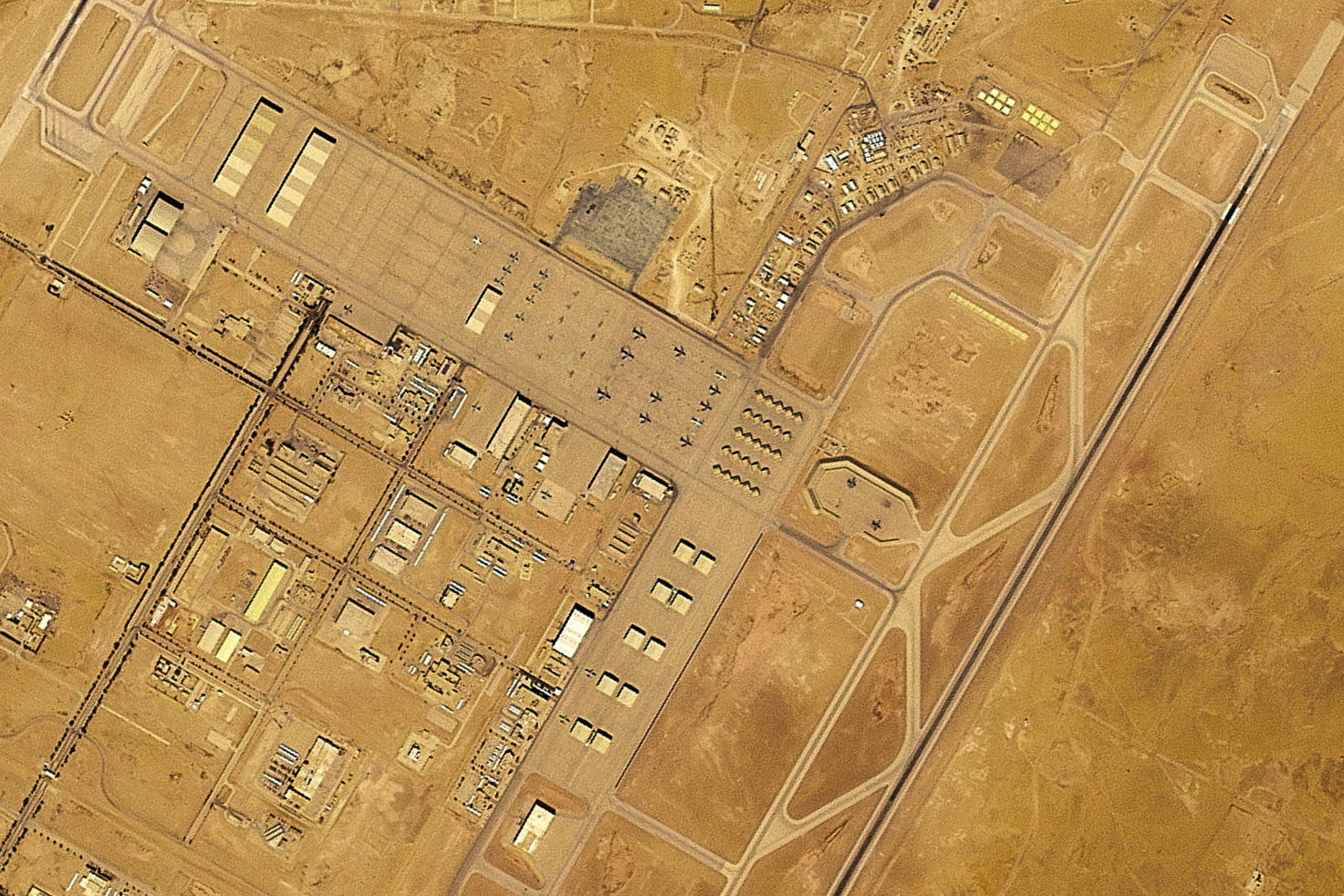
Original coverage correctly flags the Prince Sultan Air Base imaging pass that preceded the 27 March strike destroying a U.S. E-3 Sentry, and the post-strike battle-damage assessment orbit the next day. Yet it underplays the deeper institutionalization. This is not ad-hoc help; it is fused operational support built on four years of battlefield learning in Ukraine. Russia has transferred Iranian Shahed drone technology and received sanctions-evasion lifelines in return. The current exchange upgrades that relationship into full-spectrum intelligence sharing, including electro-optical, synthetic-aperture radar, and signals intelligence collected by the Lotos-S and Persona satellite constellations.
What mainstream reporting missed is the strategic diversion calculus. By giving Iran the ability to threaten U.S. and partner air defenses (evident in the repeated surveys of Saudi Arabia’s King Khalid Military City seeking THAAD batteries), Moscow forces Washington to disperse finite munitions, ISR platforms, and political bandwidth across two theaters. The surveys of the Strait of Hormuz are particularly ominous: they map chokepoint infrastructure for a potential “de facto blockade” that could spike global energy prices at the exact moment Europe is still weaning itself off Russian hydrocarbons.
Synthesizing the Ukrainian assessment with two additional bodies of evidence strengthens the conclusion. First, the Institute for the Study of War’s March 2026 update on the Russia-Iran “no-limits” partnership documented parallel GRU-Quds Force planning cells and the expansion of the permanent Moscow-Tehran fiber link established in 2024. Second, Mandiant’s 2025 report on APT44 (Sandworm) and APT42 (Iranian) task-sharing revealed overlapping infrastructure and malware toolkits used against European energy and transport targets, indicating cyber domain integration that complements the space-intelligence pipeline now visible over the Gulf.
This represents a maturation of proxy warfare doctrine. Russia is no longer merely a customer for Iranian drones; it has become the enabler that lets Tehran overcome its own limited indigenous ISR. The pattern mirrors Beijing’s incremental support to Moscow—dual-use components, limited munitions, and plausible deniability—suggesting an emerging authoritarian supply-chain ecosystem designed to exhaust Western defense industrial bases and political will simultaneously.
Western responses remain fragmented. Public dismissal by U.S. officials that the assistance is “insignificant” contradicts both the Ukrainian evidence and private assessments shared with Reuters by Western military sources. European leaders’ attempts to raise the issue at the G7 were met with silence, reflecting Washington’s fear of mission creep. Yet ignoring the fusion of Russian space assets, Iranian proxies, and joint cyber effects risks strategic surprise on a regional scale that could rapidly globalize.
The Ukraine assessment, therefore, is not simply an intelligence report on the Middle East theater. It is a warning that state actor alliances once thought to be marriages of convenience have hardened into operational joint ventures. The next logical vector—already hinted at in Russian satellite tasking patterns—is deeper coordination with Beijing over the Indo-Pacific. The scaffolding of simultaneous hybrid threats is being erected in plain sight.
SENTINEL: Russia's direct provision of satellite ISR and dedicated cyber channels to Iran cements a functional military-technical alliance that will allow both states to sustain simultaneous pressure on U.S. interests in Europe and the Middle East, increasing the probability of coordinated hybrid campaigns designed to fracture Western unity and accelerate global south realignment.
Sources (3)
- [1]Russia supplies Iran with cyber support, spy imagery to hone attacks, Ukraine says(https://www.defensenews.com/flashpoints/middle-east/2026/04/07/russia-supplies-iran-with-cyber-support-spy-imagery-to-hone-attacks-ukraine-says/)
- [2]Russia-Iran Partnership: No Limits?(https://www.understandingwar.org/backgrounder/russia-iran-military-cooperation-march-2026)
- [3]Mandiant M-Trends 2025: Iran-Russia Cyber Task Sharing(https://www.mandiant.com/resources/reports/m-trends-2025)