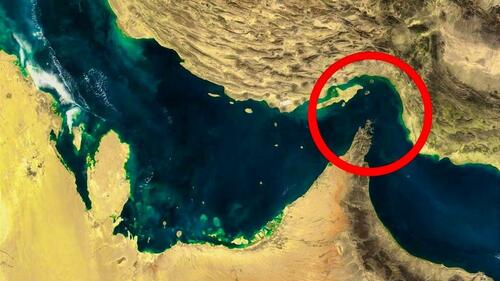
From Iranian Noose to Global Reckoning: How the Strait of Hormuz Became Tehran's Strategic Achilles' Heel
The 2026 Hormuz crisis has inverted Iran's strategic calculus: its key chokepoint now exposes military and economic frailties, risking preemptive conflicts and energy shocks as US independence neutralizes the regime's traditional deterrent.
In the shadow of the 2026 Strait of Hormuz crisis, Iran's long-touted geographic advantage has transformed into a profound strategic liability, exposing deep vulnerabilities in its military doctrine and economic model that mainstream analysis has often understated. Once a potent deterrent capable of disrupting nearly 20% of global seaborne oil and LNG flows, the narrow chokepoint now threatens to strangle the Iranian regime itself amid ongoing conflict with US and Israeli forces.
The mathematics of energy independence have fundamentally altered the balance of power. According to the US Energy Information Administration, American crude oil production reached a record 13.6 million barrels per day in 2025, with March 2026 exports hitting unprecedented levels of 5.2 million b/d for crude and 7.2 million b/d for products, establishing the US as a net petroleum exporter by nearly 2.8 million b/d. US LNG exports have similarly surged past global rivals. This self-sufficiency means Washington can frame its naval operations to 'clear the Strait' as a service to allies including China, rather than a vulnerability. Meanwhile, Iran's pre-crisis exports of around 1.7 million b/d—accounting for roughly 90% of its crude shipments, 25% of GDP, and 60% of government revenues—have collapsed by over 90% since the blockade and rerouting efforts began.
US intelligence assessments indicate Iran is unlikely to relinquish its chokehold soon, viewing the Strait as its primary remaining leverage and 'red line' in negotiations. Yet this posture reveals critical weaknesses: Iran's near-total dependence on a single export route and monopsonistic buyer (China, at steep discounts of $10-11 per barrel) contrasts sharply with the world's ability to offset 80% of volumes through alternative producers within weeks. Former US diplomats have explicitly described the Strait as having shifted 'from an Iranian asset to a liability,' a reality underscored by Iran's own economic indicators—40-50% inflation, massive capital flight, and a budget that funnels over half of oil revenues to the IRGC.
Going deeper, this reversal highlights overlooked fragilities in Iran's asymmetric military posture. Threats to mine or missile-strike the Strait, once credible insurance against regime change, now risk accelerating internal collapse faster than they inflict pain on adversaries. Hardliners pushing for transit fees or treating Hormuz like an 'atomic bomb' for deterrence may force preemptive allied strikes on Iranian naval and coastal assets to neutralize the threat before full closure triggers cascading global energy crises. The 2026 crisis, which saw shipments plummet and prices spike, demonstrates how such actions could invite exactly the decisive confrontations Tehran once hoped to deter. Missed connections include the IRGC's fiscal dependence potentially fueling factional rifts within the regime, and how prolonged disruption accelerates de-risking by Asian buyers, hastening diversification away from Persian Gulf chokepoints.
As rerouting, US production surges, and diplomatic pressure continue, Iran's 'noose' may ultimately hasten the very dismantlement of its bargaining power it sought to preserve. This episode fills gaps in geopolitical discourse by showing that in an era of American energy dominance, geographic leverage without economic resilience becomes self-defeating.
LIMINAL: Iran's exposed Hormuz dependency raises odds of preemptive US-led strikes on its military assets, potentially sparking broader energy market chaos while hastening a global shift from vulnerable fossil fuel chokepoints.
Sources (5)
- [1]U.S. crude oil production rose in 2025, setting new record(https://www.eia.gov/todayinenergy/detail.php?id=67404)
- [2]Exclusive: US intelligence warns Iran unlikely to ease Hormuz Strait chokehold soon, sources say(https://www.reuters.com/world/middle-east/us-intelligence-warns-iran-unlikely-ease-hormuz-strait-chokehold-soon-sources-2026-04-03/)
- [3]2026 Strait of Hormuz crisis(https://en.wikipedia.org/wiki/2026_Strait_of_Hormuz_crisis)
- [4]Strait of Hormuz - Iran and Oil(https://www.strausscenter.org/strait-of-hormuz-iran-and-oil/)
- [5]'Like relying on a drug dealer:' the world's dependence on Strait of Hormuz(https://www.cnn.com/2026/04/02/climate/strait-hormuz-chokepoint-clean-energy-oil-gas)