Ukrainian Drone Strike on Latvian Fuel Depot Exposes NATO's Anti-Drone Defense Gaps and Geopolitical Fault Lines
A Ukrainian drone strike on a Latvian fuel depot, diverted by Russian electronic warfare, led to the resignation of Latvia’s Defense Minister and exposed NATO’s inadequate anti-drone defenses. Beyond technical failures, the incident highlights geopolitical tensions, Russia’s hybrid warfare tactics, and the risk of alliance discord. NATO must urgently adapt to counter emerging cyber-enabled threats on its eastern flank.
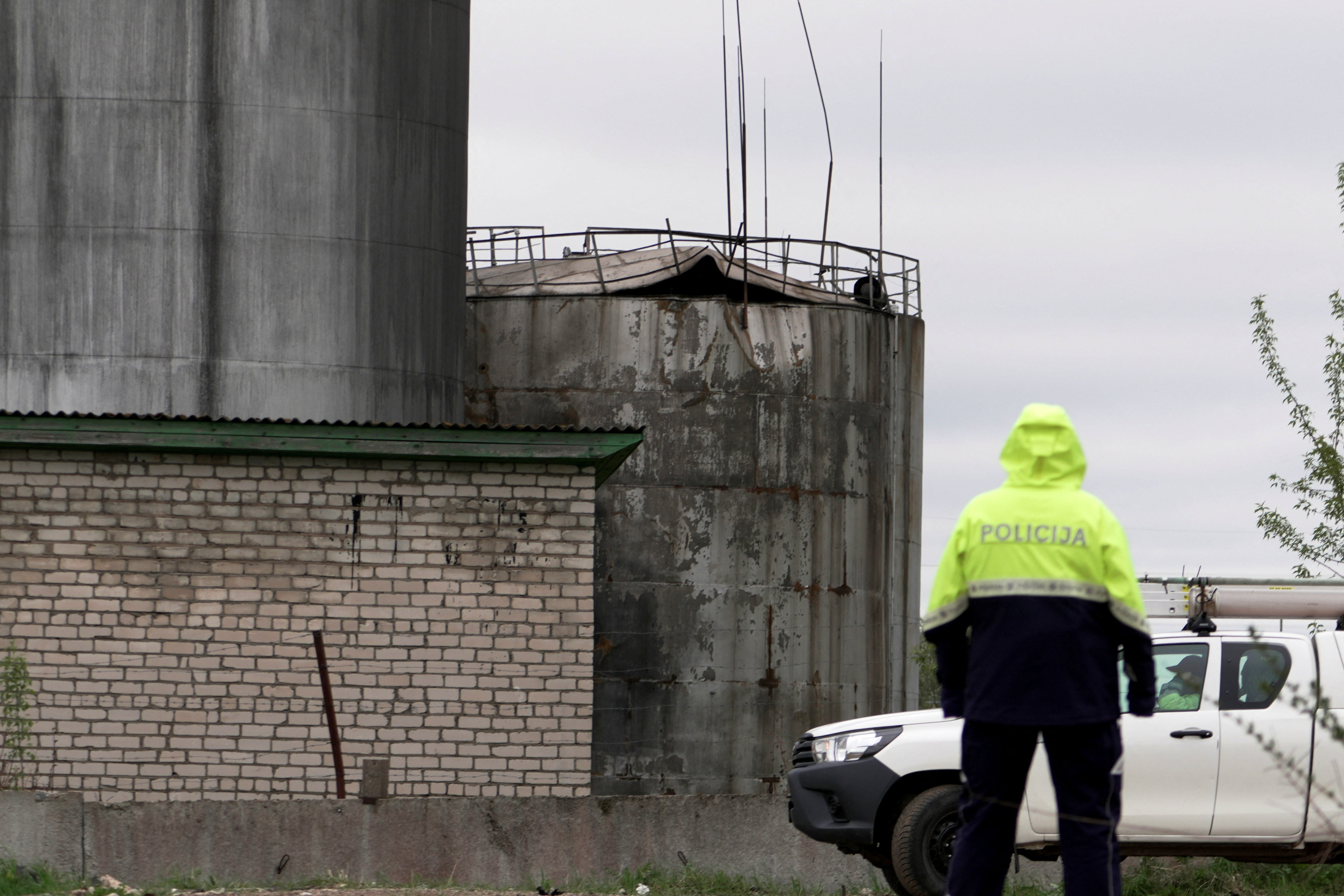
On May 7, 2026, two Ukrainian drones, reportedly diverted by Russian electronic warfare (EW), struck an empty fuel depot in Rezekne, Latvia, 40 kilometers from the Russian border. The incident, which damaged four oil storage tanks and triggered air raid alerts, led to the resignation of Latvia’s Defense Minister Andris Sprūds after Prime Minister Evika Siliņa cited a loss of public trust. While no casualties were reported, the strike—part of a pattern of Ukrainian drones veering into Baltic NATO territory—has exposed critical vulnerabilities in NATO’s air defense architecture, particularly against low-cost, cyber-enabled drone threats. Ukrainian Foreign Minister Andrii Sybiha confirmed the drones were theirs, blaming Russian EW for redirecting them from intended targets in Russia. This incident, coupled with earlier drone crashes in the Baltic states, underscores a dangerous new frontier in hybrid warfare where electronic manipulation can turn allied weapons against friendly territory.
Beyond the immediate damage, this event reveals deeper systemic issues. First, NATO’s eastern flank, despite its strategic importance, lacks robust anti-drone defenses tailored to counter small, commercially derived unmanned aerial systems (UAS). While traditional air defenses like Patriot systems or NATO’s Baltic Air Policing mission (which scrambled French jets during the incident) are designed for larger threats, they struggle with the precision required to neutralize small drones without risking civilian collateral damage—a concern Latvian officials initially cited for not shooting down the drones. Second, the incident validates long-standing warnings about Russia’s advanced EW capabilities, which can spoof GPS signals and redirect drones, as detailed in a 2023 report by the Center for Strategic and International Studies (CSIS). Moscow’s ability to weaponize Ukrainian assets against NATO allies introduces a destabilizing asymmetry, turning a conflict ostensibly confined to Ukraine into a direct challenge to alliance cohesion.
What the original coverage misses is the broader geopolitical ripple effect. This is not merely a technical failure but a test of NATO’s resolve and unity. Latvia and Lithuania’s joint call for enhanced regional air defenses signals growing frustration among frontline states with the alliance’s slow adaptation to hybrid threats. The resignation of Sprūds, while framed as a domestic accountability measure, may also reflect internal pressures within NATO to demonstrate decisiveness—yet replacing him with Col. Raivis Melnis, a military figure, risks militarizing political responses to what is fundamentally a technological and diplomatic challenge. Furthermore, the incident amplifies the risk of miscalculation; a diverted drone causing casualties could escalate tensions, forcing NATO into a direct confrontation with Russia over an attack not of Moscow’s direct making but of its manipulation.
Historical patterns provide context. Russia’s use of EW to disrupt NATO operations dates back to at least 2014, when GPS jamming was reported during exercises in Norway, as documented by the Norwegian Intelligence Service. More recently, a 2025 incident involving a Ukrainian drone crashing near a Polish military base—also attributed to Russian interference—foreshadowed the Latvian strike. These events suggest a deliberate Russian strategy to exploit technological asymmetries, sowing discord among NATO members while avoiding direct kinetic aggression that would trigger Article 5.
The original Defense News report also underplays Ukraine’s role. While it frames the drones as victims of Russian EW, it glosses over Kyiv’s responsibility to refine targeting and navigation systems to minimize collateral risks, especially given the Baltic states’ vocal support for Ukraine. This incident could strain relations between Kyiv and its staunchest allies if such mishaps persist, particularly as public opinion in frontline states grapples with the tangible risks of supporting Ukraine’s war effort.
Looking forward, NATO must prioritize anti-drone technologies—such as radio-frequency jammers and laser-based interceptors—and integrate them into a layered defense strategy for its eastern flank. Equally critical is a coordinated alliance-wide policy on EW countermeasures to neutralize Russian interference. Without these, NATO risks ceding the initiative in a domain where low-cost tools wield outsized strategic impact. The Latvian strike is a wake-up call: hybrid warfare is no longer theoretical but a live threat to alliance security.
SENTINEL: If NATO fails to deploy specialized anti-drone systems on its eastern flank within the next 12 months, expect further incidents of diverted Ukrainian drones, potentially escalating tensions with frontline states and testing alliance unity.
Sources (3)
- [1]Ukrainian Drone Strike on Empty Baltic Fuel Depot Prompts Top-Level Resignation in Latvia(https://www.defensenews.com/global/europe/2026/05/11/ukrainian-drone-strike-on-empty-baltic-fuel-depot-prompts-top-level-resignation-in-latvia/)
- [2]Russia’s Electronic Warfare Capabilities: A Growing Threat to NATO(https://www.csis.org/analysis/russias-electronic-warfare-capabilities-growing-threat-nato)
- [3]Norwegian Intelligence Service Annual Report on Russian GPS Jamming(https://www.forsvaret.no/en/organisation/norwegian-intelligence-service)