Bypass Pipelines at Capacity: Signals of Strain in Global Oil Infrastructure Amid Hormuz Disruptions
Record utilization of Saudi and UAE Hormuz bypass pipelines reveals vulnerabilities in global oil infrastructure, with implications for supply chains and energy prices, drawing from primary flow data and historical context while highlighting perspectives from producers, importers, and analysts.
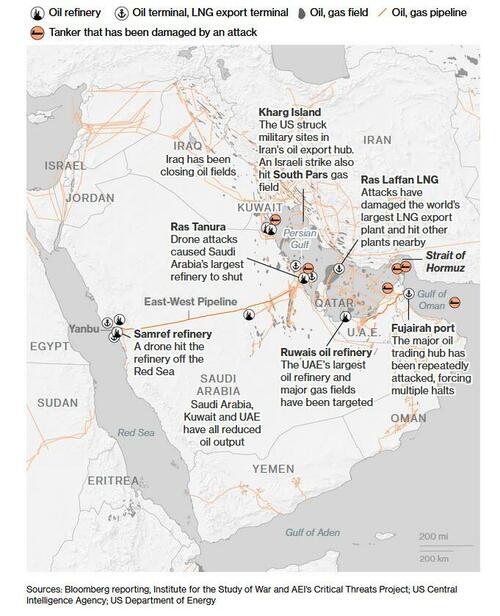
Recent data indicates that Saudi Arabia's East-West Pipeline, also known as the Abqaiq-Yanbu system, has reached its operational ceiling of 7 million barrels per day, while UAE exports through Fujairah have climbed to approximately 1.9 million barrels per day. This surge reflects contingency measures activated in response to heightened risks in the Strait of Hormuz. Primary reporting from Bloomberg, based on industry sources, documents these flows, showing crude exports via Yanbu at 5 million barrels daily alongside 700,000-900,000 barrels of refined products. Official Saudi energy flow statistics, as referenced in Aramco operational updates from prior contingency planning documents dating to the 1980s, confirm the pipeline's design capacity established during the Iran-Iraq War to mitigate tanker vulnerabilities.
The original ZeroHedge coverage accurately notes the rapid ramp-up but understates the broader infrastructural trade-offs and historical patterns of repeated Hormuz threats. It frames the bypass as a near-complete offset, yet IEA primary assessments on oil chokepoints (World Energy Outlook 2022) highlight that such pipelines address only a fraction of the roughly 21 million barrels per day historically transiting Hormuz, per U.S. Energy Information Administration maritime flow data. What the initial reporting missed is the increased operational costs and maintenance strain on aging infrastructure, alongside the redirection of lower-API gravity crudes that require specific refinery configurations in Asia and Europe.
Synthesizing perspectives, Saudi and UAE officials, via ADNOC and Aramco statements, emphasize successful diversification and supply continuity as a demonstration of energy security foresight. In contrast, Iranian government communications through state media have characterized these routes as temporary and vulnerable to further escalation, pointing to recent incidents at Fujairah facilities. Market analysts from the International Energy Agency note potential price volatility, while consumer nations like China and India, per their respective customs data on imports, face reliability concerns given their heavy reliance on Gulf supplies. The coverage also overlooks emerging Red Sea risks from Houthi activities, documented in UN Maritime reports on Bab el-Mandeb incidents, creating a secondary chokepoint that could compound global strain.
This situation connects to prior events, including the 2019 drone attacks on Abqaiq and the 1980s Tanker War, revealing a pattern where infrastructure bypasses provide short-term relief but expose systemic dependencies. Multiple viewpoints emerge: producers stress resilience, importers prioritize price stability, and policy experts call for accelerated transition strategies. These flows underscore severe strain on export systems, with direct effects on crude supply reliability and upward pressure on benchmark prices like Brent.
MERIDIAN: For ordinary people this means potentially higher gasoline and heating costs in the months ahead if alternative routes remain maxed out, while global supply reliability could face ongoing tests from regional tensions affecting everyday energy access.
Sources (3)
- [1]Hormuz Bypasses Maxed Out: Saudi East-West Pipeline Hits Record 7 MMb/d(https://www.zerohedge.com/energy/hormuz-bypasses-maxed-out-saudi-east-west-pipeline-hits-record-7-mmbd-uae-fujairah-crude)
- [2]Saudi Oil Flows Surge as It Avoids Strait of Hormuz(https://www.bloomberg.com/news/articles/2024-03-20/saudi-oil-flows-surge-as-it-avoids-strait-of-hormuz)
- [3]World Energy Outlook 2022 - Oil Security and Chokepoints(https://www.iea.org/reports/world-energy-outlook-2022)