US 'One Somalia' Policy Reaffirmation Delivers Setback to Israel's Red Sea Strategy in Somaliland
The US State Department's June 2026 report reaffirming Somali sovereignty over Somaliland undermines Israel's historic 2025 recognition and Red Sea basing ambitions, highlighting tensions between strategic anti-Iran goals and traditional African unity policies with limited mainstream attention to the alliance and stability implications.
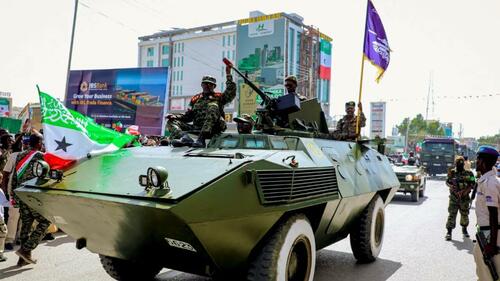
In a development with significant implications for Middle East-Africa security architecture, the US State Department has formally reaffirmed Somalia's sovereignty over Somaliland in a June 2026 report to Congress. This stance effectively maintains the long-standing 'One Somalia' policy, disappointing Somaliland advocates and delivering an indirect blow to Israel's unprecedented recognition of the breakaway region just six months earlier. While mainstream coverage has treated the report as routine bureaucracy, the move represents a notable geopolitical pivot: Washington appears unwilling to follow Israel's lead in the Horn of Africa despite shared interests in countering Iranian-backed Houthis and securing Red Sea shipping lanes. Israel became the first UN member state to recognize Somaliland on December 26, 2025, following a secret visit by Somaliland's president to Jerusalem and subsequent high-level engagements involving Mossad and Israeli diplomats. The mutual recognition included Somaliland acknowledging Jerusalem as Israel's capital and opened discussions on Israeli access to the strategic port of Berbera. Analysts note this fits Israel's broader effort to reestablish a Red Sea foothold lost after relations with Eritrea deteriorated, specifically to monitor and counter Houthi threats and Iranian influence. Reports indicate Israel has eyed military basing rights in Berbera as part of this arrangement. The US report, however, explicitly states that Somaliland falls within the Federal Republic of Somalia while expressing interest only in enhanced engagement 'within that framework.' Congressional efforts, including provisions in the FY2026 National Defense Authorization Act and the Republic of Somaliland Independence Act, had raised hopes in Hargeisa for closer ties or even recognition under the Trump administration. Yet sources close to the process indicate no appetite in the executive branch for upending the status quo, with Trump previously expressing deep skepticism toward Somalia and Somali-American political figures. This hesitation persists despite lobbying by former Trump officials and despite Somaliland's relative stability, democratic governance, and alignment with Abraham Accords partners like the UAE, which maintains strong ties to the region. The decision carries underappreciated ripple effects across the Horn of Africa. Somalia, backed by the African Union, Arab League, EU, and regional powers like Egypt and Turkey, has vehemently rejected Israel's move as a violation of its territorial integrity. Ethiopia's own memoranda with Somaliland have already strained Mogadishu-Addis ties; US reinforcement of Somali unity may embolden Mogadishu while leaving Somaliland more dependent on Gulf patrons. For Israel, the lack of US backing limits operationalizing its recognition into durable security infrastructure, potentially exposing its Red Sea strategy to greater risk amid Houthi disruptions. Connections often missed in coverage include the interplay with UAE-Ethiopia-Somaliland port and military deals, competition with Chinese and Russian influence in the Horn, and how this fits Trump's transactional Africa policy that prioritizes the 'whole cake' of Somali engagement over partial recognition. Somaliland officials have expressed frustration, rejecting the report's framing, while pro-Israel voices who attended Somaliland's independence celebrations in May 2026 continue advocating for broader recognition from Ethiopia, India, Cyprus, and Georgia. Ultimately, the US position underscores the enduring inertia of African Union norms against secession even when strategic opportunities arise, forcing Israel and its partners to navigate a more isolated path in a volatile region.
LIMINAL: US prioritization of Somali territorial integrity over Israeli strategic gains will likely push Somaliland deeper into UAE and Gulf alignment, fragment Horn of Africa diplomacy further, and constrain Israel's anti-Houthi options in the Red Sea without broader Western buy-in.
Sources (6)
- [1]US reaffirms Somali sovereignty in blow to Somaliland and Israel(https://www.middleeasteye.net/news/us-reaffirms-somali-sovereignty-blow-somaliland-and-israel)
- [2]‘Bureaucratic’ US State Department report disappoints Somaliland advocates(https://www.theafricareport.com/420650/bureaucratic-us-state-department-report-disappoints-somaliland-advocates/)
- [3]The Recognition Question: Somaliland, Israeli Security Geometry and the Red Sea Power Struggle(https://warontherocks.com/the-recognition-question-somaliland-israeli-security-geometry-and-the-red-sea-power-struggle/)
- [4]Israel Becomes the First Nation to Recognize Somaliland(https://www.nytimes.com/2025/12/26/world/middleeast/israel-recognize-somaliland.html)
- [5]After Israel's recognition of Somaliland, what comes next?(https://www.atlanticcouncil.org/blogs/menasource/after-israels-recognition-of-somaliland-what-comes-next/)
- [6]Recognizing Somaliland: Israel's Return to the Red Sea(https://www.washingtoninstitute.org/policy-analysis/recognizing-somaliland-israels-return-red-sea)