From Open Roads to Digital Enclosures: How Vehicle Surveillance Systems Signal the Fusion of Finance, Mobility, and Technological Control
Mainstream mandates for in-car biometric monitoring (NYPost, KBB) are corroborated alongside real data-sharing with insurers (NYT) and state VMT reduction policies (MA legislature/NBC). These form a deeper system of digital enclosure linking mobility control to financial scoring and climate governance, transforming vehicles from tools of independence into surveillance nodes.
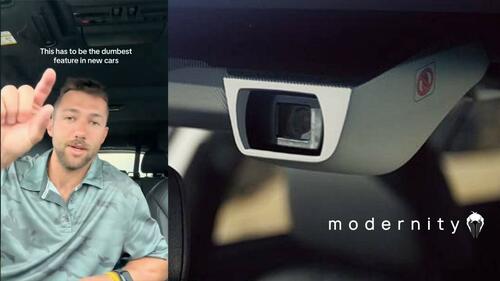
The American car, long a symbol of personal freedom and autonomy, is undergoing a profound transformation into what critics describe as an always-on surveillance pod. Recent deployments of advanced driver monitoring systems (DMS), such as Subaru's upgraded EyeSight suite in 2026 models, illustrate this shift. Drivers have reported the system issuing alerts and activating Emergency Stop Assist—with Safe Lane Selection—for momentary glances away from the road, automatically braking, steering to the shoulder, and engaging hazard lights if the driver is deemed 'unresponsive.' While marketed purely as a safety feature, this technology aligns with broader federal mandates and raises profound questions about control, data ownership, and behavioral modification.[1][2]
At the policy level, Section 24220 of the 2021 Infrastructure Investment and Jobs Act directs the National Highway Traffic Safety Administration (NHTSA) to establish standards for 'advanced impaired driving prevention technology' in all new passenger vehicles. Though implementation deadlines have slipped beyond the initial 2027 target due to technical and accuracy challenges, the framework mandates passive monitoring via infrared cameras, sensors tracking eye movement, head position, and biometrics to detect impairment, drowsiness, or distraction—with the capability to prevent vehicle operation. Mainstream reporting has highlighted the 'sinister' privacy implications, including constant facial and behavioral scanning that could extend far beyond drunk driving prevention.[3][4][5]
What standard reporting often misses is the deeper architecture of 'digital enclosure' emerging at the intersection of finance, mobility, and governance. Automakers are already sharing granular driving behavior data—harsh braking, acceleration, speed patterns—with data brokers like LexisNexis, which generate risk profiles sold to insurers. This creates de facto financial surveillance where your car's interior cameras and telematics feed directly into premium calculations, effectively monetizing compliance while punishing deviations. Consumer advocates warn this data rarely stays confined to safety functions; it flows to third parties, potentially influencing lending, employment screenings, or law enforcement access.[6][7]
Simultaneously, state-level climate policies are aligning with this technological infrastructure. In Massachusetts, Senate Bill 2246 ('Freedom to Move Act') directs the Department of Transportation to establish binding targets for reducing statewide vehicle miles traveled (VMT) to meet emissions goals. While not yet imposing individual odometer caps, such mandates create pressure for enforcement mechanisms. Always-on vehicle sensors capable of monitoring attention, route patterns, and usage could evolve into tools for 'smart' mobility rationing—linking your biometric compliance to carbon allowances or geofenced restrictions in ways that blend safety theater with behavioral governance.[8][9]
This pattern reveals technological authoritarianism not as overt dystopia but as incremental 'safety' upgrades that erode the car's role as a private space. What begins as emergency stopping assistance or impairment detection becomes infrastructure for total visibility: insurers scoring your life, governments tracking aggregate movement, and systems overriding human judgment. The Subaru complaints—beeps and vibrations for glancing at scenery or changing music—serve as an early preview of normalized nanny-state intervention. As these systems achieve mandatory status, personal mobility risks becoming conditional permission within a networked enclosure where finance, data brokers, and climate bureaucracies converge. The real horizon is not merely safer cars, but cars as nodes in a control grid that redefines freedom as monitored compliance.
Liminal Observer: Vehicle DMS mandates will normalize biometric data pipelines that fuse insurance pricing, government climate targets, and real-time behavioral overrides, turning personal mobility into conditionally granted access within a totalizing digital control layer.
Sources (5)
- [1]Sinister in-car spy tech that can kill your engine will be mandatory next year under Biden policy(https://nypost.com/2026/04/30/us-news/sinister-in-car-spy-tech-that-can-kill-your-engine-mandatory-next-year-under-biden-policy-sparking-major-privacy-fears/)
- [2]NHTSA's New 'Kill Switch' Law Approaches Key Deadline(https://www.kbb.com/car-news/nhtsas-new-kill-switch-law-approaches-key-deadline/)
- [3]Automakers Are Sharing Consumers’ Driving Behavior With Insurance Companies(https://www.nytimes.com/2024/03/11/technology/carmakers-driver-tracking-insurance.html)
- [4]Massachusetts moves to limit miles people can drive because of climate change(https://www.cbtnews.com/massachusetts-limits-driving-mileage-citing-climate-change/)
- [5]How Subaru's Emergency Stop Assist Could Save Your Life(https://www.hananiasubaru.com/blogs/8285/how-subarus-emergency-stop-assist-could-save-your-life-on-busy-roads-in-2026-outback)
Corrections (1)
Subaru's upgraded EyeSight suite is deployed in 2026 models and includes Emergency Stop Assist with Safe Lane Selection that activates for momentary glances away from the road by automatically braking, steering to the shoulder, and engaging hazard lights
Official Subaru press release confirms upgraded EyeSight debuts on 2026 Outback (and latest-gen on all 2026 Outbacks) with Emergency Stop Assist with Safe Lane Selection. It activates for driver unresponsiveness (after alerts) while using adaptive cruise control: slows vehicle, steers to shoulder when possible, stops, activates hazards, notifies services. Trigger is not 'momentary glances away' (those prompt warnings via DriverFocus).