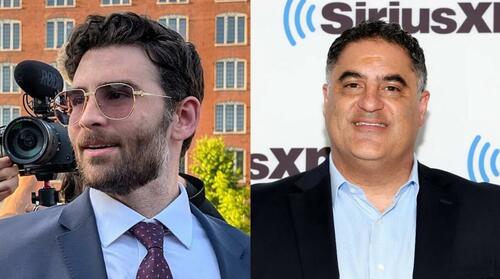
UK Ban on Israel Critics Cenk Uygur and Hasan Piker Reveals Western Free Speech Limits Shaped by Geopolitical Priorities
The UK's barring of Cenk Uygur and Hasan Piker for Israel criticism, confirmed across major outlets, exemplifies how Western governments equate certain geopolitical dissent with threats to public order. This reflects deeper patterns of censorship linked to pro-Israel lobbying and foreign policy alignment, often downplayed by mainstream narratives that emphasize antisemitism concerns over free speech erosion.
The United Kingdom's decision to bar prominent American commentators Cenk Uygur and his nephew Hasan Piker from entry highlights a growing pattern where criticism of Israel is treated as a threat to public order, revealing how geopolitical alliances increasingly override liberal commitments to free expression. According to multiple reports, the UK Home Office revoked the pair's Electronic Travel Authorisations (ETAs), citing that their presence 'may not be conducive to the public good.' Uygur, founder of The Young Turks, and Piker, a popular political streamer, were scheduled to speak at SXSW London and Oxford University events, including potential meetings with former Labour leader Jeremy Corbyn and Green Party leader Zack Polanski.[1][2]
Uygur stated he was deemed 'a serious risk to the public order' specifically for claiming Israel influences the US government through donations to a vast majority of Congress—a statement he maintains is factual though authorities labeled it antisemitic. Both men directly attributed the bans to their vocal opposition to Israel's actions in Gaza, which they describe as genocidal, with Piker claiming it occurred 'at the behest of Israel.' Corbyn condemned the move as 'an attack on the freedom to criticise Israel, as well as the UK government’s own complicity in genocide,' framing it within Britain's broader crackdown on pro-Palestine activism, including the proscription of Palestine Action as a terrorist organization.[3]
This incident fits a deeper, underreported pattern across Western nations where the IHRA working definition of antisemitism— which includes certain criticisms of Israel—has been institutionalized, blurring lines between protected speech and prohibited hate. Mainstream coverage often frames such bans through the lens of combating antisemitism, yet downplays how pro-Israel lobbying and shared geopolitical interests (arms deals, intelligence cooperation, and regional strategy) drive policy. Similar dynamics appear in Germany's near-total crackdown on BDS campaigns, France's restrictions on pro-Palestine protests, and US campus legislation equating anti-Zionism with discrimination. What others miss is the transatlantic coordination: these are not isolated overreaches but signals of a managed consensus where challenging a key ally's actions threatens the stability of the post-1945 liberal order itself.
The UK context is particularly stark following Jeremy Corbyn's own expulsion from Labour over 'antisemitism' allegations tied to Israel criticism, and ongoing detentions related to Palestine protests. By labeling factual discussions of campaign finance influence (AIPAC's well-documented role in US politics) as beyond the pale, authorities reveal a selective enforcement that prioritizes narrative control over open debate. As Western governments face declining public support for unconditional Israel backing—polls cited across outlets show majority criticism in the US and Europe—this censorship risks accelerating public disillusionment with institutions claiming to defend democracy while outsourcing speech boundaries to foreign policy imperatives.[4]
The episode underscores a uncomfortable convergence: liberal states adopting illiberal tools to shield strategic partnerships, suggesting that 'public order' increasingly means alignment with elite consensus on geopolitics rather than preventing actual violence. Without broader scrutiny, such precedents could normalize barring not just fringe voices but any prominent dissenters on sensitive foreign policy matters.
LIMINAL: This ban marks an acceleration in Western governments treating criticism of Israel as a national security/public order issue, likely leading to expanded no-fly lists, de-banking, and platform restrictions for high-profile dissenters as geopolitical pressures from lobbying and alliances intensify.
Sources (5)
- [1]Free speech activists condemn UK entry ban for Hasan Piker and Cenk Uygur(https://www.theguardian.com/media/2026/jun/01/us-political-commentators-say-banned-entering-uk-cenk-uygur-hasan-piker)
- [2]Political commentators Cenk, Piker say UK bars them over Israel remarks(https://www.aljazeera.com/news/2026/6/1/political-commentators-cenk-piker-say-uk-bars-them-over-israel-remarks)
- [3]Britain Denies Entry to Hasan Piker and Cenk Uygur(https://www.nytimes.com/2026/06/01/world/europe/uk-hasan-piker-cenk-uygur-visa-israel.html)
- [4]U.K. Blocks Hasan Piker And Cenk Uygur—Both Blame On Israel Criticism(https://www.forbes.com/sites/conormurray/2026/06/01/left-wing-pundits-piker-and-uygur-blocked-from-entering-uk/)
- [5]Hasan Piker, Cenk Uygur Barred From Attending SXSW London by U.K. Home Office(https://variety.com/2026/digital/global/hasan-piker-cenk-uygur-banned-uk-sxsw-london-1236763721/)