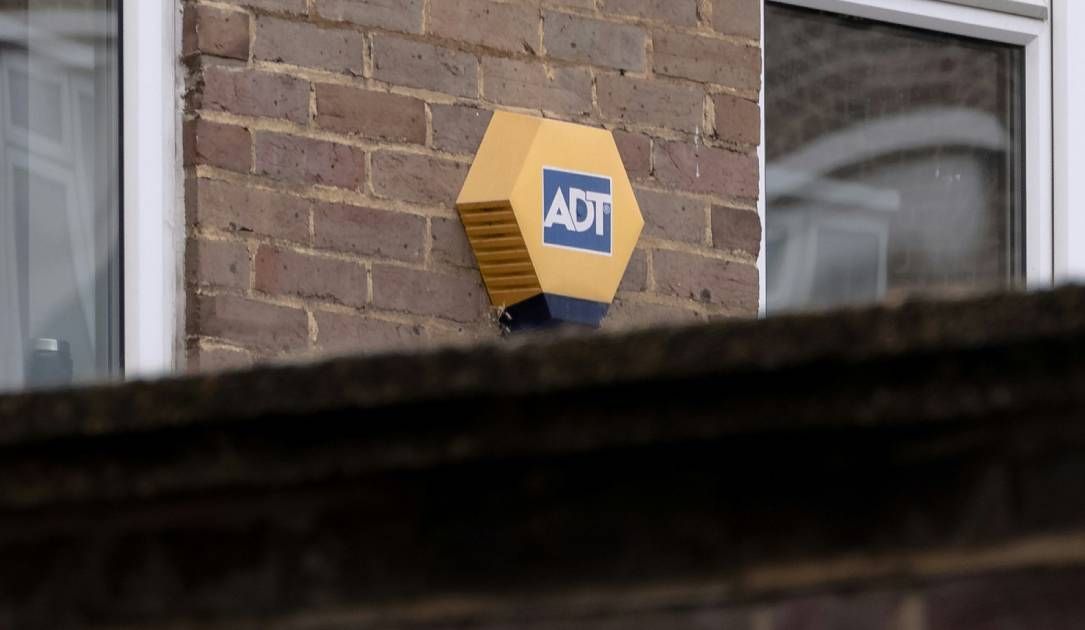
ADT Breach Exposes Cyber-Physical Convergence: How Stolen Customer Data Creates Direct Home Invasion Risks
Analysis of ADT breach reveals under-reported physical risks to homeowners from stolen address and PII data, highlighting dangerous cyber-physical convergence in residential security infrastructure with implications beyond standard identity theft.
ADT's admission that cybercriminals stole names, addresses, phone numbers, dates of birth, and partial Social Security numbers from millions of current and prospective customers represents far more than a routine data breach. While the company's statement — echoed in coverage by The Record — emphasizes that 'customer security systems were not affected,' this framing fundamentally misses the hybrid threat landscape now confronting homeowners. The convergence of cyber intrusion with physical safety risks at America's largest residential security provider creates a dangerous new attack surface that traditional breach reporting has largely ignored.
The stolen dataset is particularly toxic because it maps directly to physical locations. Burglars have long used public records and data leaks to target high-value homes; combining that with confirmed ADT customer lists allows adversaries to prioritize properties, understand installed system types through social engineering, and even impersonate owners using partial SSNs and DOBs to potentially bypass monitoring protocols. This is not hypothetical. Previous incidents involving compromised smart home devices — including Ring camera breaches documented by Vice's Motherboard in 2019 and 2022 — demonstrated how personal data quickly translates into physical stalking, SWAT swatting, and targeted theft.
What the original coverage missed was any examination of operational security gaps at ADT itself. The company has filed multiple cybersecurity incidents with the SEC over the past two years, indicating systemic weaknesses rather than a one-off event. By focusing solely on the immediate 'limited set' of stolen data and the absence of payment card information, reporting failed to connect this breach to broader patterns of cyber-physical attacks. ShinyHunters' resurgence after apparent law enforcement victories in 2024-2025 (including guilty pleas by UK members facing decades in prison) reveals the limitations of arresting individuals while failing to dismantle the criminal ecosystem that monetizes this data on dark web marketplaces.
Synthesizing reporting from The Record, Krebs on Security's coverage of prior ADT incidents, and a 2024 MITRE Corporation analysis of cyber-physical convergence in critical infrastructure, a clearer picture emerges. Home security monitoring now sits at the intersection of IoT vulnerabilities, identity theft, and physical intrusion. ADT's systems increasingly rely on mobile apps, cloud connectivity, and customer self-service portals — all of which can be socially engineered when attackers possess the precise PII obtained here. Historical patterns show that data from breached security firms frequently appears in 'fullz' packages sold to organized burglary rings.
The under-covered angle is the safety implication for vulnerable populations: elderly customers, single parents, and high-net-worth individuals who rely on ADT as a primary defense. Offering complimentary identity protection services addresses credit monitoring but does nothing to mitigate risks of physical targeting. When adversaries know both your address and that you depend on monitored alarms, they can develop sophisticated bypass techniques — from simple lock-picking during known absence patterns (derived from smart home data) to more advanced methods involving RF jamming or exploiting known vulnerabilities in older ADT panels.
This incident fits a larger geopolitical risk pattern. While ShinyHunters presents as a criminal enterprise, the proliferation of such groups creates persistent infrastructure stress that weakens national resilience. With $5.1 billion in annual revenue, ADT protects millions of American homes — a distributed network whose compromise carries implications for neighborhood-level security and emergency response systems. The FBI's notification and third-party investigation are standard, yet history suggests these groups adapt faster than law enforcement can respond.
The original source correctly noted ADT's history of breaches but failed to analyze how repeated incidents erode customer trust and potentially drive consolidation toward fewer, even larger providers — creating single points of catastrophic failure. Future attacks may not stop at data theft; they could involve direct manipulation of monitoring services, false alarm flooding to degrade response times, or weaponized outages during coordinated physical operations.
This represents the new reality of hybrid threats: every cyber breach against critical consumer infrastructure providers must now be evaluated through both digital privacy and physical safety lenses. ADT's customers aren't just at risk of identity theft — they face elevated probabilities of targeted home invasions enabled by the very data meant to protect them.
SENTINEL: The ADT breach creates a target map for physical criminals using stolen PII, exposing how home-security providers have become high-value hybrid targets; expect similar attacks on other consumer infrastructure providers as adversaries exploit the gap between digital notifications and real-world safety measures.
Sources (3)
- [1]ADT says customer data stolen in cyber intrusion(https://therecord.media/ADT-data-breach-cyberattack)
- [2]ADT Repeatedly Warns of Cybersecurity Incidents in SEC Filings(https://krebsonsecurity.com/2023/06/adt-repeatedly-warns-of-cybersecurity-incidents/)
- [3]Cyber-Physical Convergence in Protective Services(https://www.mitre.org/news-insights/publication/cyber-physical-systems-security)