Merkel's EU Merit Award Exposes Elite Blind Spot to Migration Backlash and Sovereignty Revolt
The EU's new Order of Merit awarded to Angela Merkel for 'integration' highlights the profound gap between Brussels elites and European voters. While Merkel called for more social media regulation in her acceptance speech, her 2015 migration policies correlate with sustained backlash, welfare strains, AfD surges, and a continent-wide populist revolt demanding remigration and sovereignty. Credible sources reveal this self-congratulation amid shifting public will.
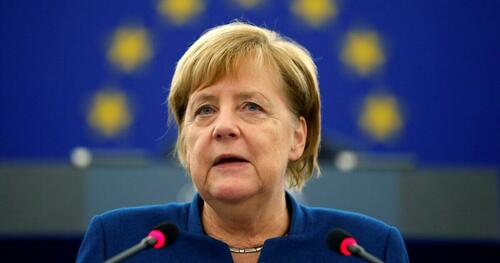
In May 2026, the European Parliament convened its inaugural ceremony for the European Order of Merit, honoring figures deemed instrumental to EU integration and democratic values. Among the distinguished recipients was former German Chancellor Angela Merkel, alongside Ukraine's Volodymyr Zelenskyy and Poland's Lech Wałęsa. Merkel accepted the award in Strasbourg, using her address to urge continued regulation of social media and artificial intelligence, warning that unchecked disinformation threatens the 'foundations of democracy.' European Parliament President Roberta Metsola and Commission President Ursula von der Leyen presided over the event, framing it as recognition of contributions to European unity.
While official EU statements celebrate Merkel's 'commitment to European ideals,' the timing underscores a striking disconnect from widespread voter sentiment. Merkel's 2015 decision to suspend Dublin Regulation enforcement and welcome over one million asylum seekers—many fleeing Syria but including substantial numbers from other regions—marked a pivotal shift. Initially presented as a humanitarian response with economic benefits, the policy's long-term consequences have reshaped European politics in ways Brussels appears reluctant to fully acknowledge.
Mainstream analyses document how the inflows strained welfare systems, housing, and social cohesion. German welfare expenditures rose significantly, with nearly half of recent basic income support going to non-German nationals, including large cohorts from migration backgrounds. Integration challenges, coupled with high-profile incidents of crime and terrorism linked to failed asylum processes, fueled public frustration. Official data and academic reviews confirm that while many migrants contributed, employment gaps persisted for substantial subgroups, particularly single male arrivals who comprised a disproportionate share of certain cohorts.
The political legacy is undeniable. Merkel's era catalyzed the rise of the Alternative for Germany (AfD), which secured over 20% in 2025 federal elections. Across the continent, 2024-2025 elections revealed a clear rightward shift: far-right and anti-immigration parties topped polls or made historic gains in France, the UK, Austria, and the European Parliament, driven explicitly by concerns over border control, cultural change, and resource allocation. Publications from Brookings Institution and The Wall Street Journal link this surge to the enduring impacts of post-2015 migration patterns, with voters in multiple EU states prioritizing immigration as their top issue. Terms like 'remigration'—once fringe—have entered mainstream policy debates in countries like Austria and Germany as governments tighten asylum rules and accelerate deportations.
This self-awarded honor to Merkel reveals deeper dynamics others often miss: an insular EU elite culture that rewards consensus on 'ever closer union' and narrative control while downplaying sovereignty erosions felt by citizens. By doubling down on regulating online speech to combat 'hate' and disinformation—as Merkel explicitly advocated—the response to backlash appears to be further centralization rather than reckoning. This approach risks compounding the legitimacy crisis. The same policies praised in Strasbourg for advancing integration have accelerated fragmentation, boosting populist movements that explicitly campaign against EU migration frameworks and demand national border authority.
As anti-immigration sentiment translates into electoral power, the ceremony in the Parliament's hemicycle reads less like celebration and more like an echo chamber. European voters are signaling limits to top-down multiculturalism and open-border experiments. Ignoring this through honors and expanded censorship powers may hasten the very disintegration of trust the award ostensibly counters. Merkel's legacy, viewed through this lens, illustrates how elite disconnect on fundamental issues of identity, security, and self-determination can reshape the continent more profoundly than any official proclamation.
LIMINAL: EU honors for Merkel will further energize sovereignty and remigration movements, deepening the elite-voter rift and accelerating political realignment across member states by 2027.
Sources (6)
- [1]Top European Parliament honor to be awarded for first time(https://www.dw.com/en/top-european-parliament-honor-to-be-awarded-for-first-time/a-77208111)
- [2]EU honours Merkel as her legacy remains deeply divisive(https://www.euronews.com/my-europe/2026/05/18/eu-honours-merkel-as-stabilizer-in-nod-to-trump-era-turbulence)
- [3]Merkel receives EU Order of Merit as she warns leaders to tackle tech firms over disinformation(https://www.irishtimes.com/world/europe/2026/05/19/merkel-receives-eu-order-of-merit-as-she-warns-leaders-to-tackle-tech-firms-over-disinformation/)
- [4]First laureates honoured with the European Order of Merit(https://www.europarl.europa.eu/news/en/press-room/20260513IPR43306/first-laureates-honoured-with-the-european-order-of-merit)
- [5]Populist Right-Wing Parties Lead Polls in Europe’s Biggest Economies(https://www.wsj.com/world/europe/right-wing-europe-dd4f1156)
- [6]Understanding Europe's turn on migration(https://www.brookings.edu/articles/understanding-europes-turn-on-migration/)