Iran's 65% Floating Oil Surge Under US Blockade Signals Ignored Escalation Risks and Looming Global Energy Shock
Iran's floating crude reserves have surged 65% to 42 million barrels amid a US naval blockade started in April 2026, with 49+ tankers idling and exports choked. Corroborated by shipping intelligence and satellite data, this buildup highlights sanctions evasion limits, storage crises, and under-appreciated risks of energy price spikes and Hormuz escalation that markets are only beginning to price in.
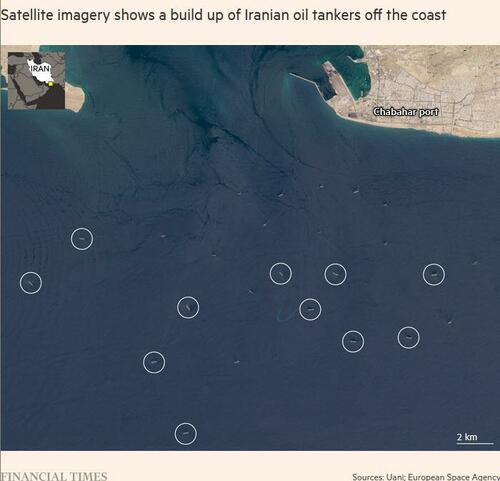
As the United States maintains its naval blockade of Iranian ports initiated in mid-April 2026, satellite imagery, shipping data, and maritime intelligence reveal a dramatic buildup of unsold Iranian crude aboard aging tankers in the Persian Gulf, near the Strait of Hormuz, and off Chabahar. Volumes have jumped 65% to approximately 42 million barrels since the operation began, according to estimates from analytics firm Kpler cited across multiple outlets. The number of laden tankers has risen from 29 to 49, with additional clusters forming in protected zones inside the blockade line. Loadings at Kharg Island have stalled, while ship-to-ship transfers, dark anchorage, and bunkering operations have intensified within Iranian waters as Tehran adapts its sanctions-evasion playbook.[1][2]
This is more than a logistics bottleneck. The floating stockpile acts as both a pressure valve and a ticking indicator of strategic failure on all sides. Onshore storage is reportedly over 60% full, pushing Iran toward extreme measures including reactivating disused tanks and 'junk storage' in Ahvaz and Asaluyeh. With production continuing at roughly 3.5 million barrels per day but exports severely curtailed, the regime faces an internal countdown: analysts estimate weeks before forced production cuts become inevitable absent new storage or successful evasions. Meanwhile, the US Navy has redirected dozens of vessels, disabled others, and extended interdiction efforts into Asian waters, underscoring that the blockade is biting but incomplete.[3][4]
Connections missed by mainstream coverage are critical. This is not isolated sanctions enforcement but part of a broader 'Iran War' context dating to late February 2026, intersecting with regional outages in Saudi, UAE, and Iraqi fields. The shadow fleet—long used to supply China at deep discounts— is now being repurposed as floating storage, reducing Tehran's revenue while concentrating flammable assets in a chokepoint prone to miscalculation. Persistent dark fleet activity and loitering near Chabahar suggest Iran is probing for breakout routes, raising the specter of asymmetric retaliation: mining Hormuz, harassing commercial traffic, or coordinating with proxies. Oil prices holding near $110/barrel already reflect fears of multi-front supply shocks; a serious disruption could send them far higher, exposing how markets have discounted these signals until visible price spikes force attention.[5][6]
United Against Nuclear Iran (UANI) tracking confirms dozens of Iranian-linked tankers operating inside the Gulf and attempting exits, with some succeeding via night transits or AIS manipulation. Reuters and the Wall Street Journal document the human and financial toll: billions in stranded crude, rising insurance costs, and Tehran resorting to previously avoided storage tactics. This dynamic is largely ignored by Western audiences focused on other theaters—until gasoline prices surge or tanker incidents spike. The 65% jump is not mere statistics; it visualizes a contained but unstable equilibrium where economic warfare risks tipping into kinetic escalation that neither side fully controls. Deeper analysis shows Beijing's quiet tolerance of discounted Iranian barrels creates a parallel supply chain that undermines the blockade's strategic goal of forcing a deal, potentially prolonging the standoff into a protracted energy tax on the global south and developed economies alike.
LIMINAL: This floating stockpile is a visible pressure gauge for an under-reported energy war; when storage maxes out, expect either sharp Iranian production cuts, bolder breakout attempts, or Hormuz incidents that will spike global prices and accelerate escalation far beyond current political narratives.
Sources (5)
- [1]US naval blockade squeezes Iran's oil exports, forces crude onto floating storage(https://www.reuters.com/business/energy/us-naval-blockade-squeezes-irans-oil-exports-forces-crude-onto-floating-storage-2026-04-30/)
- [2]U.S. Blockade Pushes Iran Toward Extreme Measures to Keep Pumping Oil(https://www.wsj.com/livecoverage/iran-war-strait-of-hormuz-2026/card/u-s-blockade-pushes-iran-toward-extreme-measures-to-keep-pumping-oil-dy8LdflRMCkzFmc6j0Xx)
- [3]Iran War Shipping Update - May 11, 2026(https://www.unitedagainstnucleariran.com/blog/iran-war-shipping-update-may-11-2026)
- [4]Iran’s Floating Oil Stockpile Jumps 65% as U.S. Naval Blockade Bites(https://oilprice.com/Latest-Energy-News/World-News/Irans-Floating-Oil-Stockpile-Jumps-65-as-US-Naval-Blockade-Bites.html)
- [5]Trump said his blockade would cause Iran's oil industry to collapse. It's not that simple, analysts say(https://www.cnbc.com/2026/04/30/trump-blockade-iran-oil-strait-hormuz.html)