Supreme Court Leaks Target Roberts as 'Strike Two' Exposes Deepening Partisan Rot and Institutional Decay
Recent NYT-published leaks of 2016 Supreme Court shadow docket memos represent 'strike two' for Chief Justice Roberts after Dobbs, revealing partisan tensions, internal shouting matches detailed in Hemingway's 'Alito' book, and a collapsing culture of confidentiality that is hastening the delegitimization of the Court as institutional rot deepens.
In a development that underscores the accelerating erosion of trust in America's highest court, fresh leaks of confidential Supreme Court memos have thrust Chief Justice John Roberts into the spotlight once again. Published by The New York Times on April 18, 2026, the internal documents from 2016 deliberations over the EPA's Clean Power Plan reveal Roberts' impatience and strategic maneuvering on what has become known as the 'shadow docket'—emergency rulings issued without full briefing or oral argument. These memos, which were expected to remain sealed for decades, illuminate how the Court began bypassing traditional procedures, a practice critics argue has enabled partisan outcomes on high-stakes issues like environmental regulation and presidential power.[1][2]
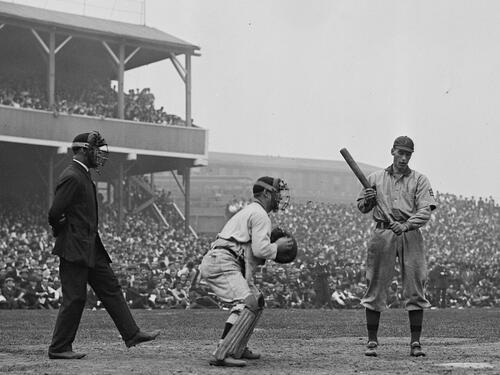
This incident marks the second major breach under Roberts' tenure, following the unsolved 2022 leak of the Dobbs draft opinion overturning Roe v. Wade. Legal scholar Jonathan Turley, writing in Fox News, frames it as 'strike two,' invoking Ted Williams' baseball wisdom that with two strikes, one must 'protect the plate.' Turley highlights not only the malicious intent behind leaking decade-old memos but also a deteriorating institutional culture where confidentiality has given way to porous partisanship. The leaks appear timed to embarrass conservative justices and amplify criticisms, such as those leveled by Justice Ketanji Brown Jackson in a recent Yale speech decrying the shadow docket as 'utterly irrational.'[3]
Compounding the sense of internal warfare, a forthcoming book by Mollie Hemingway titled 'Alito' details explosive behind-the-scenes conflict in the wake of the Dobbs leak. According to accounts reviewed by Fox News, Justice Elena Kagan allegedly screamed so loudly at Justice Stephen Breyer over accelerating dissents—amid rising threats to conservative justices—that 'the wall was shaking.' This episode, paired with Justice Sonia Sotomayor's recent pointed criticism of Justice Brett Kavanaugh as out of touch with working-class realities (later apologized for), shatters the Court's long-held image of collegiality and insularity.[4]
What others miss in surface coverage is the deeper connection: these leaks are not isolated but symptomatic of a Supreme Court caught in the crossfire of broader cultural and political realignment. Once viewed as the last stable branch insulated from executive and legislative dysfunction, the institution now mirrors the very partisan rot it was designed to check. The shadow docket controversy itself—where Roberts expressed frustration at the EPA effectively implementing regulations the Court had previously deemed unlawful—reveals how procedural innovations born in 2016 have become weapons in ongoing battles over administrative state power. As Reason's analysis notes, the memos show Roberts prioritizing swift intervention to prevent regulatory overreach, yet their selective disclosure fuels narratives of conservative activism.[5]
The failed investigation into the Dobbs leaker, which relied on Court marshals rather than the FBI, only heightened perceptions of vulnerability and possible internal protection rackets. Without accountability, the incentive for further leaks grows, accelerating delegitimization. Public confidence, already strained by ethics scandals and politicized confirmation battles, risks further collapse. This isn't mere gossip; it's evidence of a judiciary where justices increasingly see each other as adversaries in a zero-sum ideological struggle rather than umpires calling balls and strikes.
Heterodox observers have long argued the Court was never truly apolitical—its composition reflects electoral outcomes and strategic nominations. What these leaks expose is the veil slipping entirely: an institution where internal memos become ammunition in external information warfare. If Roberts cannot stem the tide, the 'last stable branch' may fracture under the weight of its own contradictions, inviting greater congressional oversight or public backlash that could reshape American jurisprudence for generations.
LIMINAL: These repeated, unpunished leaks will further erode public faith in the Supreme Court as an impartial institution, potentially triggering congressional reforms or bolder partisan challenges that permanently alter its role as a stabilizing force in American governance.
Sources (4)
- [1]Inside the Supreme Court's Risky New Way of Doing Business(https://www.nytimes.com/2026/04/18/us/politics/supreme-court-shadow-docket.html)
- [2]JONATHAN TURLEY: Chief Justice Roberts could learn from baseball great Ted Williams when it comes to leaks(https://www.foxnews.com/opinion/jonathan-turley-chief-justice-roberts-could-learn-baseball-great-ted-williams-comes-leaks)
- [3]Kagan screamed so loudly at liberal ally after Dobbs leak the 'wall was shaking,' book claims(https://www.foxnews.com/politics/kagan-screamed-so-loudly-liberal-ally-after-dobbs-leak-wall-shaking-book-claims)
- [4]Leaked Supreme Court Memos Reveal Why Court Stayed Clean Power Plan(https://reason.com/volokh/2026/04/18/leaked-supreme-court-memos-reveal-why-court-stayed-clean-power-plan-setting-important-shadow-docket-precedent-in-the-process/)