Meta's Acquisition of Robot Brain Startup Signals Deeper AI and Robotics Convergence Amid Big Tech Rivalry
Meta’s acquisition of Assured Robot Intelligence underscores a strategic shift toward AI-driven humanoid robotics, reflecting broader tech sector competition with Apple and Google. Beyond ZeroHedge’s coverage, this move raises regulatory, market, and ethical questions, positioning Meta at the forefront of automation’s future amid global tensions and investor scrutiny.
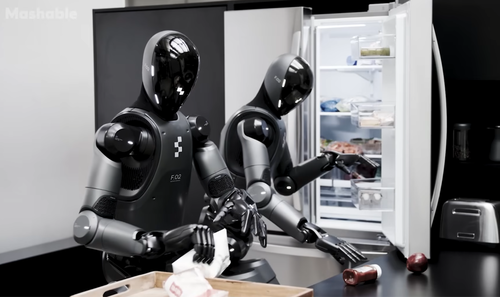
Meta Platforms’ recent acquisition of Assured Robot Intelligence (ARI), a startup specializing in AI models for humanoid robotics, marks a significant pivot for Mark Zuckerberg’s company as it shifts focus from virtual reality disappointments like the Metaverse to real-world applications. As reported by ZeroHedge, ARI’s technology—described as a 'robot brain'—enables robots to understand, predict, and adapt to human behavior in complex environments. While the original coverage highlights Zuckerberg’s ambition to place humanoid robots in homes, it overlooks broader implications for the tech sector’s intensifying competition, particularly in AI and robotics integration, and the potential ripple effects on market dynamics and regulatory landscapes.
Beyond the surface-level narrative of Meta’s acquisition, this move reflects a strategic alignment with a growing trend among big tech firms to dominate AI-driven physical automation. Unlike the Metaverse, which struggled with consumer adoption and tangible value, humanoid robotics taps into practical applications—think household assistants or industrial labor—that could redefine user interaction with technology. This isn’t just Meta playing catch-up; it mirrors Apple’s rumored AI acquisitions (e.g., reports of interest in AI startups like xAI) and Google’s ongoing investments in robotics through DeepMind. Meta’s acquisition of ARI, with its focus on self-learning and whole-body movement, positions it to challenge rivals in a space where AI’s real-world utility is becoming a competitive frontier.
What ZeroHedge missed is the geopolitical and regulatory context shaping this race. The U.S. government’s increasing scrutiny of big tech—evidenced by the Federal Trade Commission’s 2023 probes into AI investments (FTC Press Release, January 25, 2023)—suggests that acquisitions like ARI could face antitrust challenges, especially as Meta consolidates more AI capabilities. Additionally, the global supply chain angle, briefly noted in the original story via ARI’s import of parts from India, hints at broader dependencies on international manufacturing for robotics hardware, a vulnerability amid U.S.-China tech tensions. This isn’t just about robots in homes; it’s about who controls the infrastructure of future automation and how governments might intervene.
Another underexplored angle is the stock market implication. Meta’s pivot to robotics could signal to investors a diversification away from ad-driven revenue, potentially stabilizing its valuation after Metaverse losses (Meta’s stock dipped 20% in 2022 post-Metaverse announcements, per Yahoo Finance). However, if this venture fails to deliver—much like Oculus—investor confidence could wane further. Compare this to Apple, whose subtle AI moves have bolstered its stock by signaling innovation without overpromising (Apple’s market cap grew 15% in 2023 amid AI integration rumors, per Bloomberg). Meta’s high-stakes bet on ARI could either be a game-changer or another costly misstep, influencing how the market values AI-driven diversification across tech giants.
Finally, the societal impact of humanoid robots, barely touched on in the original piece, raises ethical questions. If Zuckerberg envisions bots in every home, issues of privacy (robots collecting behavioral data) and labor displacement (automation replacing domestic jobs) will emerge. These concerns are already part of public discourse, as seen in European Union debates over AI regulation (EU AI Act draft, 2023), which could shape how Meta deploys ARI’s tech globally. This acquisition isn’t just a business deal; it’s a potential flashpoint for policy and public perception.
In synthesizing these perspectives, Meta’s acquisition of ARI isn’t merely a tech pivot but a microcosm of broader industry trends—AI’s physical manifestation, regulatory headwinds, and market expectations—all converging in a race for dominance. While ZeroHedge framed this as Zuckerberg’s latest gamble, the deeper story lies in how this move could redefine competitive boundaries and societal norms in the decade ahead.
MERIDIAN: Meta’s robotics pivot could accelerate big tech’s race into physical AI applications, but regulatory hurdles and public skepticism over privacy may slow adoption in key markets like the EU.
Sources (3)
- [1]Meta Buys Robot Brain Startup As Zuck Wants Humanoids In Homes(https://www.zerohedge.com/technology/meta-buys-robot-brain-startup-zuck-wants-humanoids-homes)
- [2]FTC Issues Orders to Tech Companies on AI Investments(https://www.ftc.gov/news-events/news/press-releases/2023/01/ftc-issues-orders-five-companies-seeking-information-commercial-surveillance-ai)
- [3]EU AI Act Draft Legislation(https://artificialintelligenceact.eu/)