Hormuz Oil Shock Exposes Consumer Fragility and Geopolitical Supply Chain Risks as Recession Warnings Mount
Prolonged Strait of Hormuz closure from the 2026 Iran war is driving oil prices higher, prompting retailer alerts on consumer stress at the pump and analyst warnings of a potential recession rivaling 2008, exposing deep supply-chain and energy-geopolitical vulnerabilities.
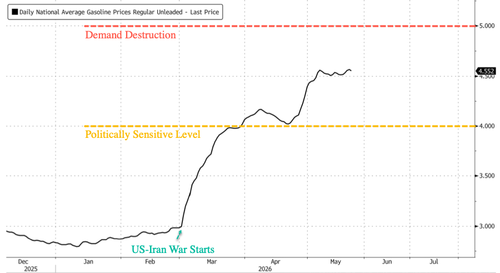
The ongoing closure of the Strait of Hormuz, triggered by the 2026 Iran conflict, has rapidly escalated from a regional geopolitical crisis into a global economic threat. Oil market analysts at Rapidan Energy Group have warned that a prolonged shutdown through August or September could trigger demand destruction on a scale that pushes the global economy toward a downturn approaching the severity of the 2008 Great Recession, with Brent crude potentially peaking near $130 per barrel in their base case and global oil demand contracting sharply. This assessment aligns with broader economist concerns that sustained disruption of this critical chokepoint—through which roughly 20% of global oil trade flows—has created the largest supply shock in history, stranding millions of barrels per day and sending gasoline prices surging past $4.50 per gallon in the U.S.
Retail giants are already detecting acute stress among low- and middle-income households, serving as a real-time barometer for broader vulnerabilities. Walmart executives noted that for the first time since 2022, customers purchased fewer than 10 gallons per visit at their fuel stations, explicitly calling it "an indication of stress." This comes as high-income consumers continue spending with confidence while lower-income ones exhibit budget-conscious behavior and signs of financial distress. Similar warnings have emerged from home improvement retailers like Lowe's and Home Depot, highlighting crumbling DIY demand and the most difficult housing market since the financial crisis—connections that reveal how fuel shocks transmit directly into discretionary spending, home goods, and real estate activity.
What many analyses miss is how this event exposes long-ignored structural fragilities in energy-geopolitics and just-in-time supply chains. Decades of reliance on Middle East oil flows, combined with underinvestment in alternative infrastructure and slower-than-expected energy transitions, have left consumer economies brittle. The shock is not merely about higher pump prices; it cascades into transportation costs, inventory replenishment, and persistent inflation risks that hit working-class budgets already stretched by post-pandemic realities. UBS analysts have cautioned of sharper slowdowns in low- and middle-income spending this summer, while JPMorgan and others flagged catastrophic shortages if the blockade persisted. IMF revisions have cut global growth projections, with risks of stagflation echoing the 1970s energy crises.
The current macro environment offers some buffers—less oil-intensive economies and improved monetary tools compared to past shocks—but these do not eliminate vulnerabilities in financial markets, inventories, and consumer psychology. A delayed reopening would deepen third-quarter supply deficits, drain inventories to critically low levels, and force painful demand destruction above $5 per gallon. This episode underscores a deeper pattern: geopolitical tensions in energy chokepoints are routinely underestimated until they manifest as broad-based economic pain, revealing the interconnected fragility of global trade, retail resilience, and household balance sheets. If the closure extends, the resulting demand suppression could tip multiple economies into technical recession, with lasting scars on growth trajectories through 2027 and beyond.
LIMINAL: Sustained Hormuz disruption will accelerate demand destruction among vulnerable consumers, unmasking how energy chokepoint fragility and thin supply chains amplify ignored geopolitical risks into cascading recessionary pressures that traditional forecasts consistently underestimate.
Sources (5)
- [1]Hormuz Closure Threatens Recession Rivaling 2008, Rapidan Says(https://www.bloomberg.com/news/articles/2026-05-21/hormuz-closure-threatens-recession-rivaling-2008-rapidan-says)
- [2]Walmart Sees Signs at Gas Pump That Consumers Are Stressed(https://www.wsj.com/business/retail/walmart-wmt-q1-earnings-report-2027-bf5912d7)
- [3]Could the standoff in the Strait of Hormuz trigger a global recession? Economists weigh in(https://abcnews.com/Business/standoff-strait-hormuz-trigger-global-recession-economists-weigh/story?id=132270330)
- [4]Walmart signals it may raise prices in response to soaring fuel costs(https://www.nbcnews.com/business/consumer/walmart-quarterly-earnings-fuel-costs-rcna345914)
- [5]The Strait of Hormuz Oil Shock Is Now Heading West(https://www.bloomberg.com/graphics/2026-iran-war-hormuz-closure-oil-shock/)