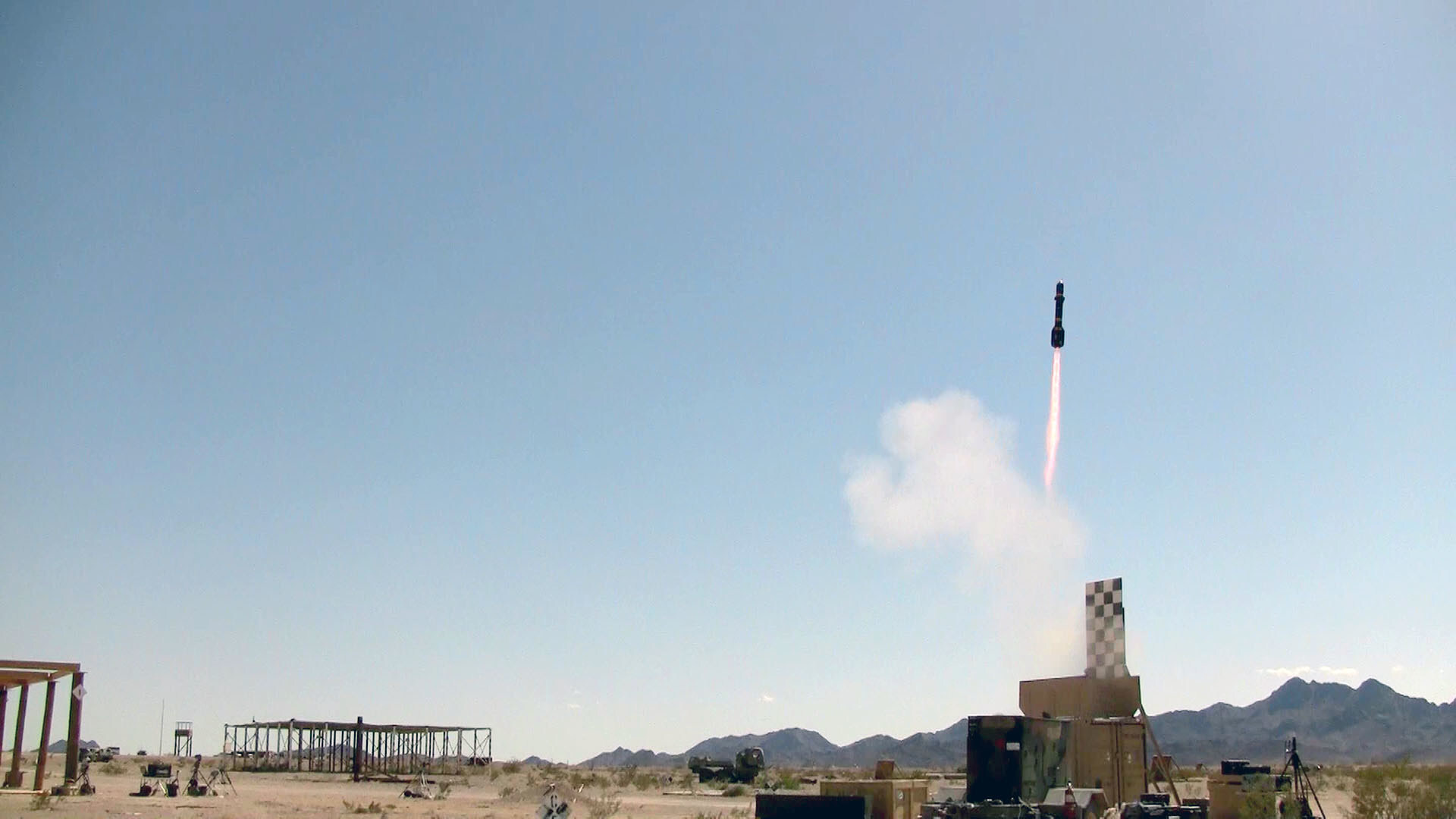
Lockheed GRIZZLY Test Exposes Shift Toward Modular, Containerized Defenses as Drone Swarms Outpace Legacy Systems
Lockheed’s GRIZZLY containerized launcher achieved a rapid JAGM intercept of a Group 3 drone, revealing accelerated private-sector integration and a strategic move toward mobile, distributed C-UAS that legacy systems cannot match.
The June 3 live-fire at Yuma Proving Ground marks more than a successful JAGM intercept of a Group 3 one-way attack drone; it validates a compressed 45-day integration cycle that fuses Fortem R-40 radars, Sanctum battle management, and a repurposed M299-derived launcher inside a standard 10-foot container. Where prior coverage framed this as incremental C-UAS progress, the deeper pattern is a deliberate pivot to distributed lethality that sidesteps the fixed-site vulnerabilities exposed in Ukraine and the Red Sea. Lockheed’s $25 million April investment in Fortem was not merely sensor procurement but an admission that commercial radar agility now outruns traditional military acquisition timelines. The system’s wireless architecture and toolless reload capability directly address Navy requirements for unmanned surface vessels, yet the original reporting underplays how this maritime angle collides with emerging Chinese drone-carrier concepts that treat small boats as expendable launch platforms. By borrowing Hellfire/JAGM kinematics rather than pursuing directed-energy solutions, GRIZZLY accepts higher per-shot costs in exchange for proven kinetic reliability against larger Group 3 threats—an implicit critique of laser hype that still dominates public discourse. Two additional vectors remain under-discussed: first, the test’s speed suggests similar containerized packages could be forward-deployed to Pacific atolls within weeks, altering the calculus for expeditionary basing; second, the absence of any reported electronic-warfare hardening leaves open questions about resilience once adversaries field GPS-denied or swarm-coordinated attacks. In aggregate, the demonstration accelerates a broader transition from exquisite, centralized air defenses toward proliferated, low-logistics effectors that match the economics of cheap drones.
SENTINEL: GRIZZLY-style systems will proliferate to forward bases and USVs within 18 months, forcing adversaries to prioritize massed drone saturation over single high-end platforms.
Sources (3)
- [1]Primary Source(https://www.defensenews.com/news/your-military/2026/06/03/lockheeds-grizzly-c-uas-system-downs-attack-drone-in-live-fire-demo/)
- [2]Related Source(https://www.csis.org/analysis/drone-wars-lessons-ukraine-red-sea)
- [3]Related Source(https://news.usni.org/2025/03/12/navy-explores-containerized-munitions-for-unmanned-vessels)