Fertilizer Shock of 2026: US Farmers' Crisis Signals Broader Pattern of Geopolitical Supply Warfare and Engineered Scarcity
Corroborated by official Farm Bureau data and multiple geopolitical analyses, the 2026 fertilizer crisis triggered by the Iran conflict and Hormuz disruptions signals not random misfortune but a predictable outcome of supply chain weaponization, pointing toward engineered global food scarcity with severe yield, price, and security implications.
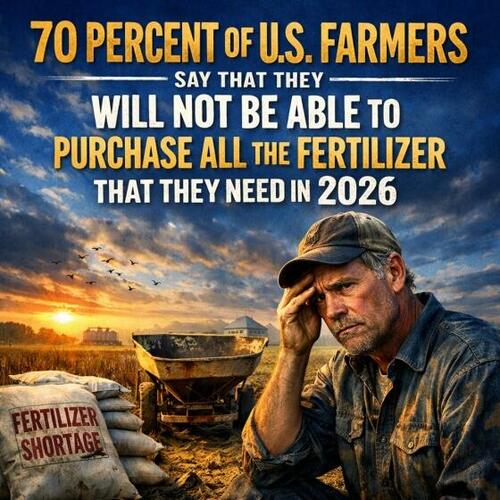
A nationwide survey by the American Farm Bureau Federation conducted April 3-11, 2026 reveals that 70% of U.S. farmers cannot afford to purchase all the fertilizer they need for the current planting season, with the crisis most acute in the South (78%), Northeast (69%), and West (66%). This stems from nitrogen fertilizer prices surging over 30% since late February, exacerbated by combined fuel and fertilizer cost increases of 20-40%. The trigger is the ongoing conflict with Iran that began on February 28, which has effectively closed the Strait of Hormuz to much commercial shipping. Approximately one-third of global seaborne fertilizer trade, particularly urea and ammonia from Gulf producers, passes through this chokepoint. The resulting scramble has driven urea prices up dramatically, with ripple effects on global food production.
Mainstream coverage attributes this to wartime disruptions, including U.S. blockades and Iranian responses that have halted nearly half the world's urea exports in some analyses. However, viewing it through the lens of supply chain warfare reveals deeper patterns. The U.S. produces much of its own nitrogen thanks to abundant natural gas, yet still faces price transmission from global markets. Import-dependent regions in Africa, South Asia, and Latin America face far worse outcomes, with the UN warning of potential famine-level impacts for hundreds of millions as production costs soar and yields drop. This mirrors but intensifies the 2022 fertilizer crisis following the Ukraine conflict, suggesting repeated exploitation of critical maritime chokepoints and energy dependencies.
Connections others miss include how layered sanctions, export restrictions (such as China's phosphate curbs), and the absence of strategic fertilizer reserves amplify fragility in a just-in-time global system. Gulf producers account for nearly half of traded urea; their disruption doesn't just raise prices but forces farmers worldwide to reduce application rates, lowering yields and driving food inflation projected at 12-18% by year-end in some forecasts. This fits larger 'engineered scarcity' dynamics—where geopolitical tools create artificial constraints on essentials like energy, grains, and now fertilizers—potentially consolidating power among those controlling alternative supply routes or synthetic alternatives while vulnerable populations bear the brunt. Goldman Sachs and other analysts have noted the crisis spreading faster than projected, underscoring systemic vulnerabilities that extend beyond one conflict. Without resolution, 2026 could mark the onset of sustained food production contraction in the West and outright collapse in the Global South, accelerating pre-existing trends of farm debt, bankruptcies, and consolidation. The Strait of Hormuz episode demonstrates how modern hybrid warfare targets the agricultural foundation of civilization itself.
LIMINAL: This 2026 convergence of sanctions, blockades, and chokepoint control exposes a recurring architecture of scarcity creation that will likely accelerate farm consolidation, spike global food prices, and trigger instability in import-dependent nations by late 2026, revealing how essential resource flows are leveraged in great power competition.
Sources (6)
- [1]Nationwide Survey: Most Farmers Can’t Afford Fertilizer(https://www.fb.org/news-release/nationwide-survey-most-farmers-cant-afford-fertilizer)
- [2]Farm Bureau Survey Reveals Real Impact of Fertilizer Availability and Price(https://www.fb.org/market-intel/farm-bureau-survey-reveals-real-impact-of-fertilizer-availability-and-price)
- [3]Fertilizer isn't getting through the Strait of Hormuz, which could lead to a global food crisis(https://carnegieendowment.org/emissary/2026/03/fertilizer-iran-hormuz-food-crisis)
- [4]U.S. farmers worry about fertilizer supply due to war with Iran(https://www.npr.org/2026/03/26/g-s1-115240/iran-war-strait-hormuz-fertilizer-exports-farmers-planting-season)
- [5]Dire fertiliser shortage a lurking threat due to Hormuz crisis(https://news.un.org/en/story/2026/03/1167182)
- [6]Global Food Supply Faces a Dangerous Bottleneck as Iran Conflict Disrupts Fertilizer(https://www.nytimes.com/2026/03/27/business/economy/fertilizer-food-supply-iran-war.html)