Pentagon Plans for Extended Iran Ground Raids Signal Escalation Risks as IRGC Threatens Regional Universities
Pentagon developing weeks-long ground raid plans in Iran per WaPo-sourced reports; IRGC threatens US-linked universities in Middle East after strikes on Iranian campuses; regional ministers meet in Pakistan seeking US-Iran de-escalation amid ongoing war.
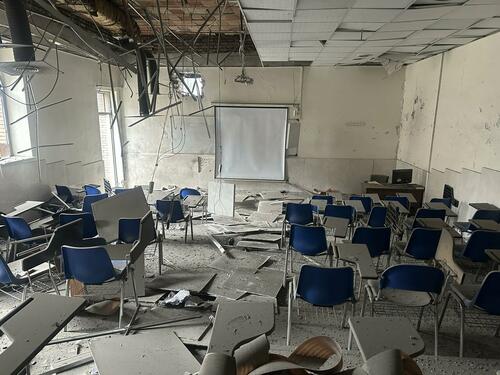
Recent reporting indicates the Pentagon has spent weeks developing contingency plans for ground operations in Iran that could last weeks and involve special operations forces alongside conventional infantry conducting raids, potentially targeting areas near the Strait of Hormuz, though falling short of a full-scale invasion. These plans remain unapproved by President Trump, with officials highlighting significant risks from Iranian drones, missiles, and ground threats. This development aligns with Iran's parliament speaker claiming the US is preparing ground attacks despite diplomatic overtures. Parallel to military planning, the Islamic Revolutionary Guard Corps (IRGC) has declared American and Israeli-affiliated universities across West Asia as "legitimate targets" in retaliation for recent strikes on Iranian academic institutions, including the University of Science and Technology in Tehran. The IRGC issued an ultimatum demanding the US officially condemn attacks on Iranian universities by noon on March 30 (Tehran time) and advised personnel to stay away from such campuses. These tit-for-tat infrastructure strikes, including damage to Iranian campuses and reported Iranian missile hits on Israeli facilities, mark a dangerous expansion of the conflict beyond traditional military targets. On the diplomatic front, foreign ministers from Pakistan, Turkey, Saudi Arabia, and Egypt convened in Islamabad on March 29 to explore offramps, including potential direct US-Iran talks and measures to secure shipping through the Strait of Hormuz. Pakistan is positioning itself as a facilitator, though US negotiators were not directly involved in the ministerial meeting. This convergence of military preparation, asymmetric retaliation threats, and regional diplomacy underscores a high-stakes phase in the month-long war, where anonymous sourcing across outlets reveals preparations that could draw in broader forces and disrupt global energy flows. Connections often missed by coverage include the potential downstream pressure toward expanded US troop commitments or conscription debates if raids encounter sustained resistance, alongside the strategic targeting of educational sites as a novel escalation vector that blurs civilian-military lines in ways not fully contextualized by legacy reporting.
Liminal Analysis: Signals dangerous shift toward sustained ground engagement and wider regional war, with conscription risks and infrastructure targeting patterns underreported by mainstream outlets despite clear escalation trajectory.
Sources (5)
- [1]Pentagon preparing for ground operations in Iran, reports U.S. media(https://www.thehindu.com/news/international/pentagon-preparing-for-ground-operations-in-iran-reports-us-media/article70798609.ece)
- [2]Pentagon said prepping weeks-long ground operation in Iran, short of full invasion(https://www.timesofisrael.com/pentagon-said-prepping-weeks-long-ground-operation-in-iran-short-of-full-invasion/amp/)
- [3]IRGC warns US, Israeli universities in West Asia of being 'legitimate targets'(https://m.economictimes.com/nri/latest-updates/irgc-warns-us-israeli-universities-in-west-asia-of-being-legitimate-targets-after-strikes-on-iranian-institutions/articleshow/129874360.cms)
- [4]Pakistan maintains 'delicate balancing act' as it hosts Iran talks(https://www.aljazeera.com/news/2026/3/29/pakistan-maintains-delicate-balancing-act-as-it-hosts-iran-talks)
- [5]Pakistan hosts regional powers for Iran talks, with focus on Hormuz(https://www.reuters.com/world/asia-pacific/pakistan-hosts-regional-powers-iran-talks-with-focus-hormuz-proposals-2026-03-29/)