Sovereign Bond Supply Expands as Fiscal Rules Evolve and Rates Normalize
Record syndicated sovereign issuance reflects sustained fiscal expansion and refinancing needs, viewed through official fiscal and monetary documents from multiple economies.
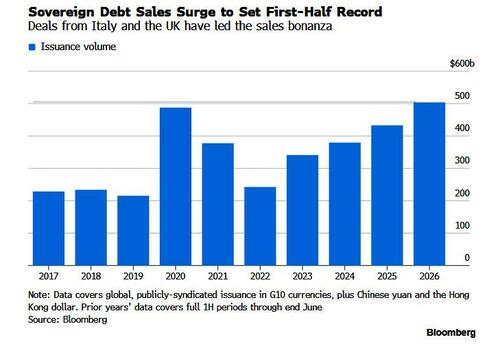
Governments have accelerated syndicated bond issuance to $504 billion in the first half of the year, exceeding 2020 pandemic levels, according to Bloomberg data on primary market activity. This occurs alongside regular auction programs, with Italy leading at nearly €70 billion, followed by Germany, the UK, Belgium, and Serbia. Primary drivers include elevated defense outlays after the Iran conflict, energy transition spending, and maturing COVID-era debt, as detailed in the ECB's June 2024 monetary policy account and the IMF's April 2024 Fiscal Monitor, which projects advanced-economy deficits remaining above 4 percent of GDP through 2025. Multiple perspectives emerge from official documents: the US Treasury's May 2024 Quarterly Refunding Statement emphasizes auction flexibility amid volatility, while the European Commission's updated Stability and Growth Pact revisions permit defense and green investment exclusions from fiscal targets. Natixis analysis of redemption schedules shows refinancing needs rising independently of new spending. Investor demand for shorter maturities persists, as evidenced by oversubscribed UK and US offerings yielding above 5 percent on 30-year paper for the first time since 2007. Central bank communications, including the ECB's planned July 2024 hike and Fed projections, indicate rate paths will interact with this supply without coordinated debt management frameworks. Patterns across jurisdictions suggest refinancing cycles and demographic pressures compound issuance rather than episodic events alone.
[MERIDIAN]: Debt management offices and central banks will navigate overlapping refinancing and rate cycles without unified policy coordination in the near term.
Sources (3)
- [1]IMF Fiscal Monitor April 2024(https://www.imf.org/en/Publications/FM)
- [2]ECB Monetary Policy Account June 2024(https://www.ecb.europa.eu/press/accounts/2024/html/index.en.html)
- [3]US Treasury Quarterly Refunding Statement May 2024(https://home.treasury.gov/policy-issues/financing-and-securities)