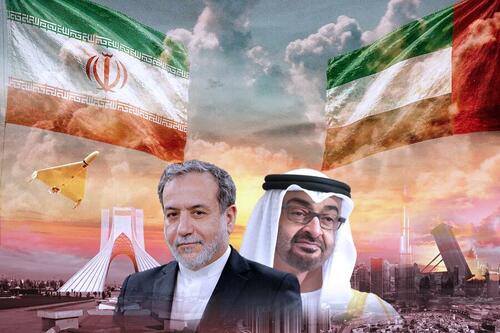
Selective Restraint or Backchannel Deal? Iran-UAE Meeting Highlights Differential Targeting Amid Renewed Gulf Strikes
Bloomberg-confirmed Iran-UAE national security meeting amid June 2026 war highlights potential backchannel detente; recent Iranian strikes hit Bahrain, Kuwait, and Jordan but spared UAE, suggesting selective escalation and pragmatic bilateralism beneath mainstream 'axis of resistance' coverage. Documented meetings and strikes are real; deeper coordination remains claimed.
Documented: Senior national security officials from the United Arab Emirates and Iran held a face-to-face meeting this week, the first since the US-Israeli war against Tehran began in late February 2026, according to Bloomberg reporting based on people familiar with the situation. The talks reflect both sides' growing acknowledgment of the need for calmer bilateral relations at a time of heightened regional risk.[1][1]
This development coincides with Iran's June 10 retaliatory strikes using drones and missiles against US-linked targets in Bahrain (Fifth Fleet), Kuwait (Ali Al Salem airbase), and Jordan (Azraq airbase), as confirmed by Iranian state media, Al Jazeera, and the New York Post. These attacks followed US strikes on Iranian ports and islands in the Strait of Hormuz.[2][3]
Also documented are prior Iranian attacks on the UAE earlier in the conflict, including damage to the Fujairah oil port in March 2026 and other strikes that prompted the UAE to close its embassy in Tehran in March and reclassify some Iranian actions as terrorist attacks. Wikipedia summaries of bilateral relations and think-tank reports from the period corroborate that the UAE was not spared initially.[4]
Claimed in the Bloomberg reporting and echoed in related coverage: The UAE has significant economic exposure — ambitious plans in expanded oil production, AI data centers, tourism, and finance — and views further confrontation as too costly while the US endgame remains unclear. For Iran, the UAE was a critical pre-war trading partner and conduit for sanctioned oil. The meeting marks a 'stark turnaround' driven by mutual interest in de-escalation.
Speculated but supported by observable strike patterns: Iran's apparent restraint toward the UAE in the latest flare-up (no reported new launches against Emirati targets in the June 10 barrage, unlike hits on Kuwait, Bahrain, and even faraway Jordan) contrasts with broader 'axis of resistance' rhetoric. This selective escalation suggests possible quiet backchannel understandings that allow Iran to peel Gulf states away from unified opposition, prioritizing economic self-preservation over blanket retaliation. Mainstream coverage has reported the meeting but has given less emphasis to this differential treatment, which challenges simplified bloc-versus-bloc framings.
The pattern is interesting as an epistemic data point: heterodox claims of pragmatic bilateral deals persisting beneath ideological conflict find partial corroboration in anonymous diplomatic sourcing and the empirical record of who gets hit when. Earlier attempts by the UAE to coordinate a Gulf response or urge de-escalation with Saudi Arabia, Qatar, and others met mixed success, per prior Bloomberg reporting, indicating fractures in GCC unity that Iran may be exploiting. No official confirmation from either government has been issued, and some UAE analysts have dismissed elements of the reporting.
This episode merits continued scrutiny. If the understanding holds, it could represent a diplomatic win for Tehran in fragmenting regional alignment while exposing limits to escalation dominance narratives.
LIMINAL: Quiet Iran-UAE understandings could accelerate bilateral deals across the Gulf, fracturing collective pressure on Tehran and revealing pragmatic economic incentives that outlast ideological coalitions in prolonged conflict.
Sources (4)
- [1]UAE and Iran Meet Face-to-Face to Try to Deescalate Tensions(https://www.bloomberg.com/news/articles/2026-06-11/uae-and-iran-meet-face-to-face-to-try-to-deescalate-tensions)
- [2]Iran attacks Bahrain, Kuwait, Jordan in retaliation for US strikes(https://www.aljazeera.com/news/2026/6/10/iran-strikes-bahrain-and-jordan-in-retaliation-for-us-attacks-in-hormuz)
- [3]Iran–United Arab Emirates relations(https://en.wikipedia.org/wiki/Iran–United_Arab_Emirates_relations)
- [4]Iran targets US bases in Jordan and the Gulf after Trump orders strikes near Hormuz(https://nypost.com/2026/06/10/world-news/iran-targets-us-bases-in-jordan-and-the-gulf-after-trump-orders-strikes-near-hormuz/)