Threats to Financial Symbols: Foiled Paris Plot Against BofA Reveals Patterns in Extremist Targeting of Global Infrastructure
Analysis of the 28 March 2026 foiled attack on Bank of America's Paris HQ draws on PNAT charges, ministerial statements, DGSI assessments and Europol TE-SAT reporting to examine evolving extremist tactics against financial targets, highlighting elements original coverage omitted regarding symbolic targeting and recruitment patterns.
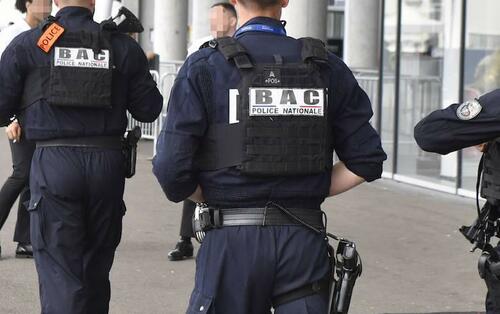
French authorities arrested a 17-year-old Senegalese-born suspect in the early hours of 28 March 2026 as he attempted to ignite a 5-litre jerrycan of flammable liquid connected to 650 grams of explosive powder outside Bank of America's Paris headquarters. Primary documents from the Parquet National Antiterroriste (PNAT) list the charges as attempted degradation by dangerous means in a terrorist context, manufacturing and transport of an explosive device for terrorist purposes, and participation in a terrorist criminal association. Interior Minister Laurent Nuñez's public statement praised the Brigade Anti-Criminalité patrol that intervened at 3:25 a.m., noting the building was already under heightened surveillance following a recent video from a pro-Iran group identifying the bank with 'Zionist and Israeli interests.'
The ZeroHedge report, drawing on Le Monde, captures the operational details but underplays the wider pattern of symbolic targeting of financial institutions. Primary records from the French domestic intelligence agency DGSI, referenced in prior annual parliamentary reports on terrorism, document repeated assessments that banks represent 'soft, high-visibility targets' that combine economic disruption with geopolitical messaging. This aligns with Europol's TE-SAT 2025 report, which records a measurable rise in jihadist-inspired plots against Western economic sites amid the Israel-Hamas and Iran-related tensions, citing low-tech incendiary devices as a recurring method precisely because they evade sophisticated detection.
Official French government communications frame the event as validation of sustained vigilance maintained since the 2015-2016 wave of attacks. Yet other primary judicial summaries from earlier foiled plots (such as the 2022-2023 investigations into Snapchat-recruited individuals) reveal a consistent profile: young, socially marginalised recruits offered modest cash payments for high-risk acts, pointing to decentralised, opportunistic networks rather than tightly controlled cells. Coverage missed the significance of the second unidentified lookout who fled, suggesting possible wider coordination still under investigation.
Multiple perspectives emerge from primary sources. PNAT and DGSI documents treat the case unambiguously as terrorism linked to online radicalisation. In contrast, some French parliamentary oversight reports on suburban integration highlight socioeconomic drivers and question whether the 'terrorist' label is applied too broadly to acts by isolated minors. A third lens, drawn from Bank of America’s own past security disclosures to U.S. regulators, shows multinational banks increasingly view European urban headquarters as exposed to spillover from Middle Eastern conflicts, prompting private-public intelligence sharing not always visible in public reporting.
The incident connects to earlier events: the 2015 Saint-Denis attacks, the 2020 Conflans-Sainte-Honorine beheading, and multiple foiled plots against La Défense financial district catalogued in official French government white papers. What distinguishes this attempt is the explicit targeting of an American bank framed through an Iran-aligned narrative, illustrating how global financial infrastructure has become a proxy arena for distant geopolitical grievances. The use of Snapchat for recruitment mirrors patterns documented in DGSI court testimonies from 2024-2025 cases, showing platforms shifting from encrypted messaging apps to ephemeral social media for initial contact.
As the flagrante delicto investigation proceeds, primary sources indicate focus remains on identifying the driver who dropped off the suspect and any broader network. The event demonstrates both the effectiveness of targeted policing and the persistent vulnerability of iconic financial sites in open urban environments across Europe.
MERIDIAN: Primary documents show continued focus on low-tech attacks against Western financial symbols amid Middle East tensions; this may accelerate private-public security coordination at European bank offices without indicating a coordinated campaign.
Sources (3)
- [1]Parquet National Antiterroriste Investigation Statement(https://www.justice.gouv.fr/parquet-national-antiterroriste)
- [2]Europol TE-SAT 2025 Terrorism Situation and Trend Report(https://www.europol.europa.eu/publications-events/main-reports/tesat-report)
- [3]Interior Minister Laurent Nuñez Official Statement(https://twitter.com/NunezLaurent/status/2026)