UAE's 'Zero Hormuz' Strategy Accelerates: Billions Flow to Fujairah Bypass Amid Regional Tensions
UAE advances 'Zero Hormuz' infrastructure push with major investments in Fujairah ports, ADNOC pipelines, and partnerships, reducing Strait of Hormuz vulnerability amid ongoing regional tensions.
The United Arab Emirates is advancing a long-term infrastructure overhaul to reduce reliance on the Strait of Hormuz, a critical chokepoint for global energy exports. Dubbed the 'Zero Hormuz' strategy, the initiative has gained momentum following regional conflicts involving Iran, with Abu Dhabi's leadership directing tens of billions in investments toward alternative ports and pipelines on the Gulf of Oman.
Central to the effort is Fujairah, an eastern port outside the strait. Abu Dhabi's L'imad Holding, a $300 billion sovereign wealth fund chaired by Crown Prince Sheikh Khaled bin Mohamed Al Nahyan, plans to take Abu Dhabi Ports Co. private at nearly $9 billion and invest additional tens of billions in port infrastructure. In May 2026, L'imad partnered with BlackRock's Global Infrastructure Partners, Singapore's Temasek, and ADNOC to target up to $30 billion in energy transportation, logistics, and water projects.
ADNOC is accelerating a second West-East crude pipeline to Fujairah, expected to double export capacity by 2027; the project is already about 50% complete. UAE Trade Minister Thani Al Zeyoudi has stated the goal is 'zero Hormuz dependency' regardless of whether the strait reopens. Dubai's DP World is separately developing new container terminals in Fujairah under a 50-year concession, adding significant capacity.
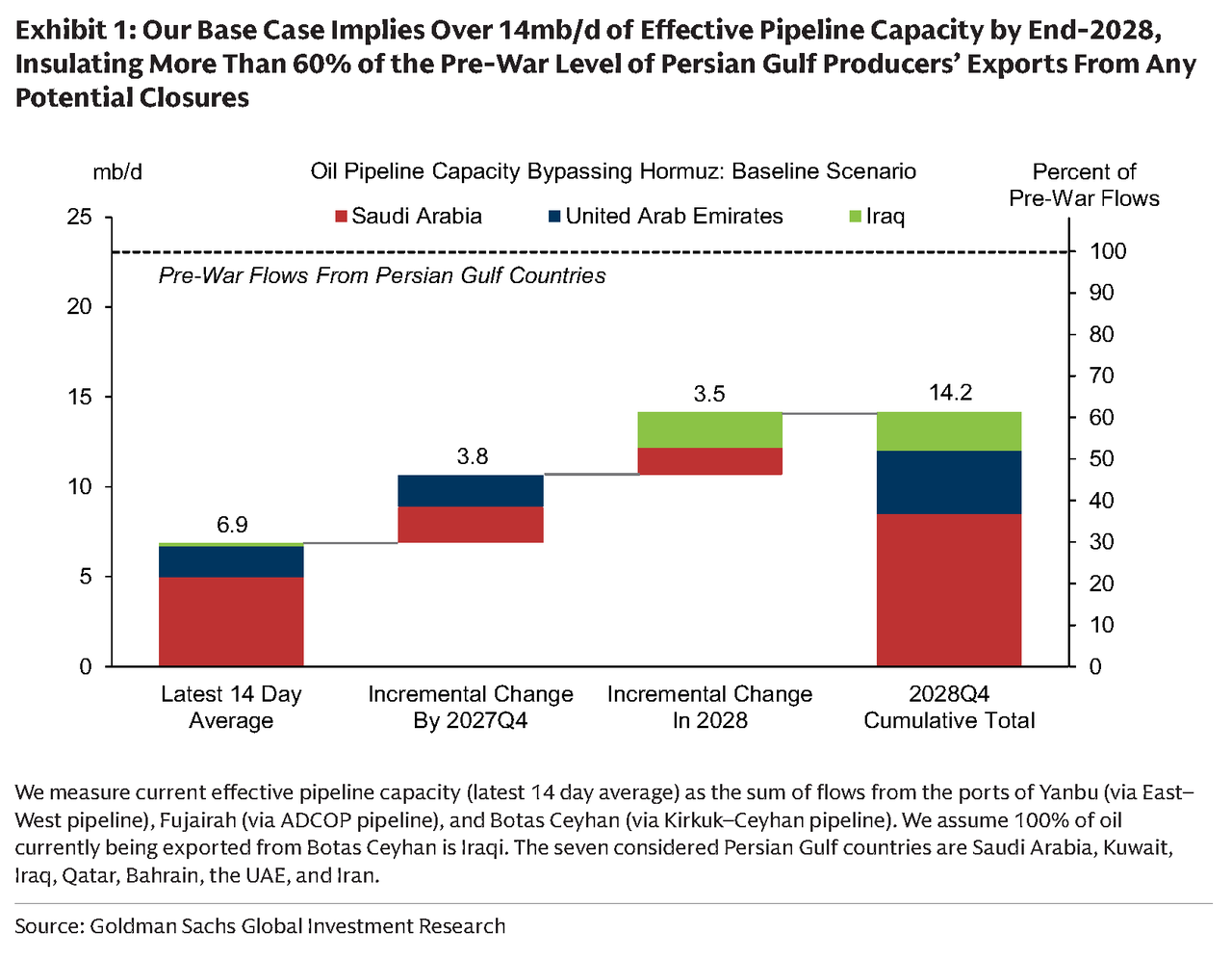
Broader efforts include rail connectivity via Etihad Rail, links to Omani ports like Sohar and Duqm, and diversification of trade routes. Analysts note this shift aims to insulate Gulf exports from future disruptions, with Goldman Sachs previously estimating 60% of regional exports could bypass the strait by 2028. The strategy reflects a permanent pivot toward redundancy in global energy and logistics networks.
Geopolitical Analyst: Permanent diversification of Gulf export routes will diminish Iran's strategic leverage over energy markets, fostering more resilient global supply chains but raising costs and spurring competition from alternative hubs.
Sources (5)
- [1]UAE’s Sheikh Khaled Spending Billions to Bypass Iran’s Grip on Strait of Hormuz(https://www.bloomberg.com/news/features/2026-09-29/uae-s-sheikh-khaled-spending-billions-to-bypass-iran-s-grip-on-strait-of-hormuz)
- [2]UAE committed to 'Zero Hormuz' strategy, says diplomat(https://www.thenationalnews.com/news/gulf/2026/09/09/uae-committed-to-zero-hormuz-strategy-says-diplomat/)
- [3]New UAE oil pipeline bypassing Hormuz 50% complete ahead of 2027 start(https://www.reuters.com/world/middle-east/new-uae-pipeline-bypassing-hormuz-now-50-complete-adnoc-ceo-says-2026-05-20/)
- [4]UAE aims to cut dependency on Strait of Hormuz to 'zero' with major ports expansion plan(https://www.thenationalnews.com/business/energy/2026/06/17/uae-aims-to-cut-dependency-on-strait-of-hormuz-to-zero-with-major-ports-expansion-plan/)
- [5]DP World to develop new UAE terminals outside Hormuz(https://theloadstar.com/dp-world-signs-50-year-concession-to-develop-new-uae-terminal-outside-hormuz/)