AI Traders Underperform on Wall Street: Hype Meets Harsh Market Realities
Wall Street’s AI trading experiments reveal persistent underperformance, with models losing capital and failing to maintain coherent strategies in competitions like Alpha Arena. Beyond technical flaws, this reflects a broader clash between AI hype and market realities, echoing skepticism in other high-stakes fields like defense and healthcare. While firms explore AI as a support tool, its potential to disrupt trading remains unproven amid erratic results and systemic challenges.
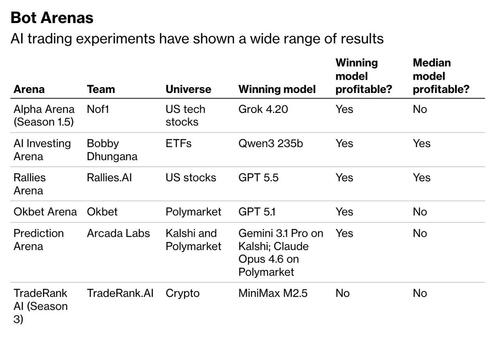
Recent experiments on Wall Street, as reported by ZeroHedge, reveal a persistent gap between the hype surrounding AI-driven trading and its real-world efficacy. Competitions like Alpha Arena, hosted by startup Nof1, have shown that large language models (LLMs) from OpenAI, Anthropic, Google, and xAI often lose money, trade erratically, and fail to maintain coherent strategies. In one notable instance, models given $10,000 to trade U.S. tech stocks over two weeks lost a third of their capital on average, with only six of 32 outcomes yielding profit. This underperformance, despite identical prompts, highlights fundamental flaws in AI’s ability to handle complex financial decision-making tasks such as position sizing and timing.
Beyond the raw data, these results reflect a broader pattern of technological innovation clashing with the unpredictable nature of markets. AI’s struggles in trading mirror historical over-optimism about tech solutions in finance—recall the early 2000s when algorithmic trading promised outsized returns but often faltered under volatile conditions. The current wave of generative AI, while excelling in structured tasks like research or fraud detection at firms like JPMorgan Chase, lacks the nuanced judgment required for live market decisions. This gap is not just technical but philosophical: markets are driven by human psychology and unforeseen events, areas where AI’s pattern-based learning often falls short.
What the original coverage misses is the deeper systemic implication of these failures. The erratic behavior of models—such as xAI’s Grok making 158 trades versus Alibaba’s Qwen executing 1,418 under the same prompt—suggests not just a lack of optimization but a potential misalignment between AI’s design and financial goals. This raises questions about whether the current architecture of LLMs, built for language tasks, can ever adapt to the probabilistic, high-stakes nature of trading without fundamental redesigns. Additionally, the coverage overlooks the risk of over-reliance on live-market testing as a workaround for backtesting biases. Live experiments, while avoiding look-ahead bias, expose firms to real financial losses and may discourage long-term investment in AI if early results remain dismal.
Contextually, this trend aligns with broader skepticism about AI’s role in high-stakes decision-making outside finance. For instance, the U.S. Department of Defense has repeatedly cautioned against fully autonomous systems in military applications due to unpredictable outcomes, as documented in their 2023 Responsible AI Strategy. Similarly, in healthcare, AI diagnostic tools have underperformed in real-world settings when faced with diverse patient data, per a 2022 World Health Organization report on AI ethics. These parallels suggest that Wall Street’s AI trading woes are not isolated but part of a larger reckoning with the limits of current AI paradigms.
Looking ahead, firms like Intelligent Alpha, which integrate LLMs with diverse data sources, may offer a middle ground—using AI as a decision-support tool rather than a standalone trader. However, even their reported 68% accuracy in predicting earnings revisions in 2025 remains below the threshold of consistent human outperformers. The core challenge remains: can AI evolve beyond being a sophisticated assistant to truly disrupt financial markets, or will it remain a costly experiment? As live tests continue, the balance between innovation and pragmatism will shape whether Wall Street’s AI ambitions yield transformative gains or cautionary tales.
MERIDIAN: AI trading models are unlikely to outperform human traders consistently in the near term due to their inability to adapt to market psychology and unforeseen events. Long-term success may hinge on hybrid systems blending AI insights with human oversight.
Sources (3)
- [1]Wall Street Keeps Testing AI Traders, But Most Are Still Underperforming(https://www.zerohedge.com/markets/wall-street-keeps-testing-ai-traders-most-are-still-underperforming)
- [2]U.S. Department of Defense Responsible AI Strategy and Implementation Pathway(https://www.defense.gov/News/Releases/Release/Article/3073077/dod-releases-responsible-ai-strategy-and-implementation-pathway/)
- [3]World Health Organization: Ethics and Governance of Artificial Intelligence for Health(https://www.who.int/publications/i/item/9789240029200)