Vance's Budapest Gambit: Cultivating a Transnational Populist Axis Against Supranational Institutions
VP Vance's explicit support for Orbán against EU interference during a pre-election visit reveals the Trump administration's active role in building a transnational populist network challenging globalist institutions like the EU, drawing on Orbán as a longstanding ideological model for U.S. conservatives with implications for European fragmentation and global governance.
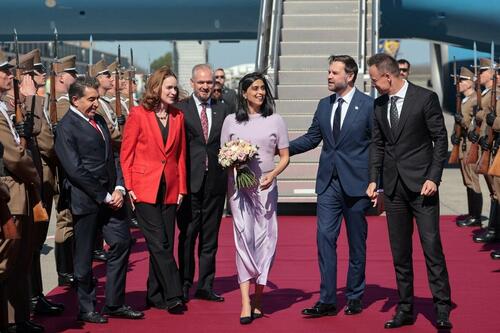
Vice President JD Vance's April 7, 2026 visit to Budapest, where he openly campaigned alongside Hungarian Prime Minister Viktor Orbán and denounced EU 'interference' in Hungarian affairs, represents more than routine alliance-building. It signals the Trump administration's deliberate strategy to nurture a global network of populist leaders united by national sovereignty, resistance to Brussels-style globalism, and 'illiberal' governance models that prioritize cultural cohesion and energy independence over multilateral bureaucracy.[1][2]
Vance's remarks were explicit: he accused EU bureaucrats of attempting to 'destroy the economy of Hungary,' undermine its energy independence, and punish voters for supporting Orbán. This mirrors longstanding Orban rhetoric framing the EU as an overreaching empire, but with the full weight of the U.S. vice presidency behind it. The timing—just days before Hungary's April 12 parliamentary elections, where Orbán trails in some polls—marks an unusually direct intervention, echoing Trump's own Truth Social endorsement of the Hungarian leader as a 'true friend, fighter, and WINNER.'
Going deeper, this alliance reveals a coherent ideological project with roots predating Trump's return. Orbán has long served as an inspirational figure for American conservatives, hosting CPAC events in Budapest and modeling institutional reforms that influence Project 2025 blueprints and Republican approaches to immigration, academia, and media. As NPR has documented, Orbán's unapologetic reshaping of Hungary's political institutions—often described as 'Trump before there was a Trump'—has provided a template for confronting 'woke' policies and asserting executive authority.[3]
European analysts have termed this the 'Orbanisation of America,' noting how Hungarian techniques of media influence, judicial reform, and demographic policy are being adapted stateside. The European Council on Foreign Relations highlights how Orbán positioned himself as a bridge between U.S. conservatives and European populists, with figures like Heritage Foundation leadership openly praising Hungary as the model for conservative statecraft. This is not isolated bilateralism but the scaffolding of a sovereignty-first international that challenges the post-1945 liberal order from within.[4]
Connections others miss include the quiet alignment with broader anti-supranational forces. Orbán's relationships extend beyond Trump to shared skepticism of EU centralization seen in Italy's Meloni government, elements of Germany's AfD, and even non-Western partners wary of Western liberal export. Brookings Institution analysis shows how Europe's strongmen—from Orbán to others—view a Trump-led America as an opening to dismantle multilateral constraints on migration, energy deals with Russia, and cultural policy. Vance's visit, coupled with earlier nuclear energy agreements and Rubio's statements of 'deep commitment' to Hungarian success, suggests Washington is actively shielding these experiments from EU financial pressure.[5]
The New York Times has contextualized this within the broader populist right's celebration of Trump's return, viewing it as validation that national sovereignty movements can succeed against globalist institutions. What receives insufficient analysis is the transnational character: this is less about one-off friendships than constructing parallel structures—bilateral energy deals, ideological conferences, mutual electoral support—that bypass and undermine bodies like the EU and traditional NATO orthodoxy.[6]
Critics label it democratic backsliding; proponents see it as corrective realism against elite overreach. Either way, Vance's warm embrace of Orbán in Budapest's Carmelite Monastery, praising a 'golden era' in U.S.-Hungary ties while Trump reportedly joined by phone, crystallizes an emerging axis that could fragment European unity further and legitimize sovereignty-focused governance models worldwide. As polls tighten in Hungary, the U.S. message is unmistakable: the populist international is operational.
LIMINAL: This high-level endorsement will likely embolden parallel sovereignty challenges across Europe, accelerating EU internal fractures and normalizing bilateral populist alliances that bypass multilateral institutions by the end of the decade.
Sources (6)
- [1]WATCH LIVE: Vance speaks in Hungary on trip to help boost Orbán's reelection bid(https://www.pbs.org/newshour/world/watch-live-vance-speaks-in-hungary-on-trip-to-help-boost-orbans-reelection-bid)
- [2]Vance will visit Hungary just days before its election(https://www.politico.com/news/2026/03/25/vance-will-visit-hungary-just-days-before-its-election-00844646)
- [3]The Orbanisation of America: Hungary's lessons for Donald Trump(https://ecfr.eu/publication/the-orbanisation-of-america-hungarys-lessons-for-donald-trump/)
- [4]Why Hungary inspires U.S. conservatives and populists(https://www.npr.org/2025/05/29/nx-s1-5399682/hungary-trump-viktor-orban-cpac)
- [5]With Trump's Victory, Europe's Populist Right Sees Return of a Fellow Believer(https://www.nytimes.com/2024/11/08/world/europe/trump-populist-far-right-leaders.html)
- [6]Why do Europe's strongmen love Trump?(https://www.brookings.edu/articles/why-do-europes-strongmen-love-trump/)