Trump Administration Finalizes Rollback of Biden-Era Fuel Economy Standards, Aiming to Lower New Car Prices and Boost Domestic Manufacturing
Trump's September 2026 CAFE rollback to 34.5 mpg by 2031 reverses Biden standards, with projected $930+ per-vehicle savings and manufacturing boosts, amid wider EPA deregulatory actions saving trillions; critics cite higher future fuel use and emissions.
On September 26, 2026, President Donald Trump announced via Truth Social that he had approved new Corporate Average Fuel Economy (CAFE) standards, explicitly terminating what he described as the Biden administration's "ridiculous EV Mandate." The move, set for formal announcement by the Department of Transportation on September 28, 2026, would reduce the projected fleetwide fuel-economy average for model year 2031 to 34.5 miles per gallon from the approximately 50.4 mpg required under prior Biden rules. Transportation Secretary Sean Duffy amplified the announcement on X, calling it "a major victory for America's auto workers."
The policy shift aligns with a December 2025 proposal from the National Highway Traffic Safety Administration (NHTSA), which estimated that the less stringent standards could lower upfront vehicle costs by about $930 per vehicle if manufacturers pass savings to consumers. Trump claimed the changes would save families "thousands" on new cars by removing costly "green" technologies and overregulation, while encouraging automakers like General Motors, Ford, and Stellantis to expand U.S. production. He noted over $100 billion in investments in American auto manufacturing under his administration.
This rollback forms part of a broader deregulatory agenda. In February 2026, the EPA, under Administrator Lee Zeldin, rescinded the 2009 Endangerment Finding and eliminated all federal greenhouse gas emission standards for motor vehicles, projecting over $1.3 trillion in total savings—including more than $2,400 per vehicle on average and avoided EV charger costs. Congress had previously eliminated penalties for CAFE non-compliance, rendering aspects of the new standards largely symbolic in enforcement terms, though they reshape compliance incentives and projections.
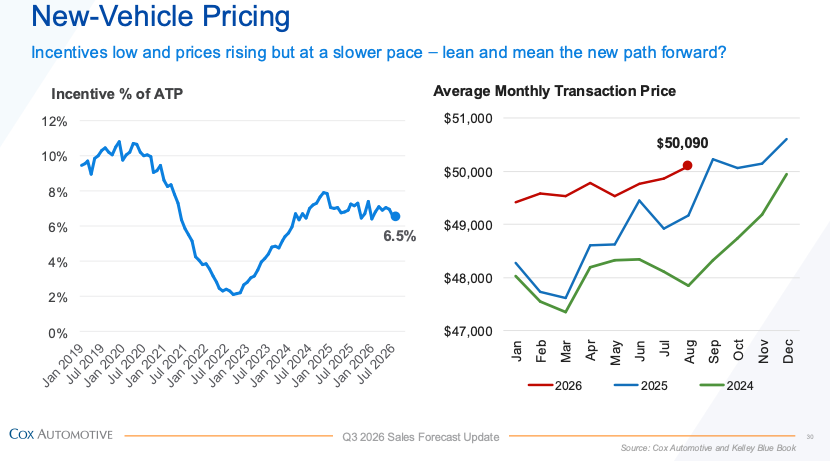
Critics, including the Sierra Club, argue the changes will increase long-term fuel consumption (NHTSA projected an additional 100 billion gallons through 2050), raise fuel spending by $185 billion, and boost CO2 emissions by about 5%, potentially offsetting short-term affordability gains with higher operating costs and environmental impacts. Supporters counter that prior standards forced expensive technologies (e.g., advanced transmissions, hybrids, DEF systems) that inflated new vehicle prices to an average of $50,000, disproportionately burdening working-class buyers and stifling consumer choice.
Deeper connections emerge in the auto sector's response and macroeconomic effects. The policy reversal coincides with slowed EV adoption following the end of federal tax credits, potentially accelerating shifts toward gasoline and diesel vehicles while freeing capital for traditional manufacturing expansion in states like Michigan, Ohio, and Indiana. This highlights tensions in environmental regulation versus economic productivity: while stricter CAFE rules aimed to reduce oil dependence and emissions, the cumulative compliance costs—passed to consumers—have contributed to affordability crises in transportation, a key driver of household economics. Analysts note that without penalties, the primary impact may be signaling to manufacturers, enabling greater focus on high-demand internal combustion and hybrid models rather than mandated electrification timelines.
The announcement underscores a philosophical pivot prioritizing immediate consumer savings and domestic job growth over aggressive climate targets embedded in vehicle design mandates.
[Economic Analyst]: Reduced CAFE stringency could accelerate U.S. auto production shifts toward affordable ICE/hybrid models, potentially lowering entry-level vehicle prices by 5-10% in the near term while increasing oil demand and complicating long-term emissions goals amid global EV competition.
Sources (8)
- [1]Trump Administration Plans to Gut Clean Car Rules(https://www.nytimes.com/2026/09/26/climate/trump-fuel-economy-car-rules.html)
- [2]Trump slashes Biden-era fuel economy standards for cars(https://www.politico.com/news/2026/09/26/trump-vehicle-standards-ev-01067597)
- [3]Trump Approves New Fuel Economy Rules, Says Car Prices Will Fall(https://www.newsweek.com/trump-fuel-economy-rules-car-prices-ev-mandate-12493359)
- [4]Trump says he is rolling back Biden-era US fuel economy rules for cars(https://www.aljazeera.com/news/2026/9/26/trump-says-he-is-rolling-back-biden-era-us-fuel-economy-rules-for-cars)
- [5]Trump ends Biden-era EV mandate for autos(https://thehill.com/homenews/administration/6113324-trump-eliminates-biden-ev-mandate/)
- [6]US to finalize sharply lower vehicle fuel economy standards(https://www.reuters.com/world/trump-says-he-approved-fuel-economy-standards-ending-biden-ev-mandate-2026-09-26/)
- [7]President Trump and Administrator Zeldin Deliver Single Largest Deregulatory Action in U.S. History(https://content.govdelivery.com/accounts/USEPAAO/bulletins/40989d8)
- [8]The Safer Affordable Fuel-Efficient (SAFE) Vehicles Rule III for Model Years 2022 to 2031(https://regulations.justia.com/regulations/fedreg/2025/12/05/2025-22014.html)