NASA Technical Bulletin Flags Casting Defects in Aluminum 2219 That Raise Corrosion Risk in Spacecraft Structures
NASA guidance stresses that early homogenization after casting is essential to restore uniform microstructure in 2219 alloy destined for human-rated space hardware. Evidence from cited studies shows measurable gains in ductility and corrosion resistance, yet the bulletin notes that very large ingots may still harbor unrecoverable discontinuities. Future qualification programs should incorporate XRD or DSC verification of homogenization effectiveness.
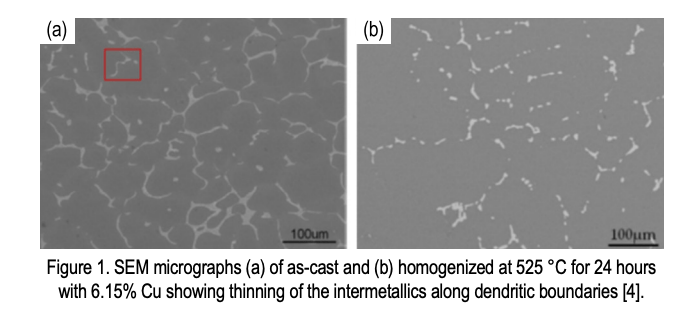
The bulletin details how direct-chill cast ingots of 2219 develop macrosegregation and banded CuAl2 phases that survive conventional thermomechanical processing, producing anisotropic properties and elevated corrosion susceptibility in large forgings used for shuttle tanks and ISS modules. Wang et al. demonstrated that a 535 °C, 10-hour homogenization step dissolves interdendritic phases, raises elongation from 6 % to 12 % and ultimate tensile strength by 8 % after T6 temper in laboratory-scale forgings. Follow-on multidirectional deformation refines grain size and distributes fine Al2Cu particles, reducing property scatter that can reach 15 % in non-homogenized material.
NASA materials team: Within 18 months at least two major 2219 forgings for Artemis hardware will be rejected or reworked after routine DSC checks detect incomplete homogenization.
Sources (3)
- [1]Primary Source(https://www.nasa.gov/centers-and-facilities/nesc/tb-26-07-aluminum-alloy-2219-material-guidance/)
- [2]Supporting Source(https://doi.org/10.1016/j.matchar.2018.03.012)
- [3]Supporting Source(https://ntrs.nasa.gov/citations/20160008373)