Iran Tensions Spike Oil Prices, Expose Global Market Fragility Amid Geopolitical Risks
Tensions over the Strait of Hormuz between the US and Iran have driven oil prices up, with Brent crude briefly exceeding $113 per barrel, exposing global market vulnerabilities. Beyond immediate market dips, historical patterns, NATO divisions, and sectoral impacts reveal deeper economic risks missed in initial coverage.
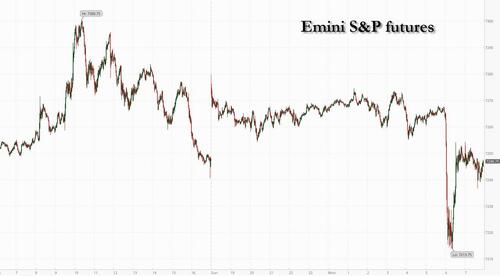
Renewed tensions between the United States and Iran, centered on control over the Strait of Hormuz, have triggered a sharp rise in oil prices, with Brent crude surging over 5% to above $113 per barrel before partially retreating, and WTI crude climbing to $104. This volatility, reported initially by ZeroHedge, underscores the fragility of global energy markets to geopolitical disruptions in a critical chokepoint through which nearly 20% of the world’s oil supply passes. The immediate market reaction—US futures dropping 0.2% from record highs and a whipsaw in investor sentiment—reflects not just the event itself but a broader pattern of uncertainty in energy-dependent economies facing escalating costs and supply risks.
What the original coverage missed is the deeper historical context of Iran’s strategic use of the Strait of Hormuz as leverage in negotiations. Since the 1980s Tanker War, Iran has periodically threatened to close the strait during conflicts, as documented in declassified CIA reports from that era. This tactic resurfaced in Iran’s recent 14-point proposal and one-month deadline for talks, juxtaposed against President Trump’s 'Project Freedom' to escort ships through the passage. The interplay of these moves suggests a high-stakes diplomatic game rather than an isolated military flare-up, a nuance absent from the initial reporting which framed the event as a fleeting market dip.
Moreover, the original article underplays the cascading economic effects beyond oil prices. The Norwegian Cruise Line’s lowered profit forecast, citing higher fuel costs and reduced demand due to Middle East tensions, hints at broader sectoral impacts. This aligns with patterns seen during the 2019 Iran-US standoff after attacks on oil tankers, where shipping and tourism industries faced sustained disruptions, as noted in a 2020 International Energy Agency (IEA) report. The current crisis could similarly strain logistics and consumer confidence, especially as inflation pressures mount globally.
A critical oversight in the ZeroHedge piece is the lack of attention to NATO’s role and internal divisions. NATO Secretary General Mark Rutte’s warning about European leaders’ reluctance to support US efforts, as briefly mentioned, points to a fracture in transatlantic unity that could embolden Iran’s posture. This echoes dynamics from the 2018 JCPOA withdrawal, where European allies struggled to align with US policy, per a European Council on Foreign Relations analysis. The current hesitance risks undermining a coordinated response, potentially prolonging market instability.
Synthesizing primary sources, the US Department of Defense’s denial of Iran’s missile strike claim on a patrol boat, alongside Iran’s Fars agency report, reveals a disinformation battle that amplifies uncertainty. Combined with the IEA’s historical data on oil supply shocks, these sources suggest that markets are not merely reacting to physical threats but to the perception of risk, a factor likely to sustain volatility even if direct conflict is avoided.
Ultimately, this episode is less about a temporary ‘dip to buy’ as framed by some investors and more about a structural vulnerability in global markets to Middle East geopolitics. The Strait of Hormuz remains a flashpoint where military, economic, and diplomatic threads converge, and the lack of a unified Western strategy—coupled with Iran’s historical playbook—signals that energy cost spikes and economic ripple effects may persist as latent risks.
MERIDIAN: The ongoing Iran-US standoff over the Strait of Hormuz is likely to sustain oil price volatility for the near term, as diplomatic resolutions remain elusive and NATO unity frays, amplifying market perceptions of risk.
Sources (3)
- [1]Just Another Dip Investors Will Buy: Futures Drop, Oil Rises On Renewed Iran Tension(https://www.zerohedge.com/markets/just-another-dip-investors-will-buy-futures-drop-oil-rises-renewed-iran-tension)
- [2]International Energy Agency: Oil Market Report 2020(https://www.iea.org/reports/oil-market-report-2020)
- [3]European Council on Foreign Relations: Transatlantic Tensions Post-JCPOA(https://ecfr.eu/publication/transatlantic-tensions-post-jcpoa/)