Compassion Without Order: Europe's Migration Reckoning and the Erosion of Social Capital
Europe's shift toward stricter migration policies reflects integration failures and eroded social trust documented in EU reports and Putnam's research. Rapid diversity without assimilation reduces civic engagement and fuels right-wing surges, underscoring the civilizational trade-off between compassion and order.
The delicate equilibrium between compassion and civilizational order, as articulated in recent geopolitical analysis, represents a fundamental trade-off too often obscured by polarized discourse. Across Europe, the post-2015 migration surge has exposed how policies emphasizing moral signaling over pragmatic integration can strain institutions, erode public trust, and fuel political realignments once dismissed as fringe. Official EU assessments now acknowledge persistent integration failures: long-term surveys indicate asylum seekers require a decade or more to achieve labor market parity with natives, while over one in six migrants reside in overcrowded housing—70% higher than native-born populations—exacerbating pressures on welfare systems and social cohesion.[1][2]
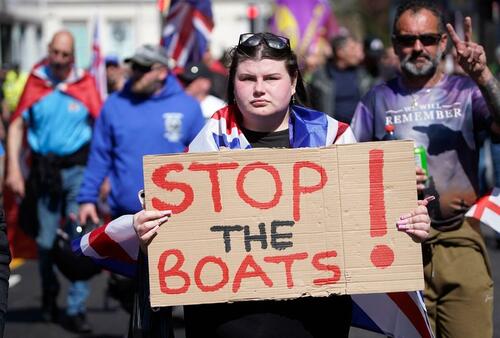
This is not abstract theory. BBC reporting documents Europe's pivot from Angela Merkel's "We can do this" openness to widespread restrictive measures by 2025, including expanded deportations, offshore processing, and bilateral deals with third countries—moves driven by public anxiety over crime, cultural fragmentation, and parallel societies in cities like London, Paris, and Brussels. Anti-migrant protests in the UK throughout 2025, often centered on perceived threats to national identity and safety, underscore how delayed acknowledgment of integration shortfalls hardens into resentment.[3][4]
Deeper examination reveals connections mainstream narratives frequently miss: Robert Putnam's landmark research on social capital demonstrates that ethnic diversity, absent robust assimilation, correlates with reduced interpersonal trust—not just between groups, but within them. In diverse communities, residents "hunker down," volunteering less, trusting neighbors less, and engaging civically at lower rates. This "constrict" effect challenges the assumption that diversity inherently strengthens societies without deliberate efforts toward shared language, values, and loyalty. Putnam's findings, though optimistic about long-term adaptation, provide empirical grounding for why rapid, low-assimilation inflows can fray the mutual regard essential to liberal democracies.[5][6]
Econometric studies reinforce the pattern. Research from the ifo Institute and others establishes causal links between non-European, low-skilled immigration and increased electoral support for far-right parties across Europe. From France's National Rally to Germany's AfD and Austria's FPÖ, these movements have surged not merely on economic grievance but on voters' perception that elites prioritize symbolic virtue over border integrity, public safety, and cultural continuity. Trade shocks and refugee inflows independently predict rightward shifts, suggesting the compassion-order tension manifests as democratic correction when institutions appear captured by idealism untethered from sustainability.[7][8]
The American contrast is instructive. Historical U.S. immigration succeeded through an ethos of assimilation—immigrants from Italy, Ireland, Asia, and Africa embraced a civic identity rooted in constitutional values, English proficiency, and national loyalty while preserving private heritage. This model generated unity amid diversity. Europe's experiment with multiculturalism emphasizing separation over convergence has yielded different results: neighborhoods functioning as enclaves rather than melting pots, schools strained by linguistic divides, and rising support for parties demanding enforced integration.
Philosophically, this reflects a civilizational constant: compassion, when elevated above ordered liberty and realistic governance, risks institutional decay. Societies require confidence in their foundational norms to absorb outsiders without self-erasure. The EU's 2026 Migration Pact—emphasizing returns, border deterrence, and responsibility-sharing—signals tacit recognition that prior approaches jeopardized cohesion.[9] Yet human rights critiques highlight the moral hazard of overcorrection. The synthesis lies in balanced policy: humane yet firm borders, accelerated assimilation pathways, and honest discourse unburdened by taboos.
Western democracies, including the U.S., face a choice. Prioritize sustainable order—defending rule of law, expecting civic reciprocity, and fostering genuine unity—or watch social fabric unravel under the weight of unmanaged compassion. The rise of heterodox political forces is less a threat than a symptom: citizens demanding their leaders value civilization's continuity alongside its generosity.
[Liminal Observer]: Prioritizing symbolic compassion over assimilation and order accelerates social fragmentation and institutional strain, forcing Western societies toward either renewed civic unity or deepening polarization by the 2030s.
Sources (5)
- [1]Migrant crisis: How Europe went from Merkel's 'We can do this' to tough new measures(https://www.bbc.com/news/articles/cn5e5q7w41eo)
- [2]The European Annual Asylum and Migration Report (2025)(https://data.consilium.europa.eu/doc/document/ST-15196-2025-INIT/en/pdf)
- [3]The Downside of Diversity(https://www.wcfia.harvard.edu/publications/downside-diversity)
- [4]Immigration and the Rise of Far-Right Parties in Europe(https://www.ifo.de/DocDL/dice-report-2017-4-davis-deole-december.pdf)
- [5]EU migration trends and policy changes revealed in new report(https://home-affairs.ec.europa.eu/news/eu-migration-trends-and-policy-changes-revealed-new-report-2025-07-09_en)