Jihadist Territorial Gains Accelerate in the Sahel: Eroding States, Migration Pressures, and Underreported Strategic Shifts
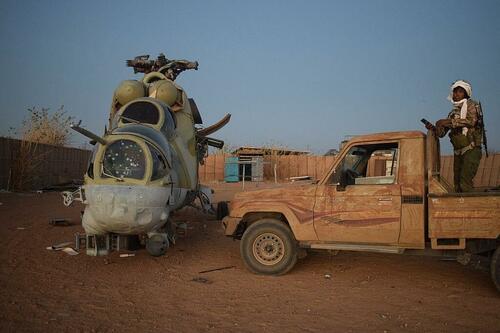
Credible reports confirm jihadist groups like JNIM and ISSP have made rapid territorial gains across Mali, Burkina Faso, and Niger since 2022, eroding sovereignty, encircling capitals, and exploiting post-coup vacuums. This underreported crisis links to heightened migration, resource control funding terror, intra-jihadist dynamics, and spillover threats to coastal West Africa, despite AES joint force efforts.
Recent coordinated attacks across Mali in late April 2026, which killed Defense Minister Sadio Camara and involved jihadist fighters alongside Tuareg separatists from the Azawad Liberation Front, highlight the accelerating collapse of state authority in the Sahel. These operations, which targeted multiple urban centers and military positions near Bamako, forced retreats by Malian forces and their Russian partners, echoing patterns of jihadist success that have intensified since the early 2020s. Groups like Jama’at Nusrat al-Islam wal-Muslimin (JNIM, an al-Qaeda affiliate) and Islamic State Sahel Province (ISSP, formerly ISGS) have capitalized on the vacuum left by successive military coups in Mali, Burkina Faso, and Niger, combined with the withdrawal of Western forces and inconsistent Russian support.
Data from the Global Terrorism Index and ACLED shows the Sahel now accounts for nearly half of global terrorism-related deaths, surpassing combined totals from Afghanistan, Iraq, and Syria. Jihadists control or contest over 40-50% of territory in Burkina Faso and significant portions of Mali and Niger, encircling capitals and imposing shadow governance through taxation, dispute resolution, and Sharia enforcement in rural zones. While JNIM and ISSP have clashed in the past, reports indicate periods of tacit détente, allowing both to focus on state forces, control smuggling routes for gold, weapons, and drugs, and expand southward toward coastal states like Benin, Togo, and Ivory Coast.
This territorial shift carries overlooked implications. The Sahel's instability exacerbates monumental migratory flows toward North Africa and Europe, straining local economies already burdened by conflict and climate stress. Jihadist control over resource-rich areas funds operations and creates proto-states resistant to counterterrorism. Multilateral efforts like the MNJTF and the new Alliance of Sahel States (AES) joint force have yielded limited results, as juntas prioritize regime survival over effective governance. Western coverage has been muted amid competing global crises, yet UN assessments and think tank analyses warn of spillover risks, including transnational plots traced back to Sahel-based ISSP networks.
The post-2021 surge followed French Operation Barkhane's drawdown and coups that severed ties with traditional partners. Reliance on Wagner/Africa Corps mercenaries produced short-term gains but failed to stem jihadist momentum, with recent Russian pullbacks from northern Mali underscoring the fragility. Deeper connections reveal how ethnic tensions, governance failures, and great-power distractions have enabled jihadists to evolve from hit-and-run attacks to sustained territorial administration—a strategic pivot with profound counterterrorism, resource security, and demographic ripple effects across Africa and beyond.
Liminal Analyst: Jihadist proto-states in the Sahel will likely drive record migration surges into Europe, self-finance through resource smuggling, and create new launchpads for transnational attacks as Western attention remains divided.
Sources (5)
- [1]Violent Extremism in the Sahel | Global Conflict Tracker(https://www.cfr.org/global-conflict-tracker/conflict/violent-extremism-sahel)
- [2]Western Withdrawal, Jihadist Expansion: How the Sahel Became Ground Zero for Global Terrorism(https://warontherocks.com/western-withdrawal-jihadist-expansion-how-the-sahel-became-ground-zero-for-global-terrorism/)
- [3]Counterterrorism Shortcomings in Mali, Burkina Faso, and Niger(https://www.fpri.org/article/2025/03/counterterrorism-shortcomings-in-mali-burkina-faso-and-niger/)
- [4]Conflict in the Sahel(https://acleddata.com/region/conflict-sahel)
- [5]Burkina Faso, Mali, Niger: The Sahel accounts for 51% of global terrorism deaths in 2024(https://www.theafricareport.com/378239/burkina-faso-mali-niger-report-shows-sahel-accounted-for-51-of-global-terrorism-deaths-in-2024/)