China Achieves First Orbital-Class Booster Recovery with Innovative Net Capture on Long March 10B, Signaling Intensifying Reusable Launch Competition
China's July 10, 2026 Long March 10B test achieved the nation's first orbital booster recovery using a net-capture barge system, advancing reusable tech but trailing SpaceX by a decade; corroborates accelerating Sino-US space rivalry.
On July 10, 2026, China successfully completed the maiden flight of its Long March 10B rocket from the Wenchang Commercial Space Launch Site in Hainan, marking a historic milestone as the first stage booster was recovered via a novel net-capture system on the Linghangzhe offshore platform in the South China Sea. State media and the China Aerospace Science and Technology Corporation (CASC) confirmed the controlled recovery approximately six minutes after stage separation, making China only the second nation after the United States to achieve orbital-class booster recovery during a launch.[1][2]
The recovery employed a distinctive approach: the booster deployed hooks to engage tensioned cables in a grid-like net on the recovery vessel, rather than relying on landing legs like SpaceX's Falcon 9. This net-based method shifts complexity to the ground segment, potentially allowing a lighter booster design and higher payload capacity. CASC highlighted it as the world's first successful net-system capture of a carrier rocket, with plans to refl y the same stage before the end of 2026.[3]
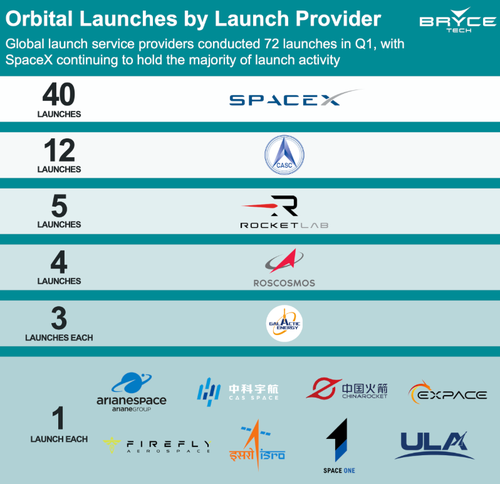
This breakthrough builds on China's prior suborbital tests and positions the Long March 10B—capable of at least 16 metric tons to low-Earth orbit—as a direct competitor to established reusable systems. While SpaceX pioneered operational reuse with Falcon 9 landings starting in 2015 and drone ship recoveries in 2016, China's rapid progress underscores a strategic push to close the gap in launch cadence and cost. BryceTech data for Q1 2026 already showed SpaceX's dominance (40 launches vs. China's 12), but this test accelerates China's trajectory toward reusable operations.[4]
Analysts note the move enhances China's space access capabilities amid broader geopolitical competition, with potential implications for satellite deployment, crewed missions, and commercial markets. Shares in related Chinese firms rose sharply post-announcement. The event draws parallels to Blue Origin's New Glenn recovery but introduces a unique maritime net technique that could influence future designs worldwide.
[Space analyst]: China's net-capture milestone could enable faster iteration on reusable boosters, pressuring US dominance in launch economics by 2030 if reflights succeed and scale.
Sources (5)
- [1]China lands reusable rocket for first time, state media says(https://www.bbc.com/news/articles/cm2rmmx86pdo)
- [2]China recovered its first reusable rocket and showed a new way to do it(https://arstechnica.com/space/2026/07/china-recovered-its-first-reusable-rocket-and-showed-a-new-way-to-do-it/)
- [3]China successfully tests sea-based rocket booster recovery system(https://www.reuters.com/science/china-successfully-tests-sea-based-rocket-booster-recovery-system-state-media-2026-07-10/)
- [4]Long March 10B(https://en.wikipedia.org/wiki/Long_March_10B)
- [5]China Catches Orbital Rocket in Net at Sea: Long March 10B Joins Reuse Club(https://spacedaily.com/sd-china-just-caught-a-rocket-booster-in-a-net-at-sea-and-the-detail-everyone-missed-is-that-the-refly-is-scheduled-before-the-stage-has-even-finished-cooling/)