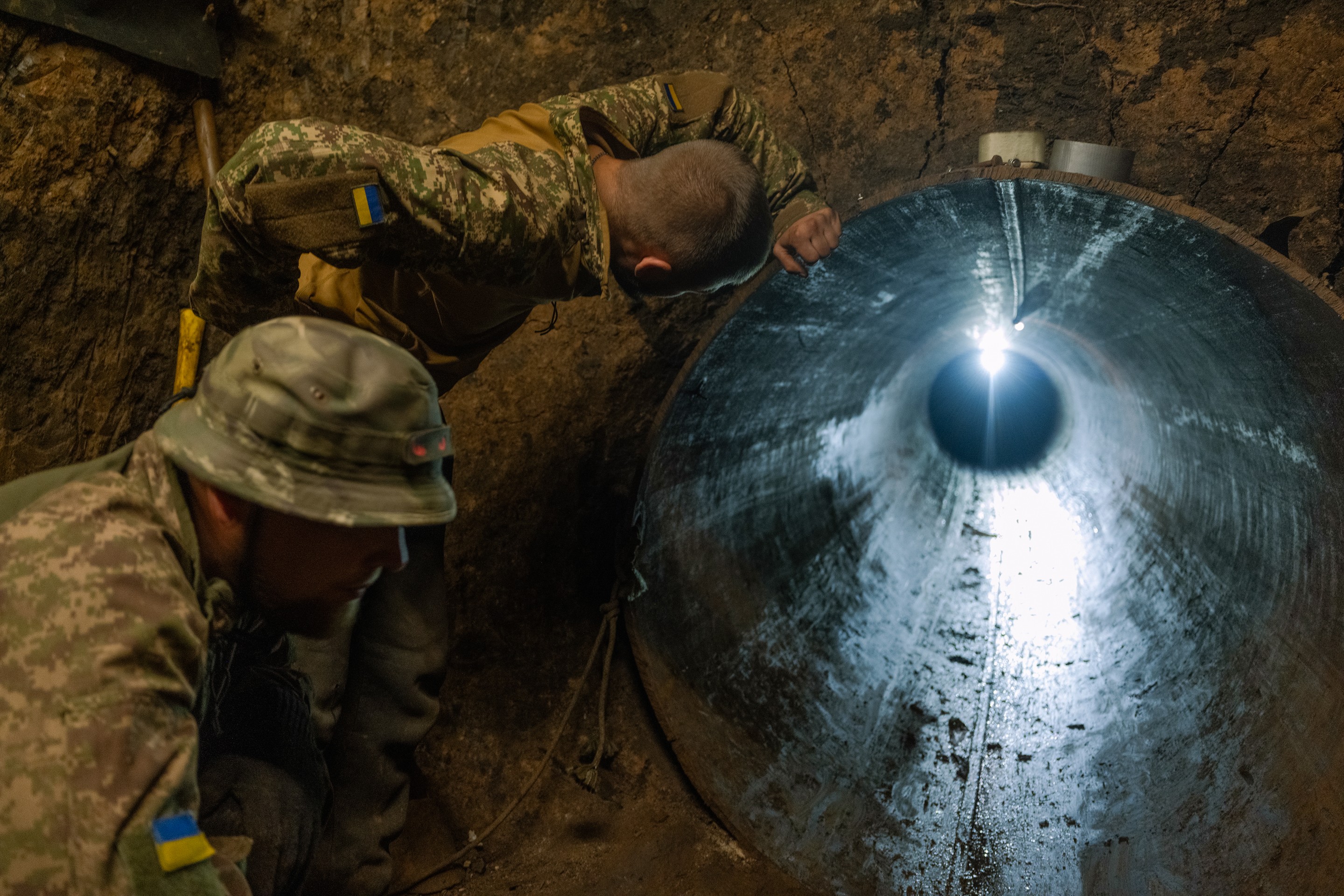
Soviet-Era Gas Pipelines Become Primary Arenas as Drone Density Forces Subterranean Shifts
Pipeline combat reveals how legacy infrastructure alters modern incentives once drones dominate airspace. Both militaries adapt existing Soviet assets rather than build new tunnels, exposing dependence on archival data and industrial remnants. Continued drone proliferation will lock in subsurface fighting as the default until one side seizes or destroys the network.
The Atlantic report documents small-unit firefights inside 1.4-meter-diameter pipes, using night-vision and suppressed weapons to control junctions that allow flanking of surface positions. These routes exploit pre-existing Soviet infrastructure laid for industrial delivery rather than military purpose, turning maintenance valves into choke points. Visual evidence of entry hatches and casualty extraction shows both sides prioritizing control of these corridors over contested villages.
This pattern follows directly from drone economics: cheap FPV and Lancet systems raised the cost of surface movement, rewarding forces that could relocate logistics and reserves underground. Russian engineering units have mapped pipelines via industrial records while Ukrainian special forces leverage captured schematics, creating an incentive structure where the side with better archival access gains asymmetric advantage without new construction.
Forward indicators point to accelerated mapping operations and potential pipeline sabotage campaigns aimed at denying the network to the opponent. Western supply of portable respirators and low-signature comms will determine whether these tunnels remain viable through winter 2027 or collapse into static attrition zones.
PRAXIS: Pipeline junction control will account for at least 25 percent of reported platoon engagements by March 2027 if drone sortie rates remain above 400 per day on the eastern front.
Sources (3)
- [1]Primary Source(https://www.theatlantic.com/national-security/2026/10/ukraine-war-gas-pipelines-russia/689105/)
- [2]Supporting Source(https://www.understandingwar.org/backgrounder/russian-offensive-campaign-assessment-october-2026)
- [3]Supporting Source(https://www.reuters.com/world/europe/ukraine-forces-use-underground-routes-donbas-2026-10-15/)