Uranium Market Tightens Structurally as AI Demand and Nuclear Renaissance Converge
UBS and multiple analysts confirm structural uranium tightening driven by supply lags and rising demand from nuclear growth plus AI; prices firming with long-term contracts at highs, pointing to sustained deficits and energy policy shifts.
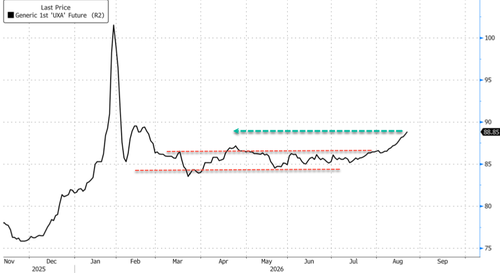
UBS analyst George Eadie highlighted in early August 2026 that continued strength in term pricing and accelerating utility procurement signal a uranium market tightening structurally, echoing themes of chronic underinvestment and long development timelines for new supply.[1][2] Spot prices, which briefly exceeded $100/lb in January before stabilizing in the mid-$80s, have shown renewed momentum approaching $89/lb by mid-August, with long-term contract prices reaching 18-year highs near $95-96/lb.[3][4]
This aligns with broader analyst consensus on a widening structural deficit. Primary mine production trails reactor demand by tens of millions of pounds annually, exacerbated by producer discipline (e.g., Kazatomprom output cuts), geopolitical risks, and the decade-plus lead time for new projects.[5][6] Demand drivers extend beyond traditional utilities: China’s rapid nuclear expansion positions it as the world’s largest market by decade’s end, while AI data center buildouts introduce hyperscaler demand for reliable, low-carbon baseload power. Tech firms like Meta and Microsoft have secured nuclear PPAs, adding inelastic demand that traditional cycles lacked.[7][8]
Deeper connections reveal policy and investment ramifications often overlooked. The U.S. remains heavily import-dependent (domestic production <2% of needs), with Russian LEU bans accelerating efforts to rebuild domestic supply chains amid energy security concerns.[9][10] This intersects with reindustrialization and “powering up America” themes, where nuclear becomes central to meeting AI-driven electricity surges projected to reach 1,200 TWh by 2030. Long-term price incentives have risen (UBS lifted its real 2035 estimate toward $100/lb), suggesting sustained pressure that could reshape energy policies toward faster permitting, SMR deployment, and diversified sourcing.[11] Equities have lagged fundamentals, creating potential disconnects for investors focused on producers like Cameco.
Overall, the market shift appears structural rather than cyclical, with deficits projected to widen through 2040 absent major new supply—implying higher sustainable prices and strategic implications for global energy transitions.
Liminal Analyst: Structural tightening will sustain elevated uranium prices into the 2030s, accelerating nuclear investments for AI/data centers and prompting policy shifts toward domestic supply security in import-dependent regions.
Sources (8)
- [1]UBS Uranium Research: Powering Up Equities Outlook(https://studylib.net/doc/28277744/uranium-powering-up)
- [2]Uranium | UBS Global(https://www.ubs.com/global/en/investment-bank/insights-and-data/articles/uranium.html)
- [3]Cameco gets UBS upgrade on strengthening uranium bull case(https://www.proactiveinvestors.com/companies/news/1096099)
- [4]Uranium Price: Charts, Forecasts & News - FocusEconomics(https://www.focus-economics.com/commodities/energy/uranium/)
- [5]Uranium Fundamentals Strengthen Beneath the Market | Sprott(https://sprott.com/insights/uranium-fundamentals-strengthen-beneath-the-market-noise/)
- [6]Uranium contracting gap widens as utilities face supply crunch - Mining.com.au(https://mining.com.au/uranium-contracting-gap-widens-as-utilities-face-supply-crunch/)
- [7]Uranium Primer: The Nuclear Renaissance Powering AI(https://read.aurelionresearch.com/p/uranium-primer-the-nuclear-renaissance)
- [8]US Uranium Production & Prices: 2026 Market Update(https://discoveryalert.com.au/domestic-uranium-production-uranium-prices-us-market-2026/)