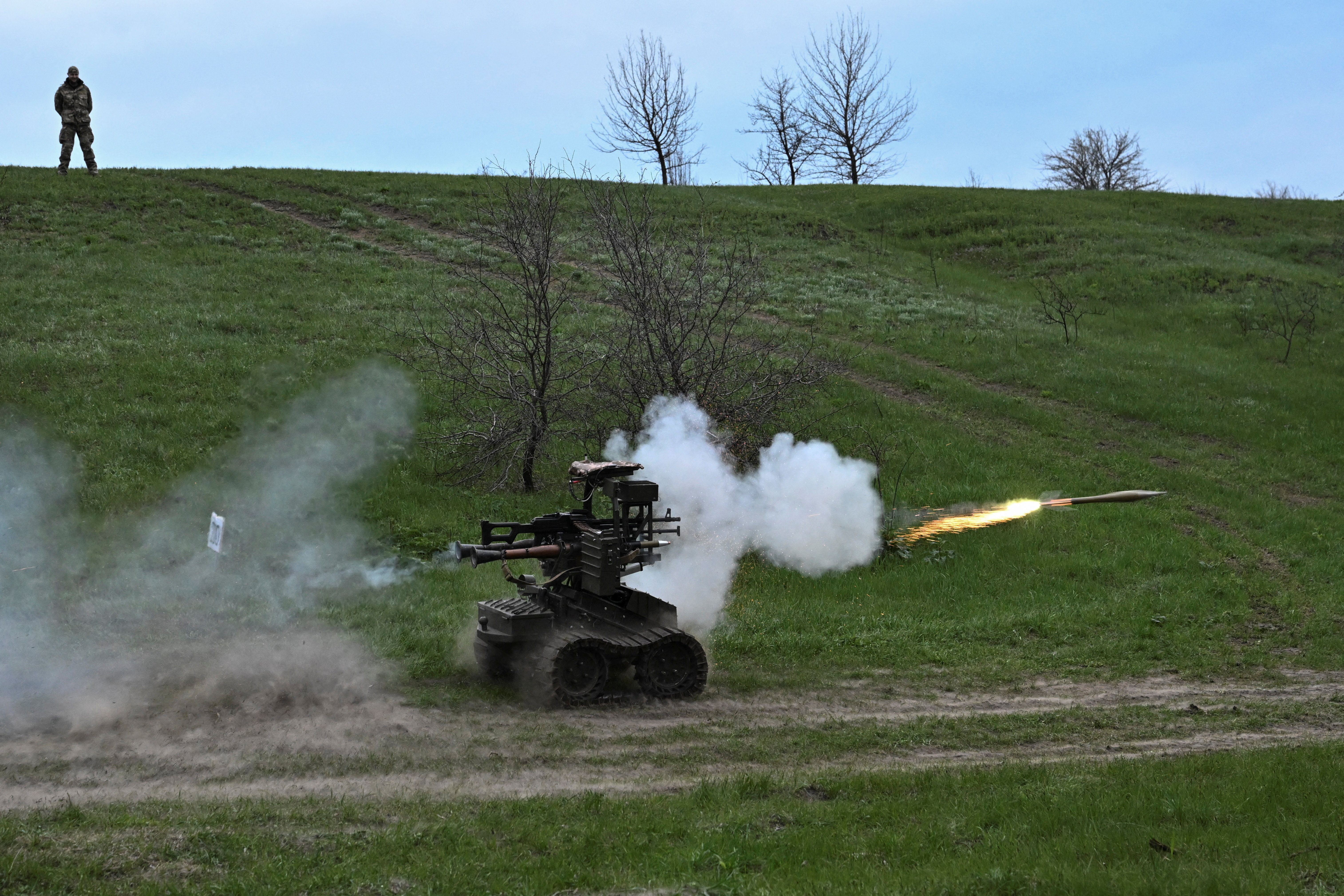
Ukraine's 25,000-Robot Logistics Surge: Autonomous Breakthrough or Cyber Target in Waiting?
SENTINEL analysis frames Ukraine's 25,000-UGV plan as a historic move toward autonomous logistics at scale, exposing overlooked cyber and EW vulnerabilities that could let Russia compromise or redirect entire robotic fleets, a risk downplayed in optimistic mainstream reporting.
Ukraine's announcement to contract 25,000 unmanned ground vehicles (UGVs) in the first half of 2026, more than double the prior year's total, is routinely reported as a logistics efficiency move. The Defense News coverage correctly captures Minister Mykhailo Fedorov's target of shifting 100% of frontline logistics to robotic systems, the 22,000+ missions already conducted, and the symbolic all-unmanned capture of a Russian position by the 3rd Separate Assault Brigade. Yet this framing misses the deeper historic inflection: the deliberate transition to autonomous logistics at scale across a 1,200 km front, an experiment no military has attempted at this density.
This is not merely an extension of existing drone tactics. Ukraine's aerial FPV and loitering munition revolution (2022-2024) demonstrated cheap unmanned systems could attrit superior armor and artillery. Ground robots introduce new variables: they must negotiate mine-laden, cratered terrain while carrying 300 kg payloads over 50 km, all while remaining resilient to the very electronic warfare (EW) that has already degraded Ukrainian GPS-guided munitions and Starlink terminals. The original source celebrates the Brave1 cluster's growth to 300 ground-drone companies but fails to note that scaling hardened, cyber-resilient platforms is exponentially harder than iterating quadcopters.
Synthesizing a 2025 RUSI study on Ukrainian unmanned systems with a CSIS report on autonomous platform cybersecurity reveals what the coverage omitted. RUSI documented that while remote UGVs have spared thousands of casualties, achieving reliable autonomy requires onboard AI for obstacle avoidance and decentralized command—capabilities still maturing in Ukrainian industry. The CSIS analysis warns that each additional robot multiplies the attack surface: RF links, firmware update mechanisms, and sensor feeds all become vectors for Russian SIGINT and malware injection. Patterns from prior Russian operations against HIMARS, Excalibur shells, and commercial drones suggest EW jamming paired with spoofed control signals could redirect logistics UGVs, harvest telemetry on Ukrainian supply routes, or trigger mass denial-of-service at critical moments.
The Bizon-L's rapid NATO cataloguing is presented as standardization success; deeper reading shows it also signals intent to export the model, potentially making allied forces inheritors of the same vulnerabilities. Comparisons to U.S. Army Robotic Combat Vehicle trials and Israeli UGV experience in Gaza indicate that Western militaries have encountered similar integration problems—maintenance under fire, battery logistics, and command latency—but rarely at the 25,000-unit tempo Ukraine now pursues.
The strategic risk is clear: an adversary that has invested heavily in EW regiments and cyber units since 2014 will view these robotic swarms as high-payoff targets. Without equal urgency on mesh networking, AI-driven autonomous navigation that reduces reliance on constant operator links, and intrusion detection at machine speed, Ukraine risks converting a manpower-saving innovation into a multimillion-dollar gift to Russian electronic intelligence. Zelenskyy's statement that "high technology [protects] the highest value—human life" is compelling, yet history of unmanned systems shows that unprotected technology often becomes the next human vulnerability.
This inflection point will likely force doctrinal shifts on both sides. Russia may accelerate ground robot and counter-UGV programs; NATO partners will watch Ukrainian telemetry to harden their own fleets. The true measure of success will not be delivery numbers but whether the digital command layer survives sustained Russian attempts to fracture, hijack, or blind it. Autonomous logistics at this scale is coming; whether it arrives secure is the question the current coverage has left unanswered.
SENTINEL: Ukraine's mass UGV deployment will accelerate adversarial EW and cyber campaigns targeting logistics swarms; by late 2027 the side that first fields reliable AI-offline autonomy and hardened mesh networks will hold decisive logistical advantage.
Sources (3)
- [1]Ukraine to field 25,000 ground robots in push to replace soldiers for frontline logistics(https://www.defensenews.com/unmanned/2026/04/24/ukraine-to-field-25000-ground-robots-in-push-to-replace-soldiers-for-frontline-logistics/)
- [2]Unmanned Systems and the Future of Ukrainian Defence(https://rusi.org/explore-our-research/publications/commentary/unmanned-systems-and-future-ukrainian-defence)
- [3]Cybersecurity Challenges for Autonomous Military Systems(https://www.csis.org/analysis/cybersecurity-challenges-autonomous-military-systems)