America's $630 Billion Sewage Crisis: Symptom of Decaying Infrastructure and Neglected Civilizational Foundations
Corroborated by EPA and ASCE data, the U.S. faces a $630B wastewater infrastructure shortfall with tens of thousands of annual sewer overflows, exemplified by the 2026 Potomac River disaster, highlighting systemic neglect of basic maintenance as a marker of broader decay.
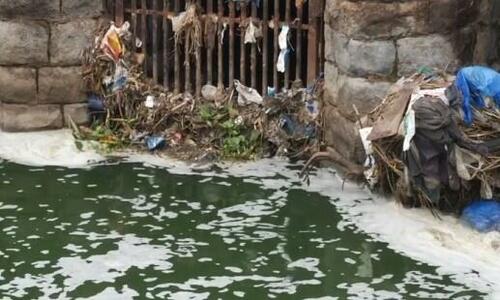
Beneath America's cities and suburbs lies a vast, aging network of sewer pipes and wastewater treatment facilities that is failing at an alarming rate. The Environmental Protection Agency estimates that $630 billion in infrastructure investment is needed over the next 20 years to address wastewater and stormwater systems, a figure that underscores chronic underinvestment in basic public works. This half-trillion-dollar problem, highlighted in EPA's recent needs assessments, reflects not just technical decay but a deeper societal failure to maintain the physical systems that underpin modern civilization. The American Society of Civil Engineers (ASCE) awarded U.S. wastewater infrastructure a D+ grade in its 2025 Infrastructure Report Card, citing insufficient funding, rising operational costs, and increasing demands from population growth and extreme weather events. Despite wastewater utility bills rising over 24% between 2020 and 2025, the rate of large-scale infrastructure renewal has actually declined from 3% to 2% over the past decade. The EPA estimates between 23,000 and 75,000 sanitary sewer overflows occur annually, releasing untreated waste into waterways and exposing millions to health risks including gastrointestinal illnesses and infections. These incidents stem from blockages, pipe breaks, and overloaded systems in an 800,000-mile network where the average pipe is 45 years old, with some dating back over a century in cities like Philadelphia and St. Louis. A stark recent example occurred in January 2026, when a pipe collapse in Montgomery County, Maryland, sent over 240 million gallons of raw sewage into the Potomac River near Washington, D.C. - one of the largest such spills in U.S. history. This event, which spiked E. coli levels and prompted public health warnings, illustrates the immediate human and environmental costs of deferred maintenance. Connections to broader patterns emerge when viewing this crisis alongside other infrastructure failures: it mirrors underreported breakdowns in roads, bridges, and electrical grids, where short-term fiscal priorities and political focus on newer technologies overshadow the unglamorous work of preserving core systems. Elite neglect is evident in the paradox of ballooning utility costs for consumers that fail to translate into proportional upgrades, disproportionately affecting lower-income communities with higher exposure to contamination. Experts warn that without accelerated rehabilitation, overflows and bypasses will increase, degrading waterways and public health. While recent federal funding through the Clean Water State Revolving Fund and related programs has allocated billions, it covers only a fraction of the documented needs. This sewage infrastructure crisis serves as a subterranean symbol of civilizational maintenance failure - a reminder that societies decline not just through dramatic events but through the quiet erosion of essential, hidden foundations.
LIMINAL: This under-maintained subterranean network reveals how elite priorities have shifted away from basic civilizational upkeep, accelerating tangible decline in public health and environmental integrity that will compound with climate pressures.
Sources (5)
- [1]Water Infrastructure Needs(https://www.epa.gov/sustainable-water-infrastructure/water-infrastructure-needs)
- [2]Water System Upgrades Could Require More Than $1 Trillion Over Next 20 Years(https://www.pew.org/en/research-and-analysis/articles/2024/09/05/water-system-upgrades-could-require-more-than-$1-trillion-over-next-20-years)
- [3]Wastewater earns D+ on ASCE 2025 Infrastructure Report Card(https://www.wwdmag.com/utility-management/news/55277011/wastewater-earns-d-on-asce-2025-infrastructure-report-card)
- [4]How more than 240 million gallons of sewage flowed into the Potomac River(https://www.npr.org/2026/02/20/nx-s1-5716215/how-more-than-240-million-gallons-of-sewage-flowed-into-the-potomac-river)
- [5]Sanitary Sewer Overflows (SSOs)(https://www.epa.gov/npdes/sanitary-sewer-overflows-ssos)