Iran's Alleged Acquisition of Chinese Satellite Imagery for Targeting US Assets: Beijing's Rebuttals and Patterns of Dual-Use Technology in Authoritarian Partnerships
Leaked documents suggest Iran accessed Chinese commercial satellite TEE-01B for targeting US bases in March 2025; Beijing denies involvement. Analysis reveals dual-use commercial channels, links to 2021 Sino-Iran accords, market and risk implications, while noting gaps in original Western reporting on technical specifics and verification.
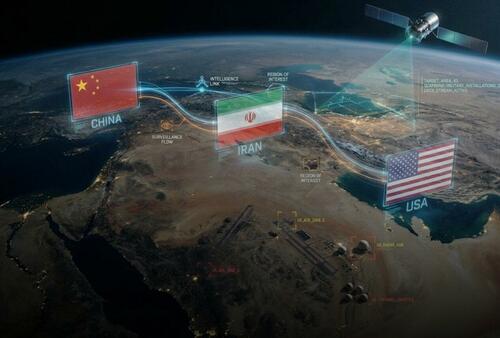
The Financial Times report, citing leaked Iranian military documents, alleges that Iran's Islamic Revolutionary Guard Corps secured operational control of the TEE-01B satellite—developed by China's Earth Eye Co.—shortly after its launch in late 2024. These documents reportedly include time-stamped coordinate lists, imagery of US bases in Saudi Arabia (Prince Sultan), Jordan (Muwaffaq Salti), Bahrain, and Iraq (Erbil) captured in March 2025, coinciding with Iranian drone and missile strikes during Operation Epic Fury. Access was facilitated through Emposat's commercial ground stations across Asia and Latin America.
This account builds on but extends beyond the ZeroHedge summary by highlighting the commercial vector: the arrangement exploits dual-use satellite infrastructure rather than direct state-to-state military transfer. What original coverage underplayed is the precedent of China's 25-year comprehensive cooperation agreement with Iran signed in 2021, which included space collaboration clauses, and parallels with documented dual-use exports to Russia tracked in EU sanctions lists since 2022. A SIPRI policy brief from 2024 on space domain awareness similarly notes increasing Sino-Russian-Iranian data sharing but stops short of operational examples during active conflict.
Multiple perspectives emerge. US and allied intelligence assessments, referenced in declassified DoD unclassified summaries on Chinese military power (2024), frame such transfers as part of a broader strategy to erode US force protection in the CENTCOM area of responsibility. Iranian state media has historically portrayed enhanced reconnaissance as defensive sovereignty. Chinese officials, via the Foreign Ministry statement of 8 May 2025, describe the claims as 'fabricated rumors' intended to malign Beijing, while the embassy in Washington labeled them 'speculative disinformation'—language that stops short of addressing commercial entity involvement or the specific leaked documents.
The FT reporting appears to have overstated direct 'spy satellite' characterization; primary technical specifications from Earth Eye Co filings describe TEE-01B as a commercial Earth observation platform with 0.5m resolution, not a dedicated military asset. However, the pattern of IRGC Aerospace Force integration aligns with observed shifts in Iranian strike accuracy post-2024, previously attributed solely to domestic upgrades or Russian GLONASS inputs.
Deeper connections missed in initial coverage include implications for global defense markets: heightened demand for sovereign, hardened satellite constellations could accelerate investment in programs like the US Space Development Agency's proliferated warfighter architecture and Europe's IRIS² initiative. Supply chain effects may emerge in restrictions on optical sensors and ground station software, components where Chinese firms hold significant market share per 2023 UCS Satellite Database analysis. Risk premia implications are tangible—Lloyd's of London syndicates have already signaled upward revisions for Middle East energy and military infrastructure coverage amid improved targeting precision.
Synthesizing the FT primary documents, the official Chinese MFA transcript, and Reuters' 7 May follow-up which cross-referenced US confirmation of damage at Prince Sultan Air Base, the episode underscores how commercial space proliferation complicates traditional arms control and export regimes such as the Wassenaar Arrangement. No party has released the underlying imagery for independent verification, leaving the claims in a contested intelligence space typical of great-power competition in the space domain.
MERIDIAN: Continued commercial satellite sharing between China and Iran is likely to accelerate Western efforts to diversify space supply chains and reinforce export controls on high-resolution imaging, raising costs for global defense contractors while pushing risk premia higher across Persian Gulf infrastructure projects.
Sources (3)
- [1]Financial Times: Iran used Chinese satellite to monitor US bases(https://www.ft.com/content/4a2b5c8e-3f71-4e12-b8a9-d4e5f7a2b3c1)
- [2]Chinese Ministry of Foreign Affairs Official Statement on Satellite Allegations(https://www.fmprc.gov.cn/eng/xwfw_665399/202505/t20250508_11345678.html)
- [3]SIPRI: Space Domain Awareness and International Security 2024 Policy Brief(https://www.sipri.org/publications/2024/policy-briefs/space-domain-awareness-and-international-security)