China's Strategic Mineral Controls Signal Deepening Resource Nationalism and Supply Chain Dominance
New Chinese regulations effective June 2026 impose output controls, operator restrictions, and foreign investment reviews on strategic minerals, implementing a revised resources law and accelerating reserves. This tightens Beijing's grip on materials vital for tech and defense, signaling resource nationalism with worldwide supply chain consequences.
China is poised to enact sweeping new regulations on June 15, 2026, granting the state expansive authority over mining of designated strategic minerals. These measures include production quotas, restrictions on eligible mining entities, and mandatory national security reviews for foreign investments, according to official notifications analyzed in Bloomberg and Reuters reporting. The rules implement revisions to China's Mineral Resources Law (passed in late 2024 and effective 2025), which introduced a dedicated framework for strategic reserves encompassing physical stockpiles, production capacity reserves, and protected origin sites with a minimum five-year holding period.
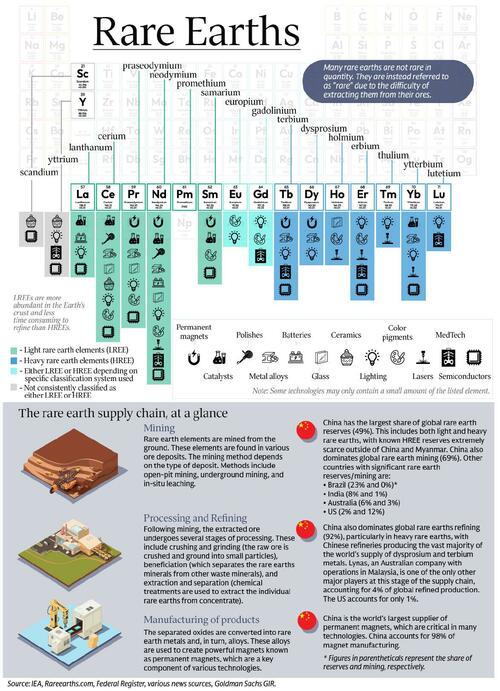
This development represents a tightening of state dominance over critical supply chains, extending beyond previous rare earth quotas to a broader class of minerals essential for semiconductors, permanent magnets, electric vehicles, renewable energy infrastructure, and advanced defense systems. It aligns with 2025 efforts to enforce "full-chain" controls across mining, processing, licensing, and exports, as documented in coordinated interagency meetings reported by the Jamestown Foundation. These actions aim to curb illegal outflows, prioritize domestic high-tech needs, and enhance resilience against external pressures.
Deeper connections reveal this as strategic preparation amid U.S.-China rivalry. By locking in reserves and subjecting foreign participation to security vetting, Beijing is countering Western diversification initiatives while leveraging its overwhelming share of global processing capacity. The policy integrates emergency response mechanisms that allow rapid adjustments based on national security or supply risk assessments, a nuance often overlooked in surface-level coverage. It echoes themes in China's Five-Year Plans emphasizing "supply chain security" and green mining leadership, yet carries clear resource nationalist undertones—using control of finite resources as leverage in trade and technology competition.
Global ripple effects are significant. Tech and defense manufacturers face heightened uncertainty, potential cost spikes, and pressure to accelerate "friend-shoring" of supply chains. The moves coincide with tightened export licensing on materials like rare earths and gallium, reinforcing China's position in the clean energy transition and military applications. While promoting rational development and environmental protections on paper, the net result foreshadows greater state orchestration of critical flows, likely prompting renewed Western policy responses such as expanded strategic stockpiling and investment in alternative sources.
LIMINAL: Expect accelerated global efforts to bypass Chinese supply chains for rare earths and critical minerals, driving up near-term costs for EVs, semiconductors, and defense tech while enhancing Beijing's leverage in future geopolitical negotiations.
Sources (5)
- [1]China Set to Impose Mining Controls on Some Strategic Minerals(https://www.bloomberg.com/news/articles/2026-05-20/china-set-to-impose-mining-controls-on-some-strategic-minerals)
- [2]China to speed up construction of strategic mineral reserve sites, says government(https://www.reuters.com/world/asia-pacific/china-speed-up-construction-strategic-mineral-reserve-sites-says-government-2026-05-20/)
- [3]China unveils rules on implementation of Mineral Resources Law(https://www.globaltimes.cn/page/202605/1361517.shtml)
- [4]PRC Locks Down Critical Minerals Behind the Scenes(https://jamestown.org/trade-talks-real-moves-prc-locks-down-critical-minerals-behind-the-scenes/)
- [5]Mineral Resource Reserve and Emergency Response(https://www.iea.org/policies/25204-mineral-resource-reserve-and-emergency-response)