Listening to the Magnetosphere: How Citizen Volunteers Uncovered Inverted Plasma Waves Professional Satellites Missed
Citizen volunteers using sonified THEMIS magnetometer data (method: auditory classification of audio clips; sample size undisclosed but involved community labeling of myriad events) identified inverse frequency dispersion in plasma waves. Peer-reviewed in Frontiers in Astronomy and Space Sciences (2024). This highlights citizen science filling gaps professional instruments miss due to sampling biases; connects to STEVE discovery and whistler-wave history. Original NASA coverage underplayed implications for radiation-belt dynamics and wave-particle interactions.
When NASA translated magnetic field data from its THEMIS satellites into sound, it expected volunteers to confirm a simple pattern: lower-frequency plasma waves farther from Earth, higher frequencies closer in. Instead, citizen participants discovered the opposite in multiple instances—lower pitches near Earth and rising tones at greater distances. This finding, now detailed in a peer-reviewed paper in Frontiers in Astronomy and Space Sciences (2024), illustrates far more than an interesting anomaly.
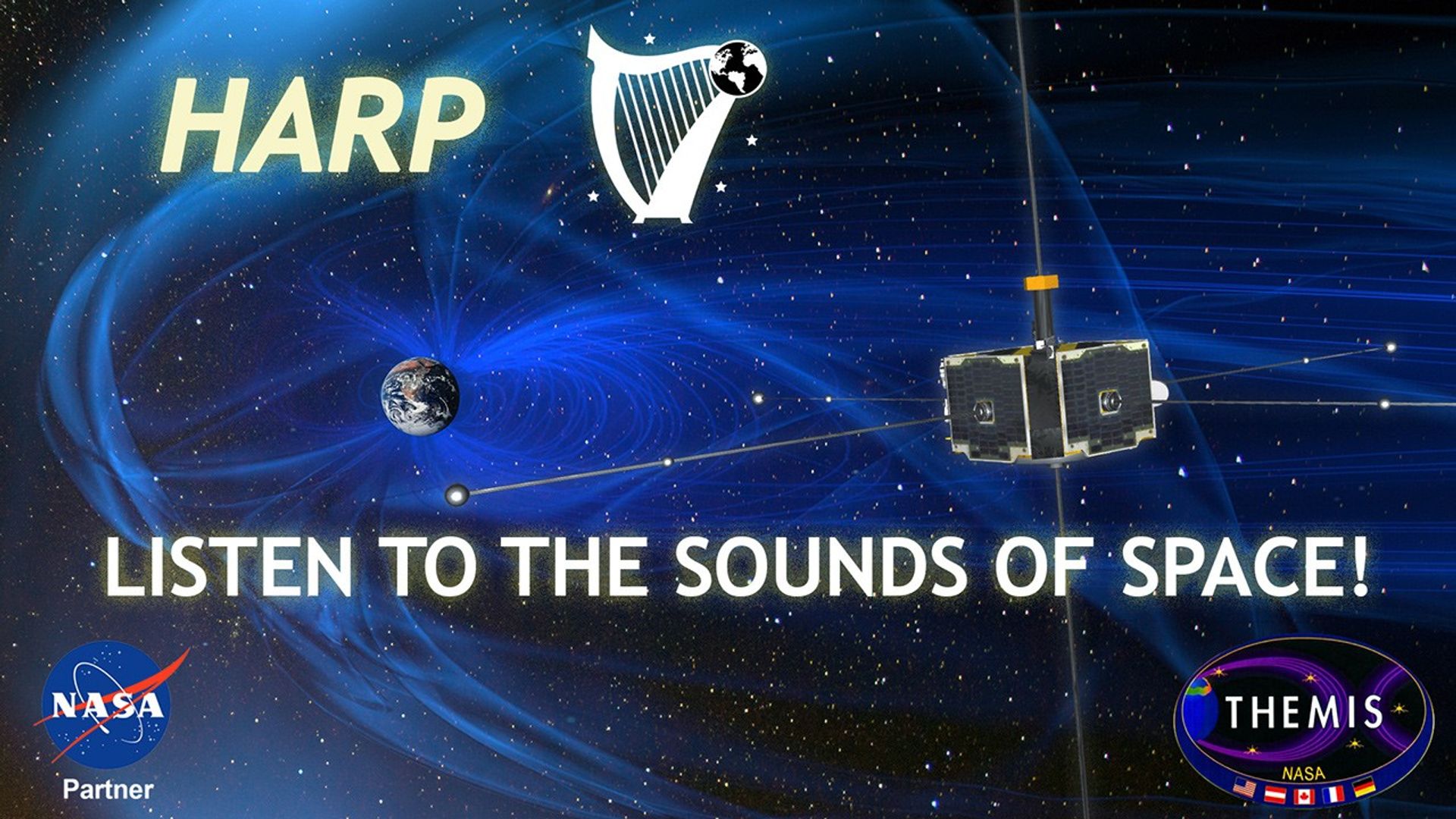
The HARP project converted fluxgate magnetometer readings from THEMIS’s five probes into audible tracks. Volunteers used a custom web interface to listen, tag, and classify wave events. The NASA release does not disclose exact sample size or total events analyzed, but thanks participants for developing protocols, beta-testing software, and labeling 'myriad' waves over months of community effort. The Frontiers study follows up with quantitative spectral analysis to validate the auditory detections. Limitations include subjectivity in human listening, potential fatigue during long sessions, and the fact that sonification necessarily compresses multi-dimensional data into one audible channel—requiring follow-up with traditional Fourier methods.
Original coverage framed the work as volunteers simply 'helping' professionals. What it missed is the deeper scientific implication: these inverse-dispersion waves appear linked to plasmaspheric hiss and its role in scattering high-energy electrons in the Van Allen belts. Better understanding them improves models of how geomagnetic storms accelerate or deplete radiation-belt particles that threaten satellites and power grids.
This discovery fits a clear historical pattern. Amateur aurora watchers identified STEVE in 2016, leading to peer-reviewed papers revealing a previously unknown ionospheric mechanism (MacDonald et al., Science Advances, 2018). Radio amateurs first reported whistler waves in the 1920s. Professional instruments often miss such phenomena because of orbital limitations, narrow spectral focus, or sheer data volume that buries subtle patterns.
Synthesizing the NASA HARP page, the 2024 Frontiers article, and a 2022 Space Weather review on citizen contributions to heliophysics (Kepko et al.), the consistent insight is that accessible interfaces let human pattern recognition complement automated systems. In an age of big data from THEMIS, MMS, and upcoming missions, ears can flag anomalies algorithms were never trained to find.
The editorial lens holds: citizen science is not outreach—it is discovery infrastructure. As Solar Cycle 25 intensifies, hybrid human-AI approaches like HARP may prove vital for forecasting that protects infrastructure. One volunteer’s pivot toward a physics major shows another lasting outcome: broadening who gets to participate in science. The project is now closed to new volunteers, but its lesson is open-ended—sometimes the most sophisticated sensor is a curious listener.
HELIX: Turning satellite magnetic data into sound lets human ears catch wave patterns that algorithms and point sensors routinely miss, potentially sharpening forecasts for geomagnetic storms that threaten power grids and satellites.
Sources (3)
- [1]Volunteers Discover Rare Space Weather Events Using Their Ears(https://science.nasa.gov/get-involved/citizen-science/volunteers-discover-rare-space-weather-events-using-their-ears/)
- [2]Auditory inspection of plasma waves in the magnetosphere: HARP citizen science project(https://www.frontiersin.org/journals/astronomy-and-space-sciences/articles/10.3389/fspas.2024.1369739)
- [3]Citizen Science and its Potential for Space Weather Research(https://agupubs.onlinelibrary.wiley.com/doi/10.1029/2022SW003189)